
Symphony Hall for Everyone: Celebrating 125 Years of Cultural and Civic Uses
Since its completion in 1900, Symphony Hall has served as the permanent home of the Boston Symphony and Boston Pops Orchestras, which have collectively presented nearly 18,000 concerts on its stage. When not in use by the BSO and Pops, the Hall is available for outside events on a rental basis, with proceeds used to offset maintenance costs. This versatility has led Symphony Hall to play a significant role in the cultural and civic life of the city of Boston, where it has presented thousands of non-BSO performers, ensembles, and groups. And, while best known as a space for musical performances, Symphony Hall has an impressive history as a venue for dance, film, political debates and conventions, graduations and convocations, lectures, religious services, fundraisers, film, trade shows, and even a sporting event.
Exhibit curated by Margot Rashba, PhD Candidate, 2025 Boston University Center for the Humanities Intern

Postcard featuring the exterior of Symphony Hall

Instrumental Performances
Symphony Hall was built for the presentation of orchestral music, making it no surprise that the majority of non-BSO/Pops events have been musical performances. The Celebrity Series has been presenting world class orchestras and musicians in recital since 1938. In addition to classical soloists (such as Artur Rubinstein, Jascha Heifetz, Teresa Carreño, Sergei Rachmaninoff, Gina Bachauer, and Andrès Segovia) and visiting orchestras (from Chicago, Philadelphia, New York, Milan, Berlin, Vienna, Venezuela, and more), Symphony Hall has also seen a number of folk, jazz, and blues musicians on its stage.
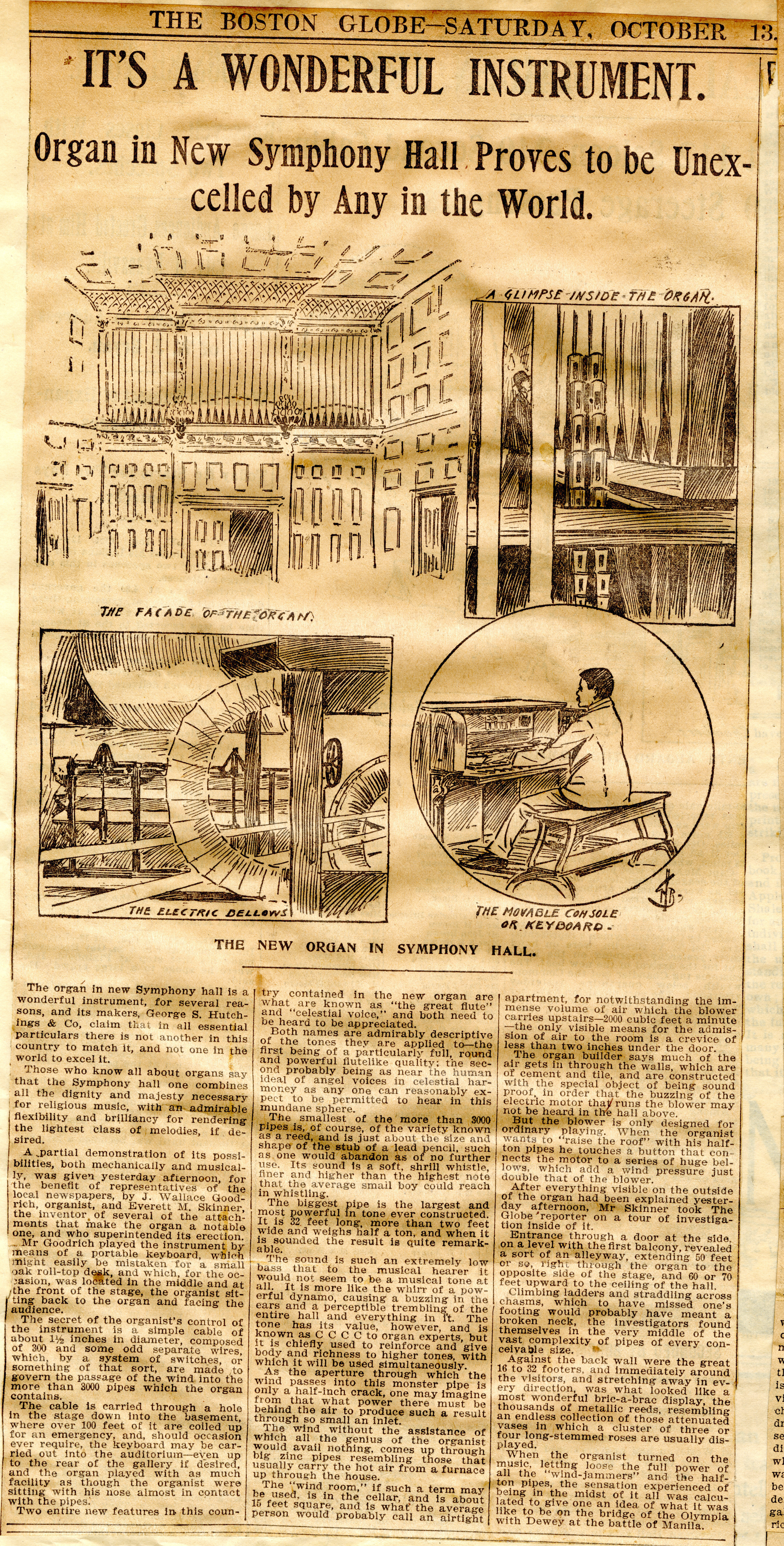
Newspaper review for an organ demonstration given by J. Wallace Goodrich on October 13th, 1900.
A local of Newton, Massachusetts, Goodrich was an organist, conductor, and composer. The newspaper article featured above reports on the installation of the organ inside the Hall in 1900. Goodrich gave a demonstration of the instrument on the 13th and a formal organ recital on October 25th, one of the earliest recitals in the Hall. The Globe reported that Goodrich’s “mastery of the instrument was quickly made evident, and his playing was most artistic and satisfying. (Boston Globe, October 26, 1900)
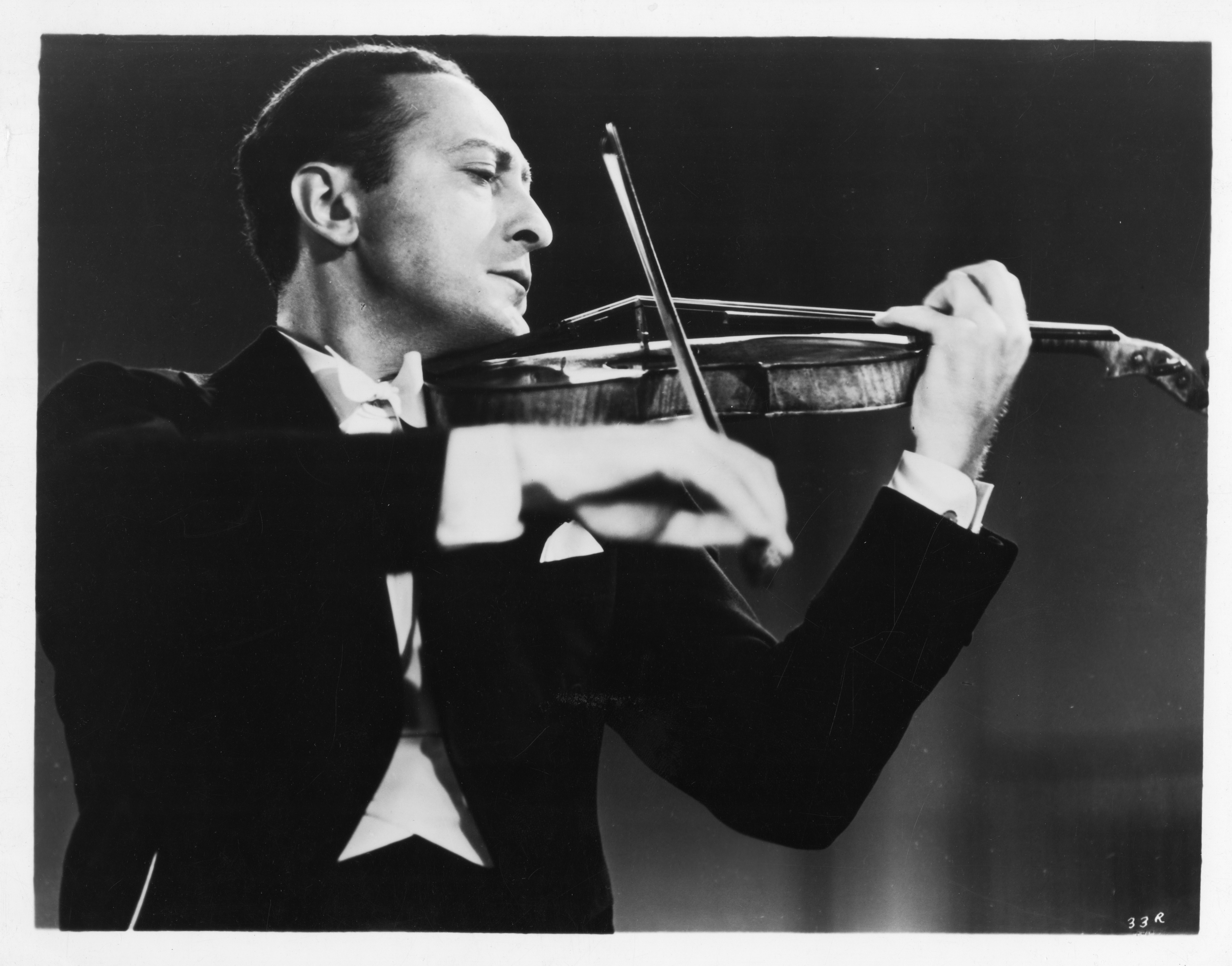
Image of Jascha Heifetz, violinist. Photographer unknown.
Jascha Heifetz, a Russian American violinist, is regarded as one of the greatest violinists of all time. Throughout the 1930s to the 1950s, Heifetz appeared frequently at the Hall. In 1930 he drew a “storm of applause” after this performance and the audience demanded a fourth encore. (Boston Globe, January 6, 1930)
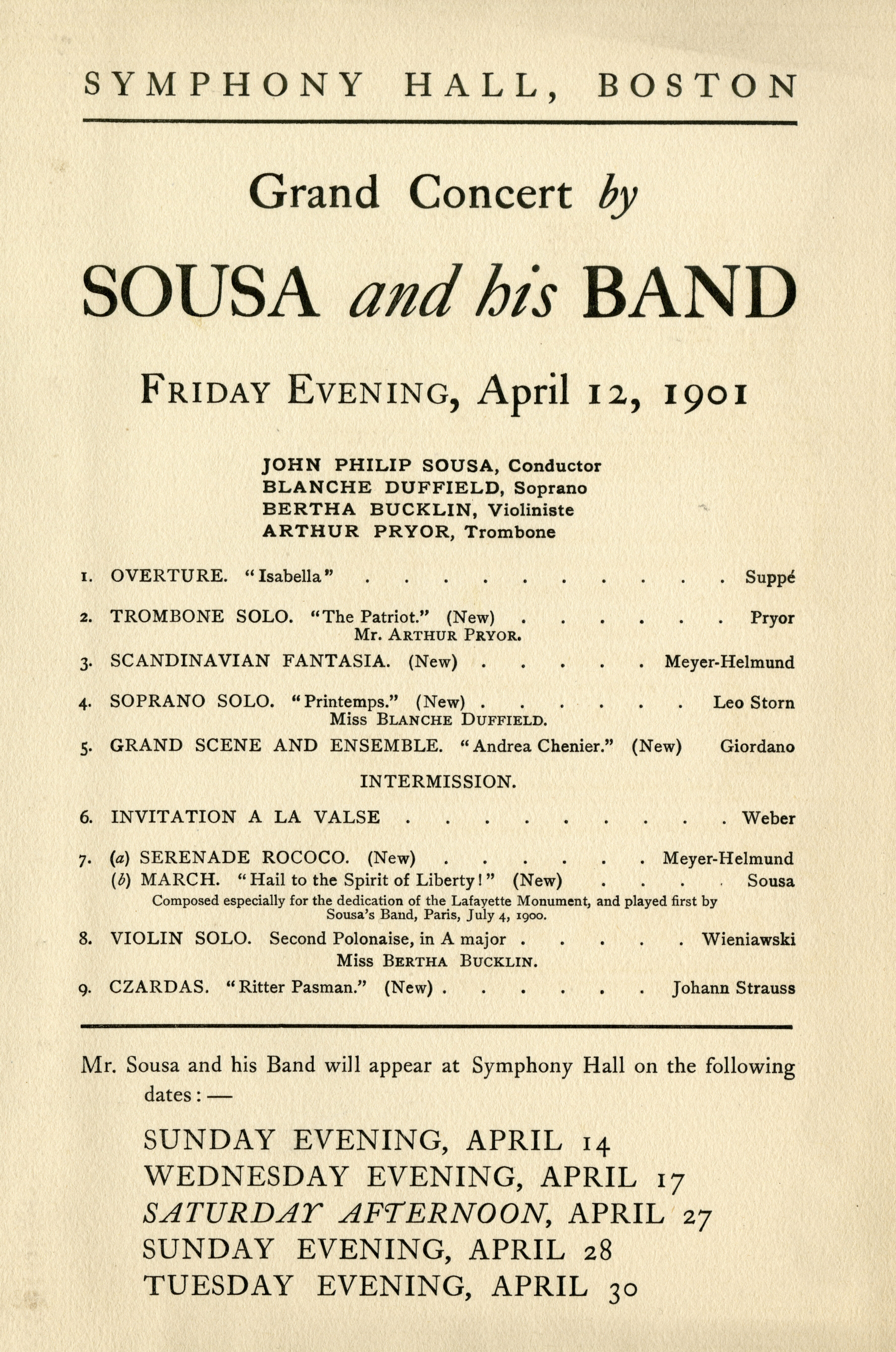
Program book for a performance of Sousa and his band on April 12th, 1901.
Originally part of the Marine Corps Band, John Philip Sousa formed a civilian band after he was discharged in 1892. Touring in both the United States and internationally, the band performed until the 1930s. At Symphony Hall they were quite popular with a “very large audience applauding every number” and “demanding double encores.” (Boston Globe, April 13, 1901)
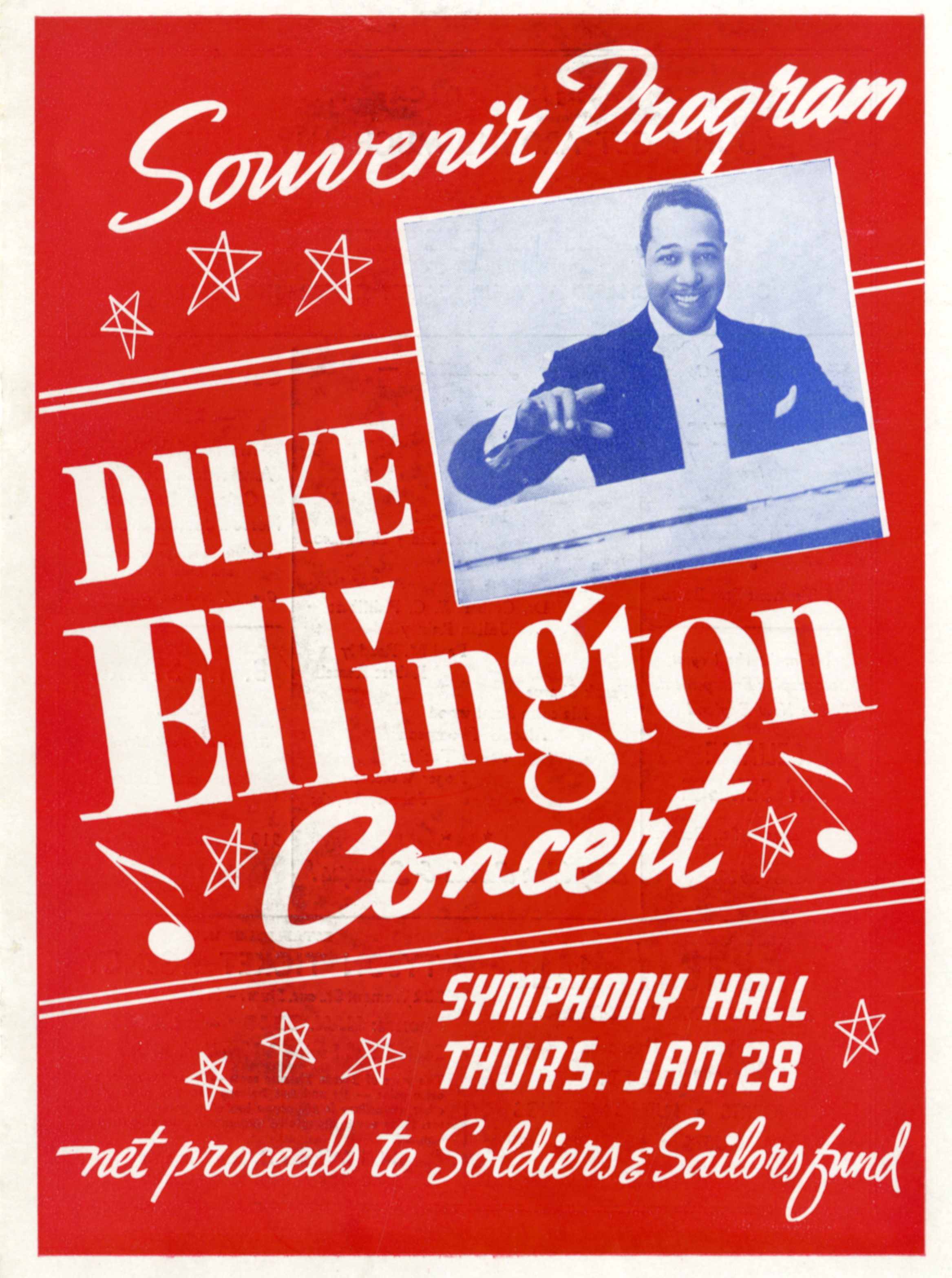
Flyer for a Duke Ellington Concert given on January 28th, 1943.
Duke Ellington, the world-renowned American composer, pianist, and jazz bandleader, performed a series of numbers in 1943, including Boston's first experience with his tone poem Black, Brown and Beige (premiered a week earlier at Carnegie Hall). The concert was for the benefit of the Soldiers' and Sailors’ Fund under the auspices of the Younger Citizens’ Coordinating Committee. The performance was sold out, despite the rain and hot weather. (Boston Globe, January 29, 1943).
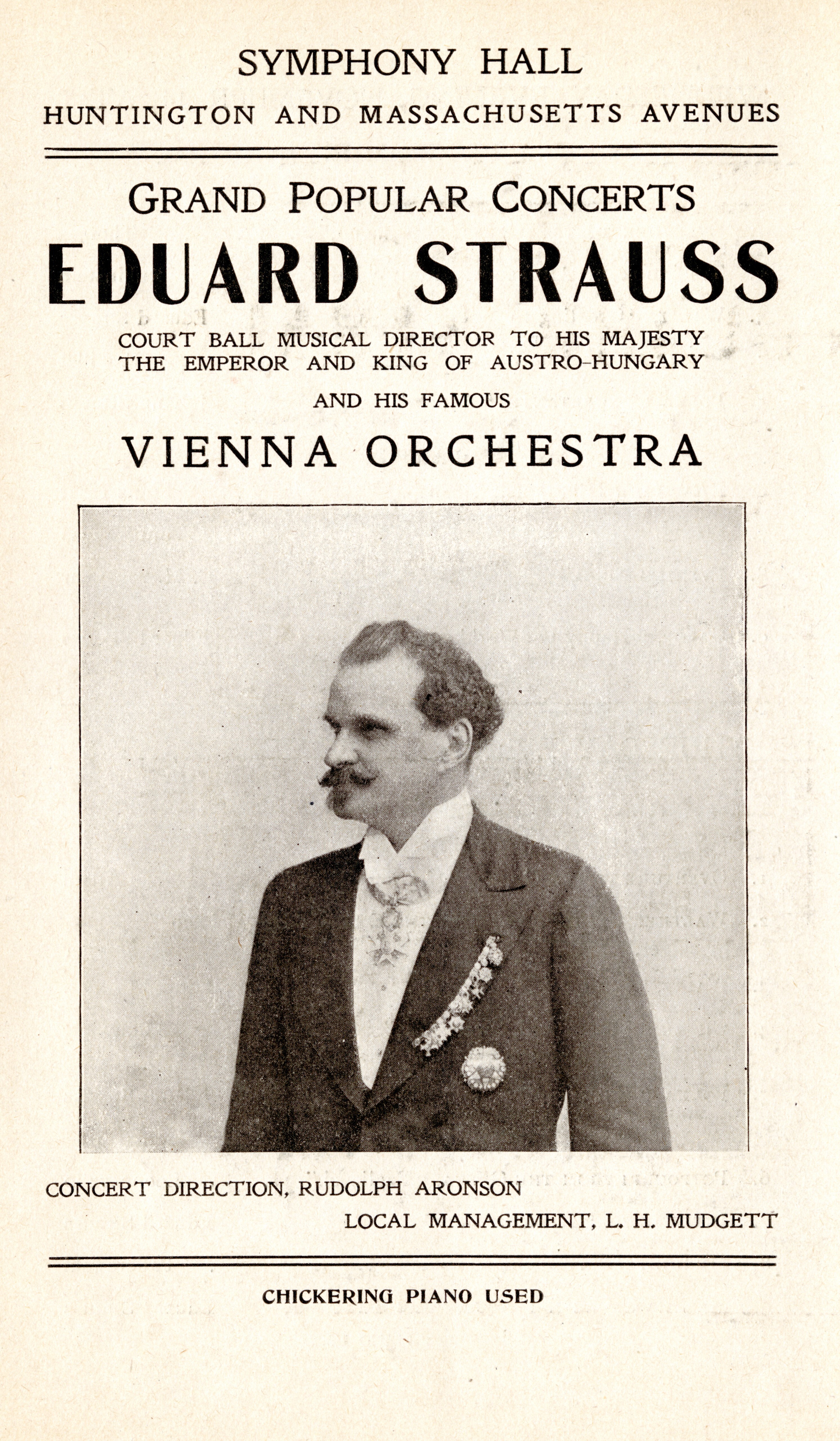
Program book for Eduard Strauss and his Vienna Orchestra on November 12th, 1900.
Eduard Strauss was an Austrian composer and part of the renowned Strauss family who dominated the light music world for decades. Strauss performed dance music and selections from Beethoven, Bizet, and Gillet. The public particularly enjoyed the Strauss numbers from both Eduard and Johann Strauss, Sr., Eduard’s father. (Boston Globe, November 15, 1900)
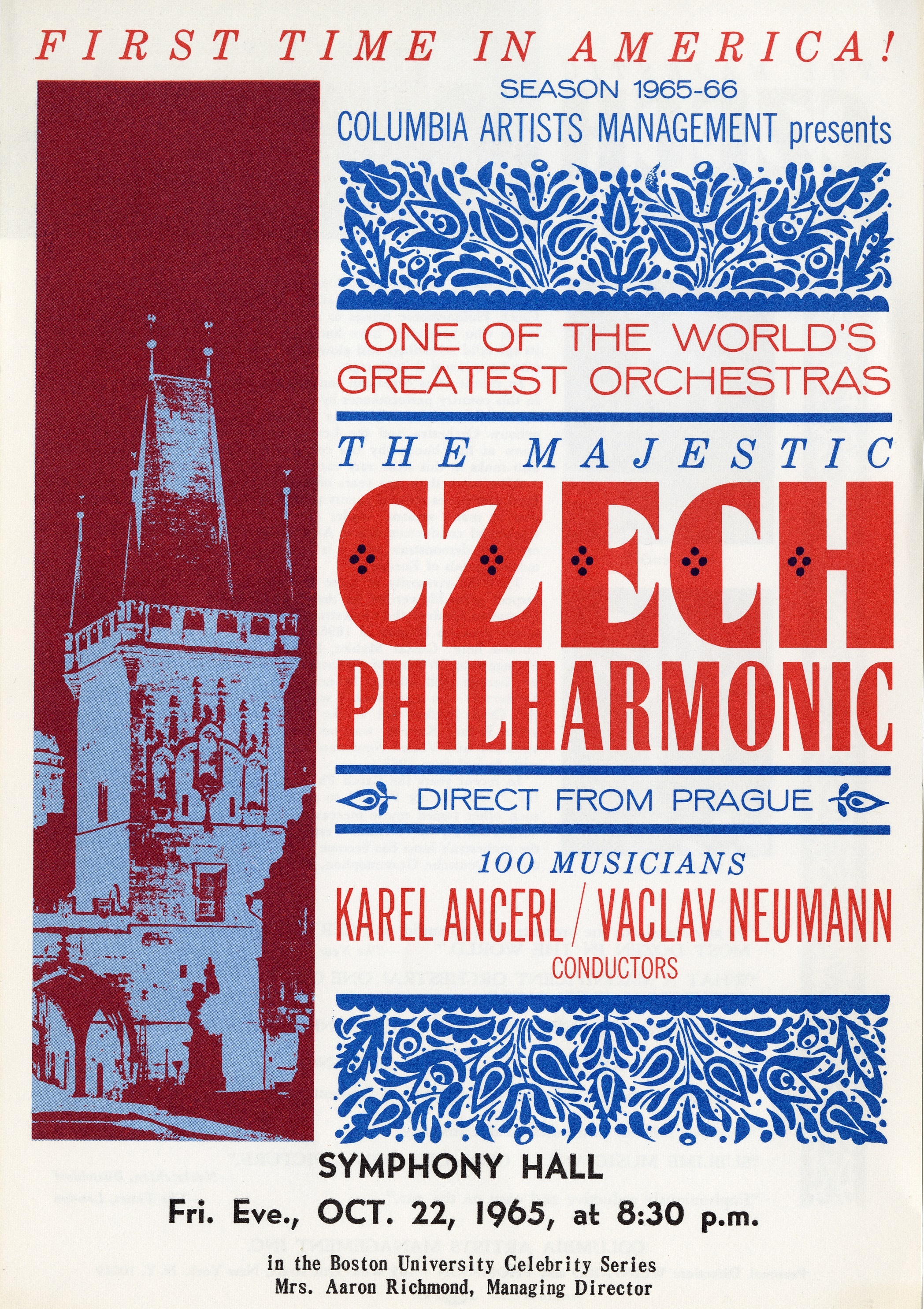
Flyer for a performance by the Czech Philharmonic on October 22nd, 1965.
Symphony Hall has long hosted international orchestras from the Netherlands, France, Canada, and Germany. The Czech Philharmonic’s first North American tour began at Symphony Hall in 1965 with Karel Ancerl conducting.
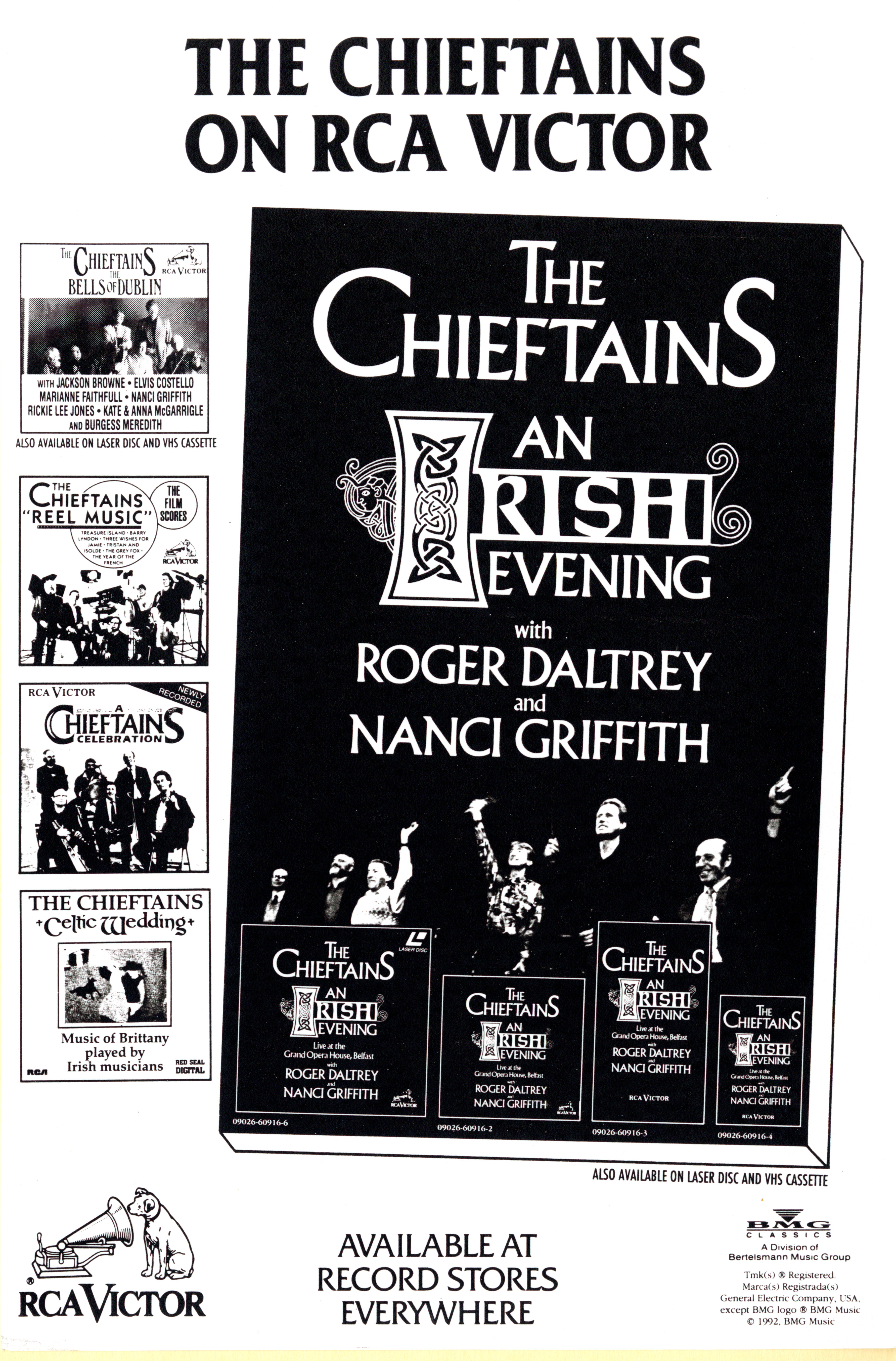
Flyer for a performance by the Chieftains on March 15th, 1992.
The Chieftains, a traditional Irish folk band formed in Dublin in 1962, performed at the Hall as part of St. Patrick’s Day celebrations in 1992. As ambassadors of Irish music, their appearance at the Hall was anticipated with even Boston Mayor Ray Flynn declaring St. Patrick's Day to be unofficially Chieftains Appreciation Day. Paddy Maloney, the founder of the group declared that everyone could find something in common with the music as, “it is folk music, after all.” (Boston Globe, March 17, 1992)
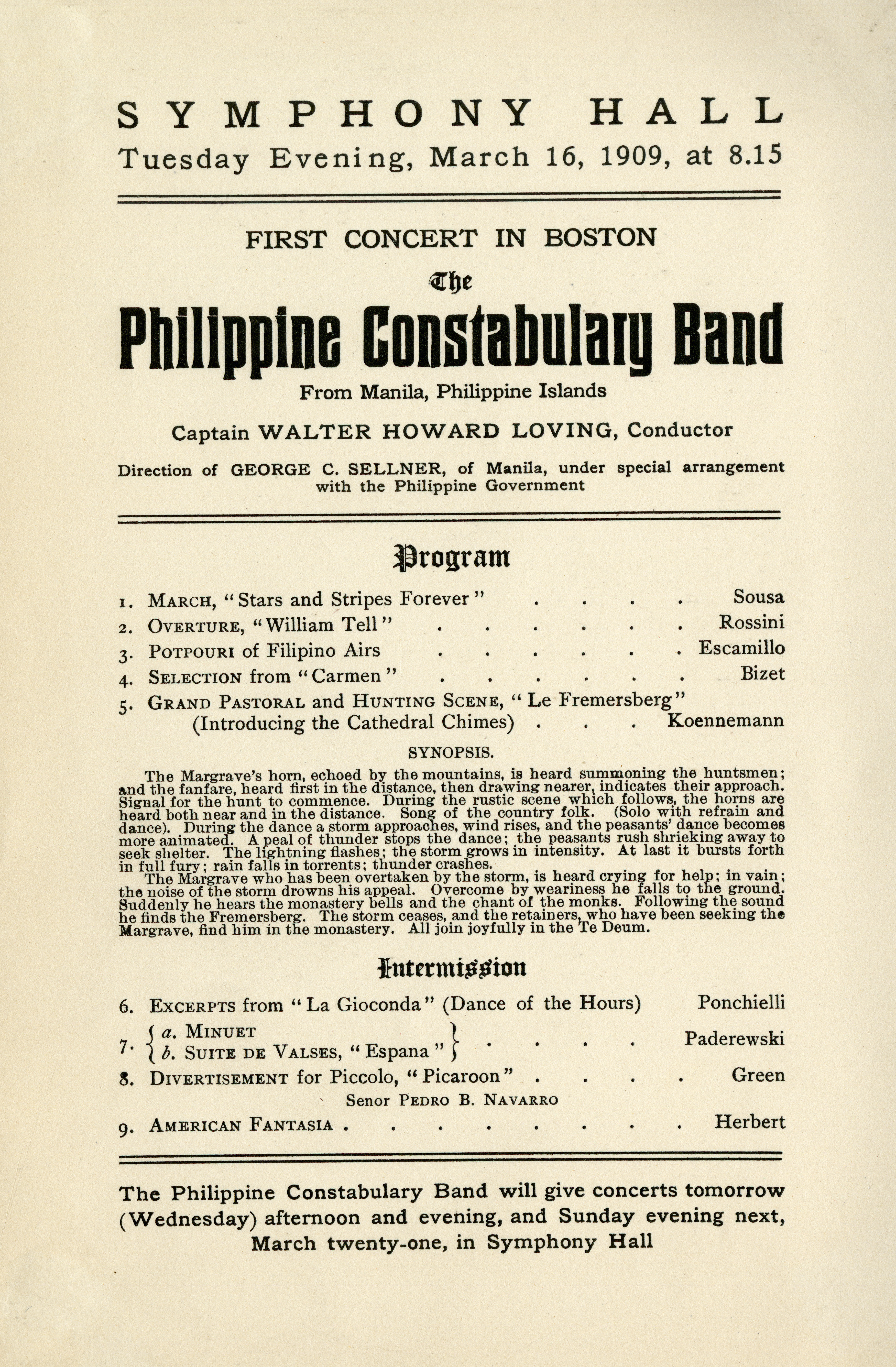
Program book for a performance by the Philippine Constabulary Band on March 16th, 1909.
The son of a formerly enslaved person, Captain Walter Howard Loving, an African American soldier, conducted the Philippine Constabulary Band. Loving led the band during the 1909 presidential inaugural parade where it was an official escort to President Taft, the first time a band other than the U.S. Marine Band was assigned that duty.
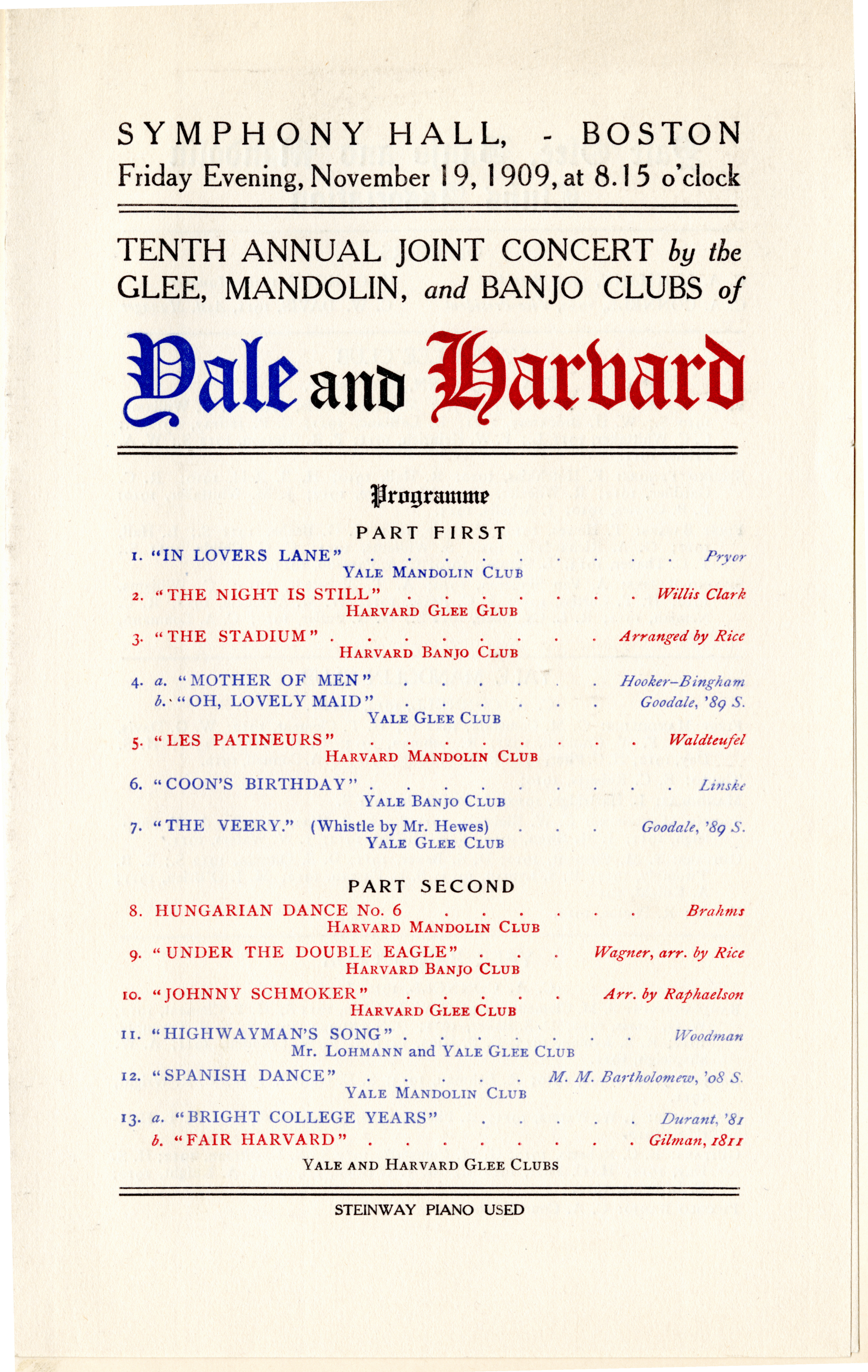
Program book for performances by the Glee, Mandolin, and Banjo Clubs of Yale and Harvard on November 19th, 1909.
With their tenth annual joint concert, the Glee, Mandolin, and Banjo clubs performed a full array of music and songs in 1909. The Hall regularly hosts associations from local universities and colleges, including glee clubs, wind ensembles, and bands.

Image of Boston Public School Orchestra on stage for “Music Week” on May 6th, 1924. Photograph by Dadmun Co., Boston.
With 1600 students in attendance, the Hall hosted a gigantic sing with the Boston Public School Symphony Orchestra. A group of girls from the Hancock School in the North End made Italian dresses in the style of the 18th century and performed songs in Italian. Kindergarteners from the Philbrick School in Jamaica Plain marched while the orchestra played “The Parade of the Wooden Soldiers.” (Boston Globe, May 7, 1924)
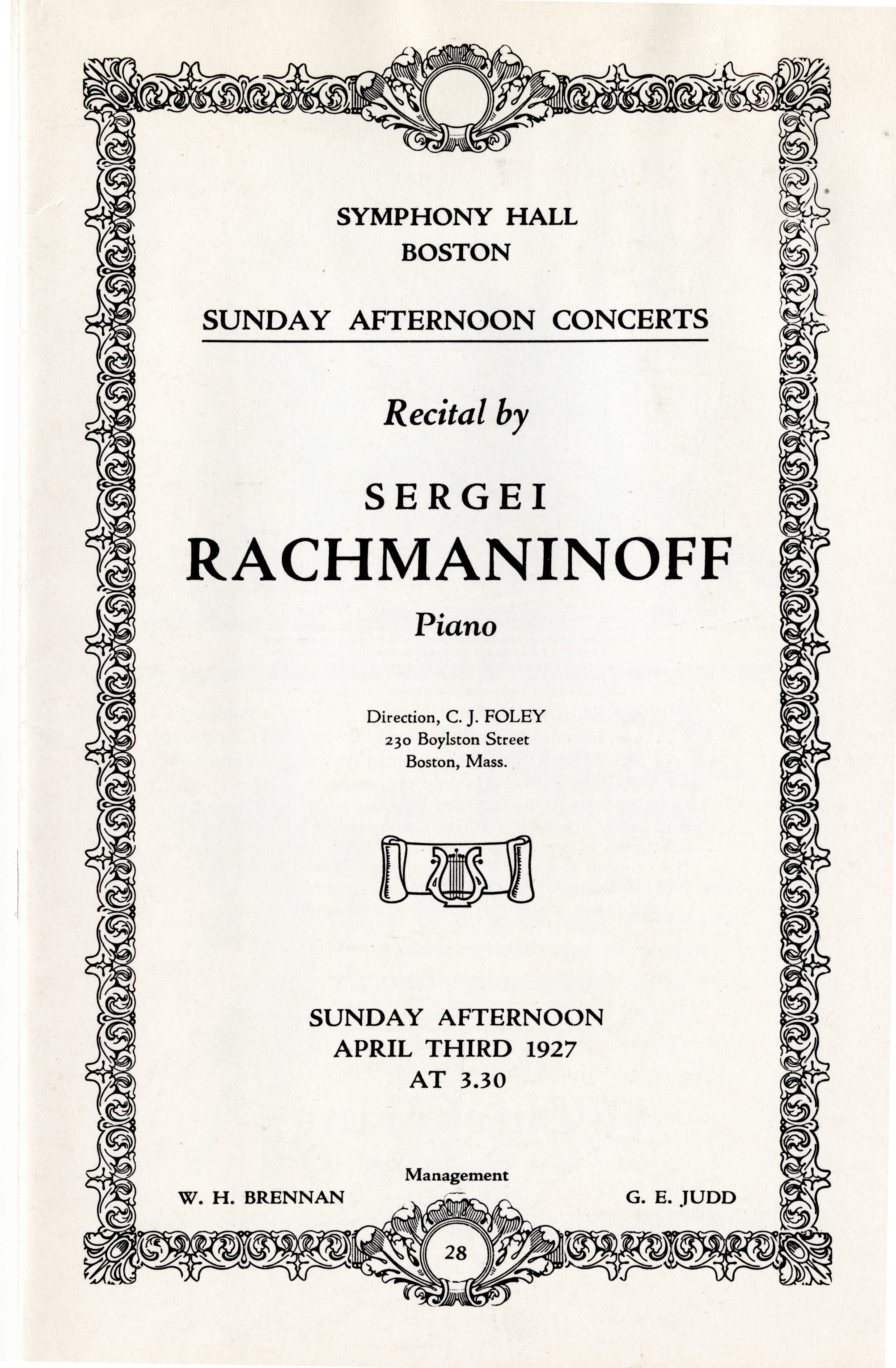
Program book for a piano recital given by Sergei Rachmaninoff on April 3rd, 1927.
The Russian composer was also considered one of the finest pianists of all time and performed numerous times at Symphony Hall. The Boston Globe review for this 1927 performance stated that he played with “the fires and the versatility of a romantic genius.” (Boston Globe, April 4, 1927)
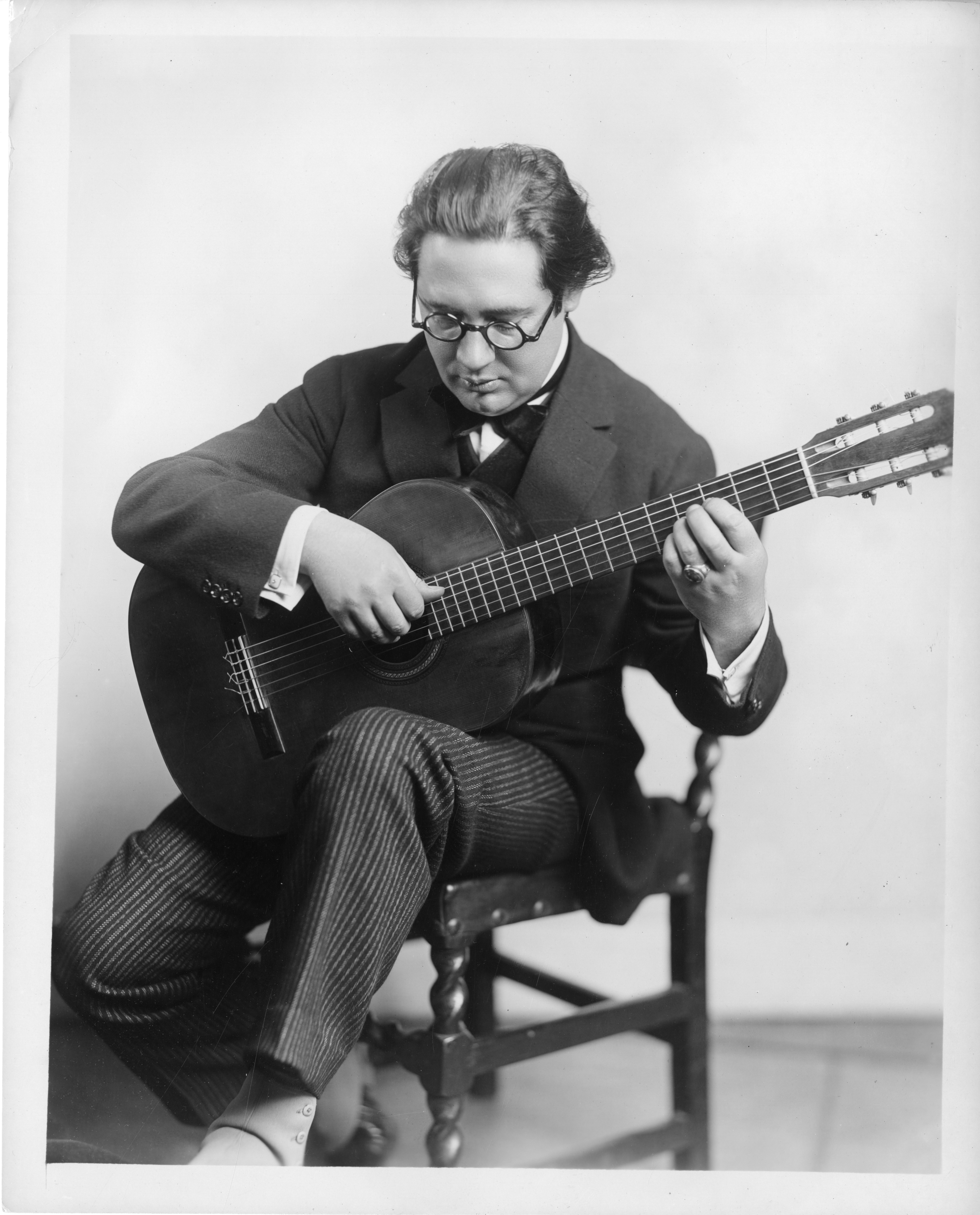
Image of Andrès Segovia. Photographer unknown.
A frequent performer at Symphony Hall, Andrès Segovia was a classical guitarist who re-established the guitar as a significant concert instrument in the 20th century. Segovia’s first performance at the Hall was February 12th, 1928, where he was lauded for his “keen sensitiveness to rhythm, melody, and tonal color.” The Boston Globe commented that the “nuances in his playing are astonishing. It seemed incredible that anyone could do so much with such an instrument as the guitar.” (Boston Globe, February 13, 1928)
Singing and Choral Performances
Vocal music (both solo and choral) also has a long history at the Hall. The first non-BSO performance was the Handel and Haydn Society (then a choral group), who have been performing at Symphony Hall since October 21, 1900. Other vocalists to appear in the Hall include Marian Anderson, Lily Pons, Maria Callas, Nina Simone, Jessye Norman, Judy Collins, the Boston Gay Men's Chorus, Polish choirs, and groups from Ireland, bringing both local and international vocal talent to Boston audiences.
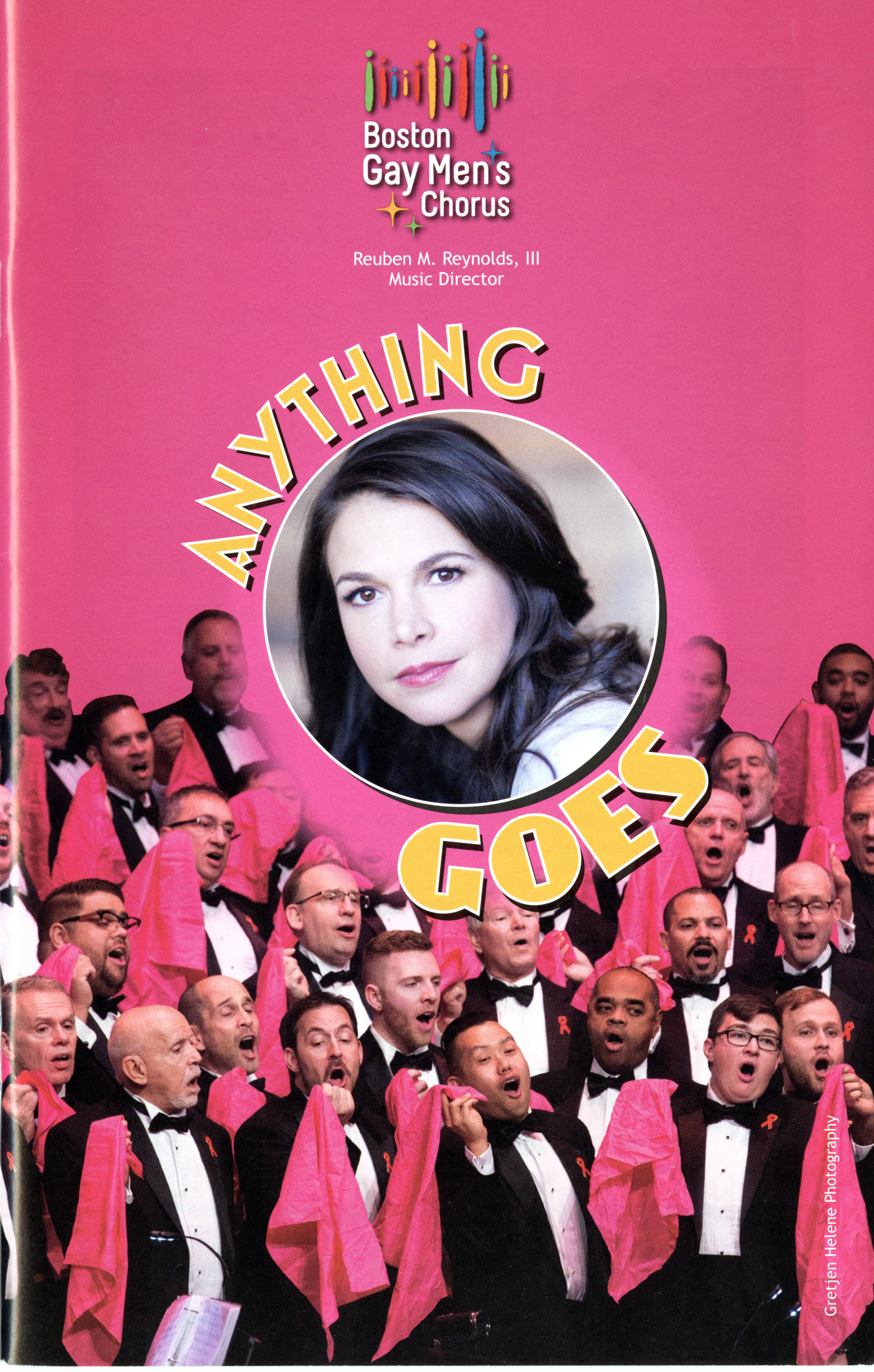
Program book for the Boston Gay Men’s Chorus’ performance of “Anything Goes” on June 4th, 2017.
The Boston Gay Men’s Chorus celebrated its 35th Anniversary with 175 singers on stage, a 20-piece orchestra and Tony Award winner Sutton Foster. The repertoire included a new commission from Gwyneth Walker, a mashup medley from five of Leonard Bernstein’s best-known works along with songs from “Anything Goes.”
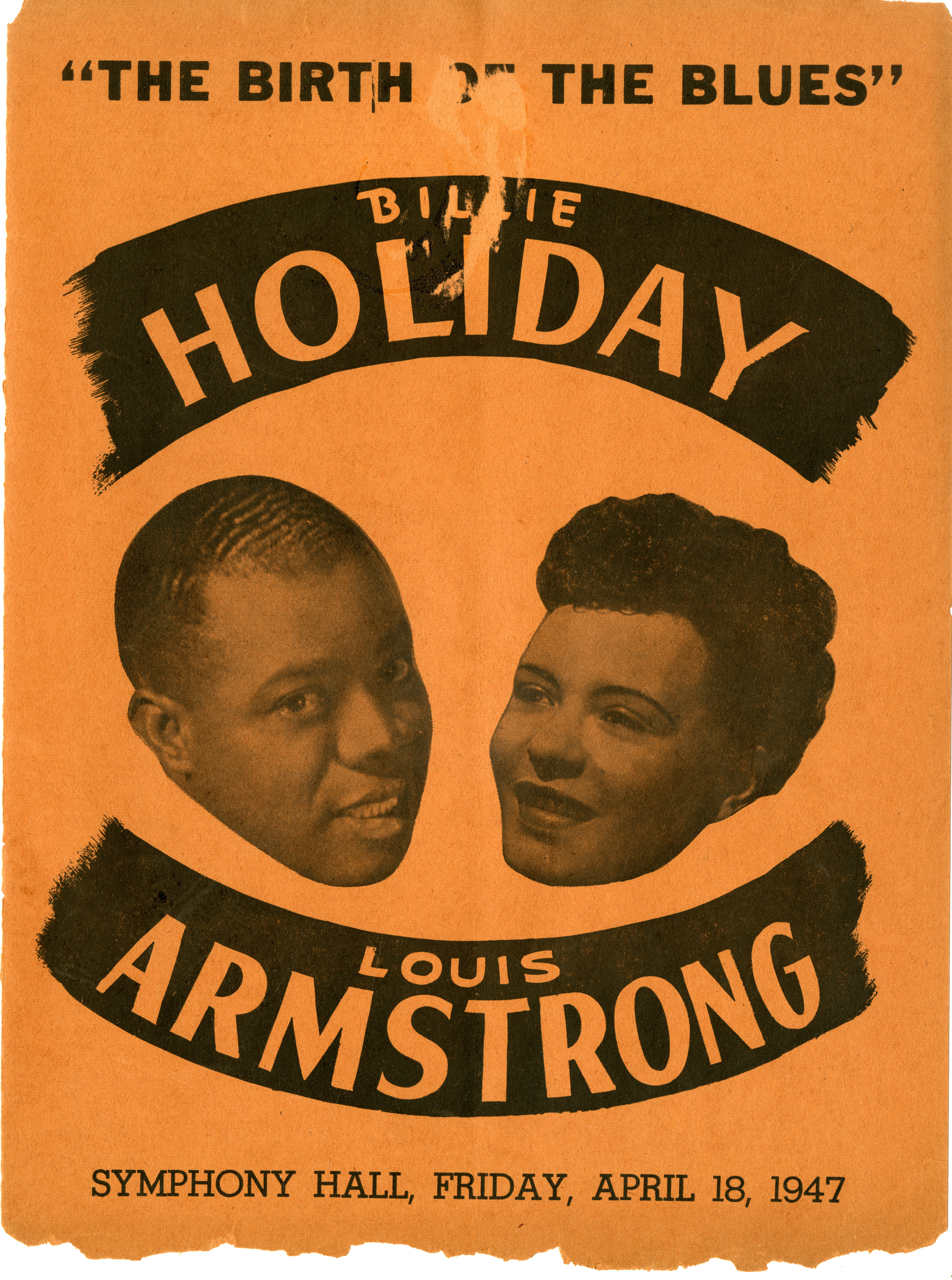
Flyer for a performance by Louis Armstrong and Billie Holiday's “The Birth of the Blues” on April 18th, 1947.
Louis Armstrong, the famous trumpeter, performed at Symphony Hall several times over the course of his career. In April 1947, Billie Holiday, a revolutionary jazz and swing singer, accompanied him for a performance of jazz tunes that included “Mahogony Stomp” and “Dippermouth Blues.” (Boston Globe, April 19, 1947)
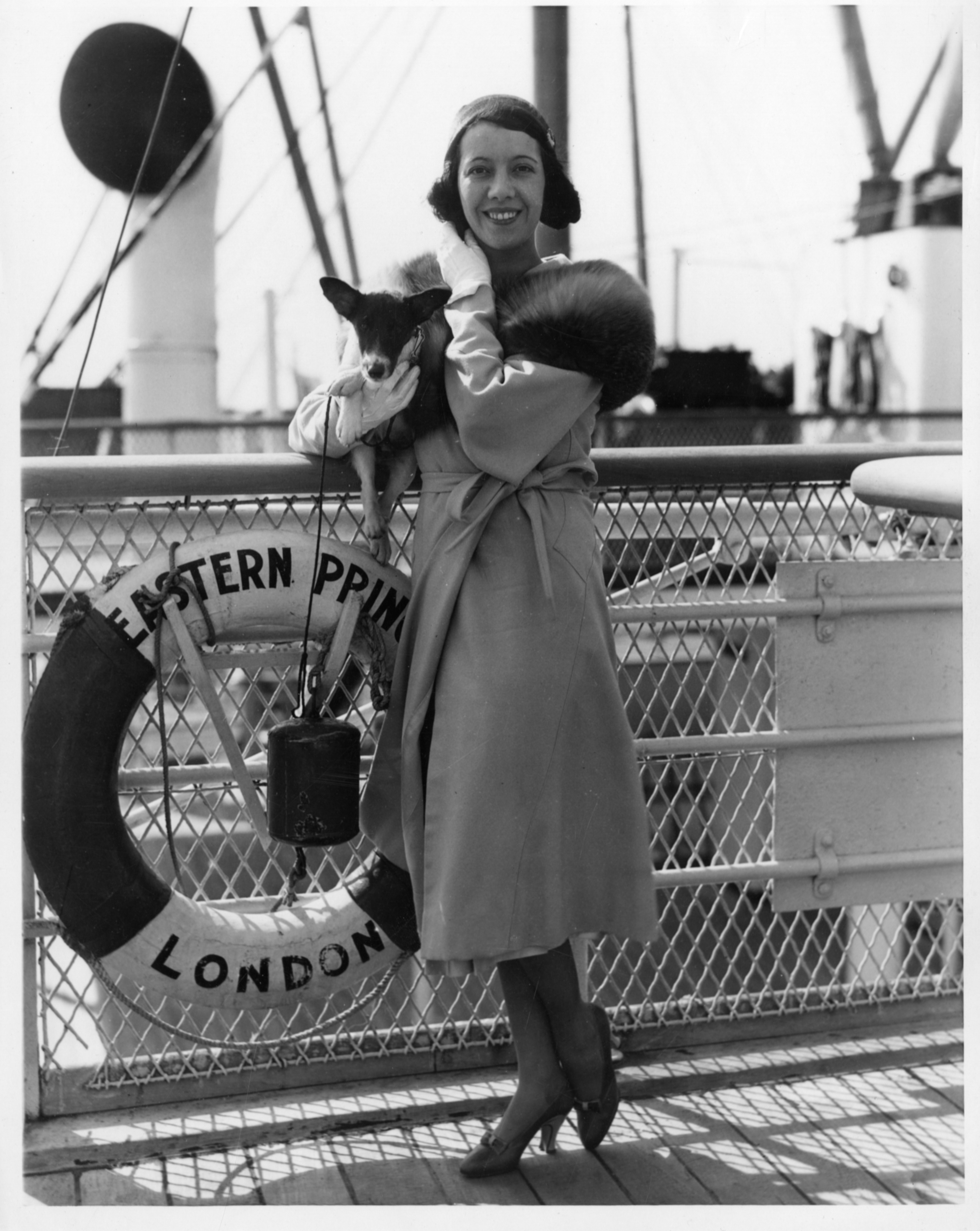
Image of Lily Pons. Photograph by Cosmo News Photo Service (New York).
Lily Pons, a noted French operatic singer, performed at Symphony Hall on March 25th, 1940 for the benefit of Boston’s four French War Charities. Part of several fundraising events held at the hall during WWII, Pons noted that she could “do more for the Allies in this country” rather than France by performing at Symphony Hall. (Boston Globe, March 25, 1940).
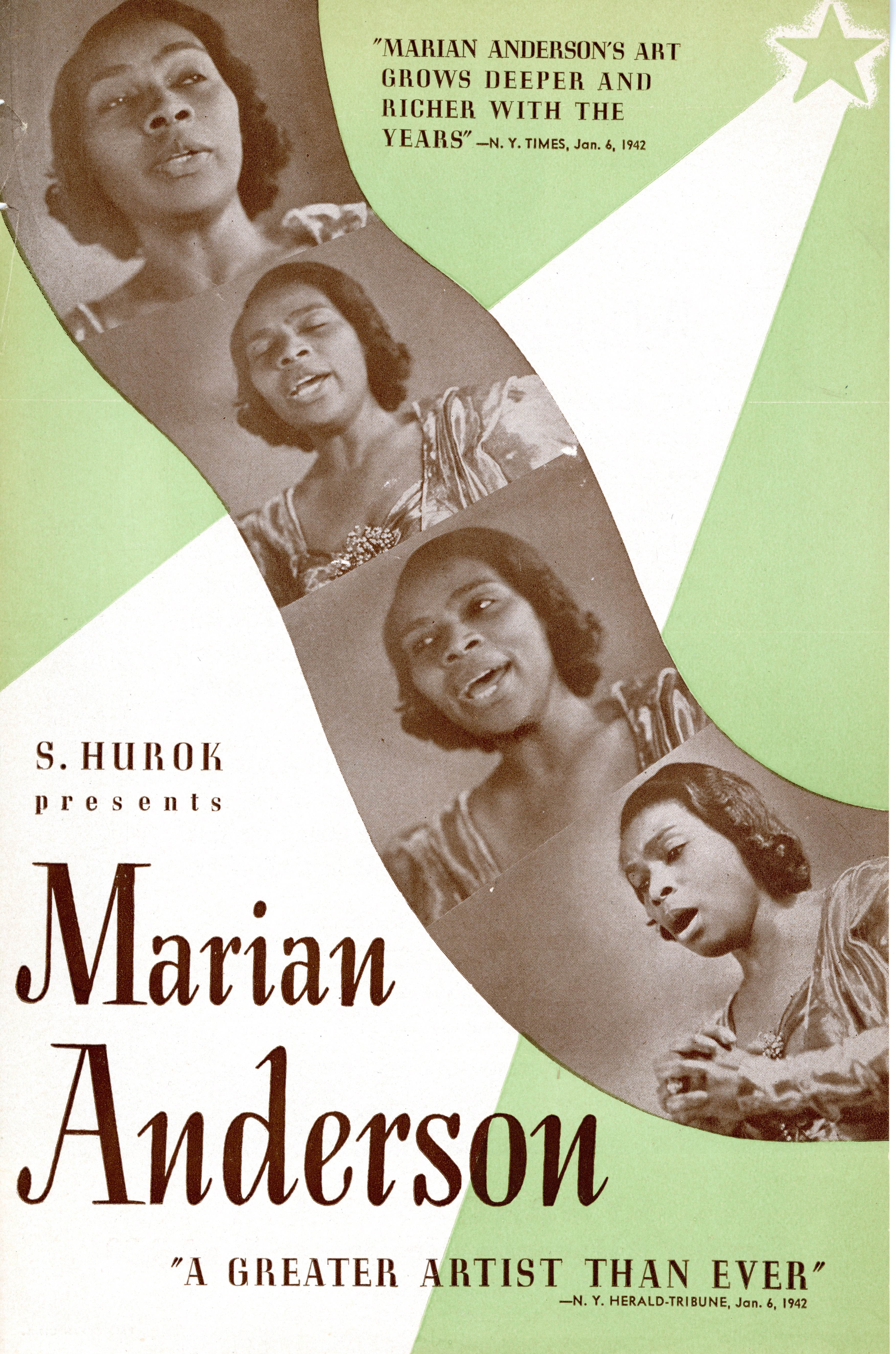
Flyer for a performance by Marian Anderson on November 5th, 1944.
Marian Anderson, a world-renowned contralto, first performed at Symphony Hall in 1932, before her historic performance on the steps of the Lincoln Memorial in 1939. For one of her performances at the hall in 1940 the Boston Globe reported that she “joined the small and select company of artists who command exceptional admiration from the public.” (Boston Globe, January 8, 1940)
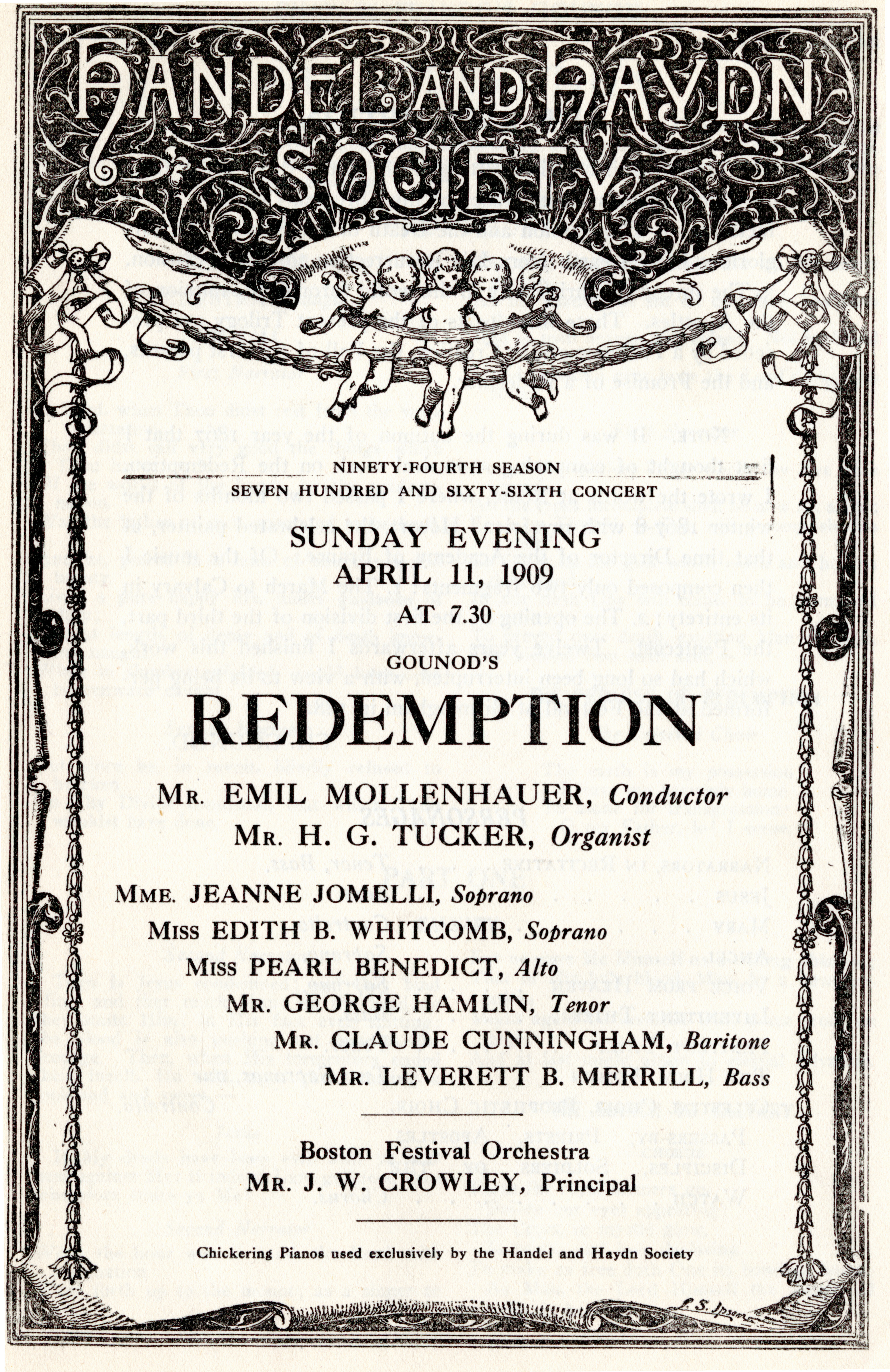
Program book for Handel and Haydn Society’s performance of Gounod’s “Redemption” on April 11, 1909.
The Handel and Haydn Society has performed in Symphony Hall since 1900, the earliest and longest continuing non-BSO affiliation in the Hall’s history. Reviews lauded their 1909 performance as “massive” and “brilliant.” (Boston Globe, April 12, 1909)
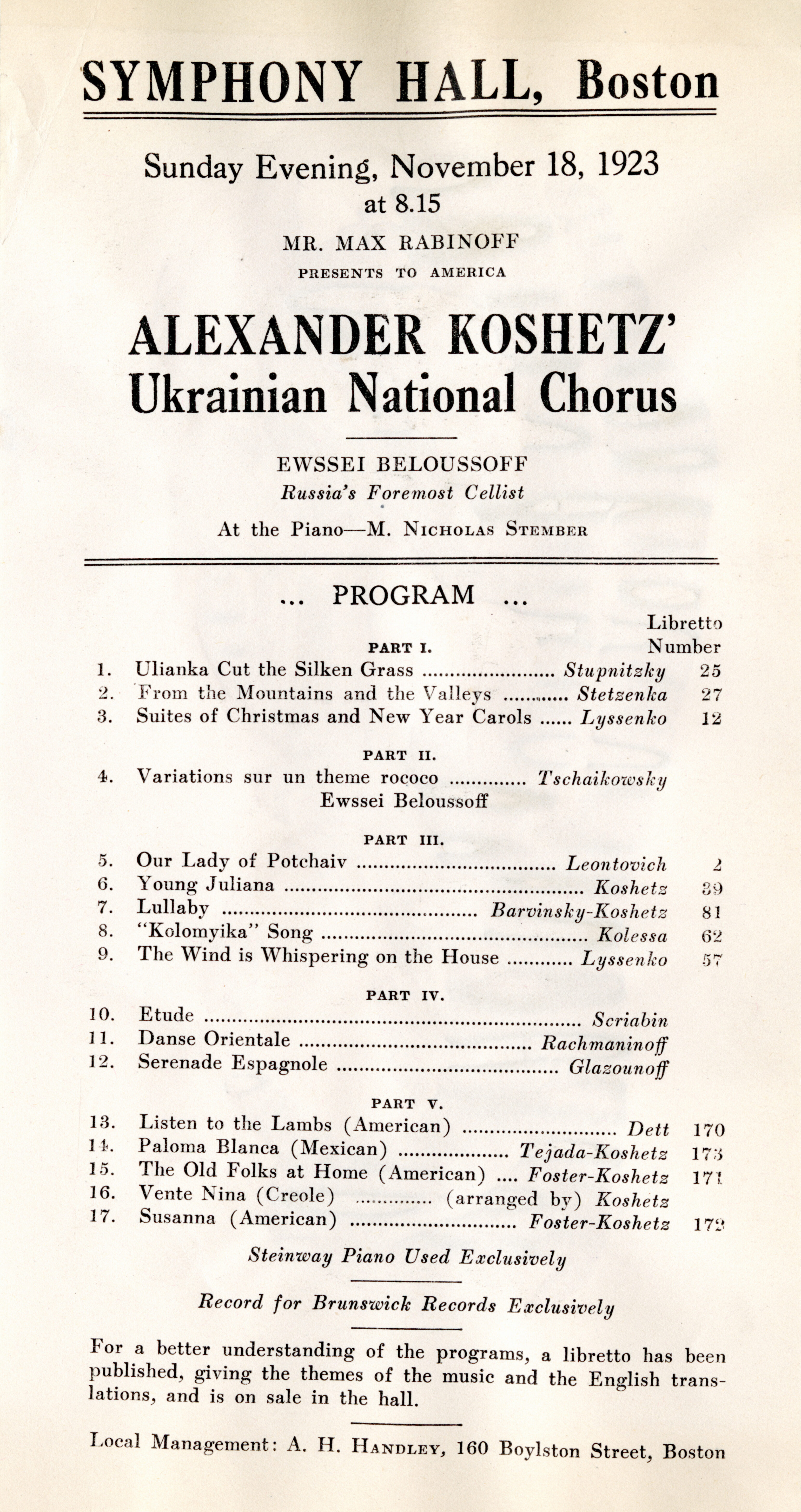
Program book for the Ukrainian National Chorus’ performance on November 18th, 1923.
The Ukrainian National Chorus was a musical company that toured Europe and North America in 1923 to promote Ukrainian culture. Presenting folk songs and other classic Ukrainian songs, they performed at Symphony Hall on November 18th, 1923, under conductor Alexander Koshetz.
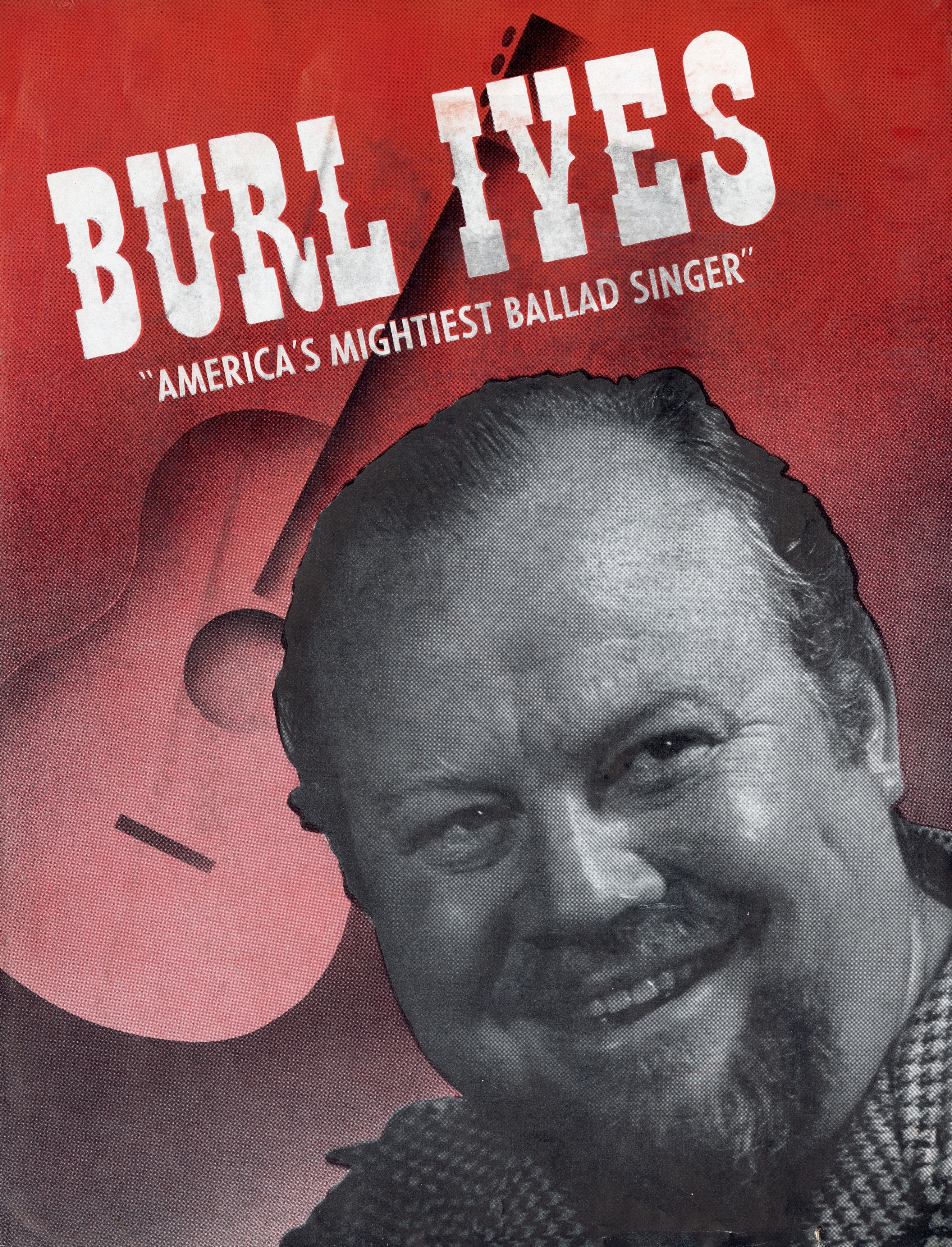
Flyer for a performance by Burl Ives on October 1st, 1949.
Burl Ives, an American folk singer and actor, performed at Symphony Hall several times throughout his career. In 1949, Ives performed a series of folksongs and ballads and accompanied himself on guitar.
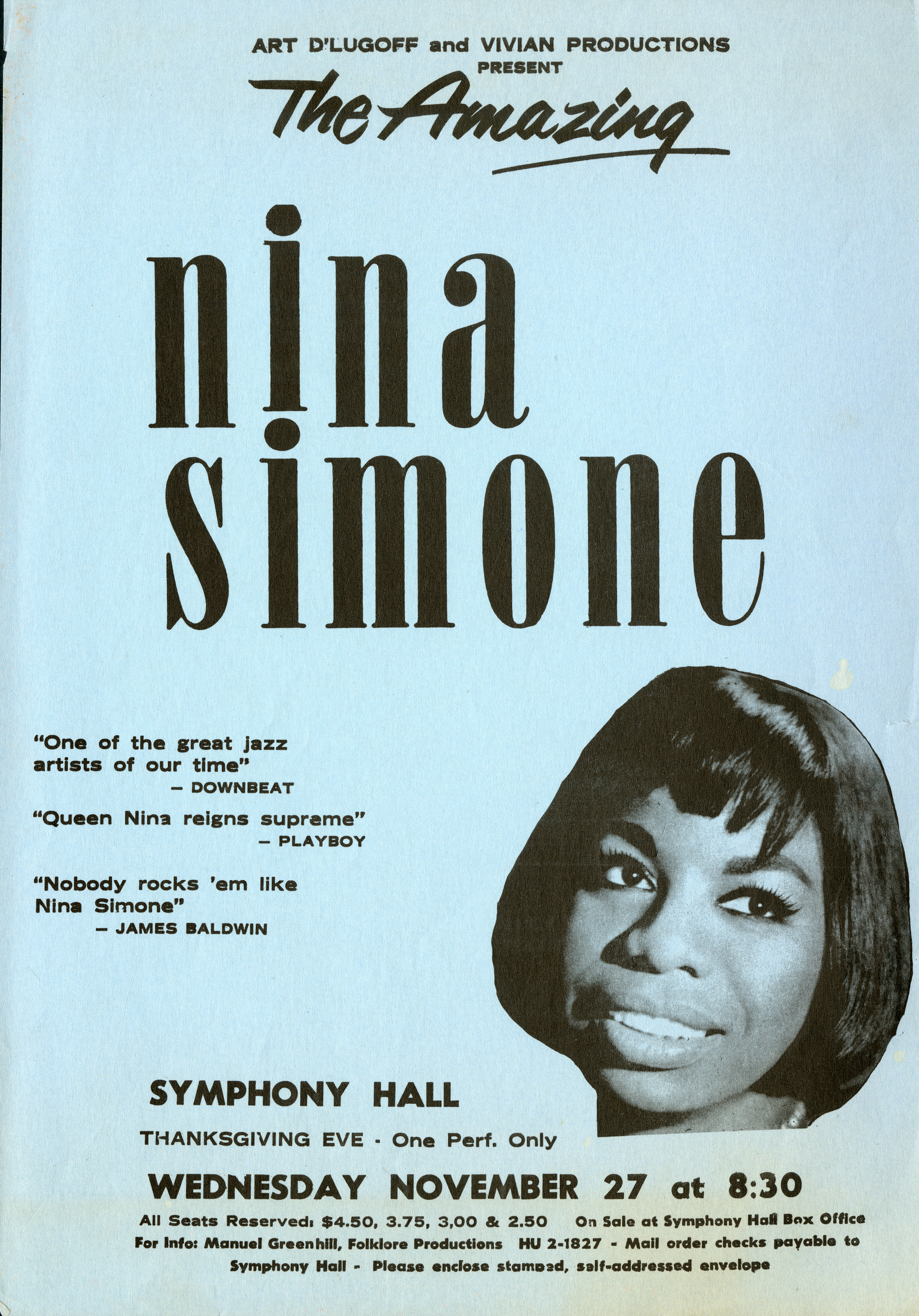
Poster advertising Nina Simone’s performance at Symphony Hall on November 27, 1963.
Nina Simone, an American singer, songwriter, pianist, and civil rights activist, performed at Symphony Hall several times during her career. Simone’s music is known for her blend of gospel, blues, and folk pop.
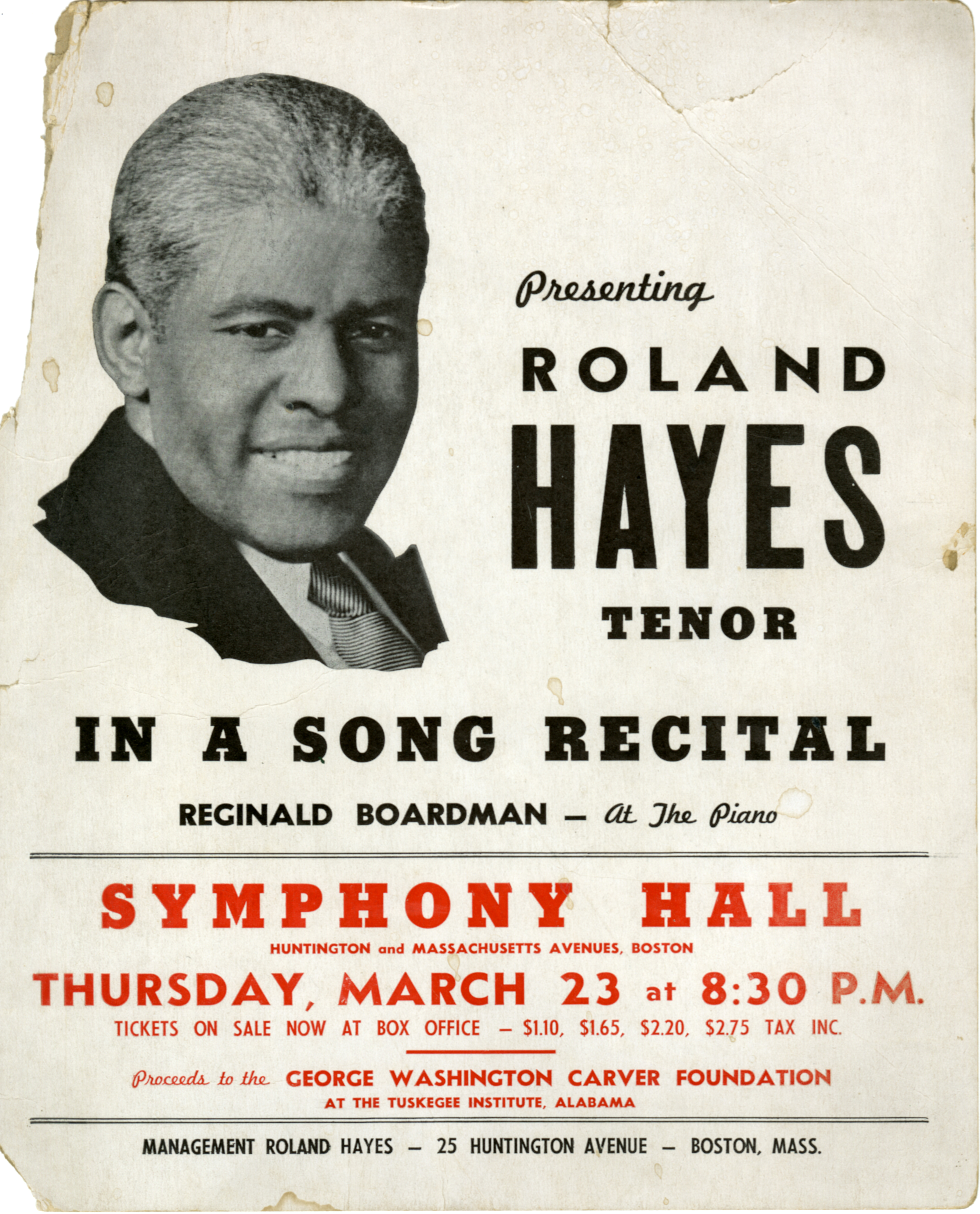
Poster for Roland Hayes’ performance on March 23rd, 1944.
The first African American man to win international fame as a concert performer, Roland Hayes performed many times throughout Symphony Hall’s history. The Hall featured strongly in his early career as an early tour with the Fisk Jubilee Singers’ tour caused him to stay in Boston and pursue his career on the concert stage. Paying all the expenses for his first concert in Symphony Hall, he arranged and promoted his own concerts and became a popular performer both at the Hall and throughout the United States and Europe.
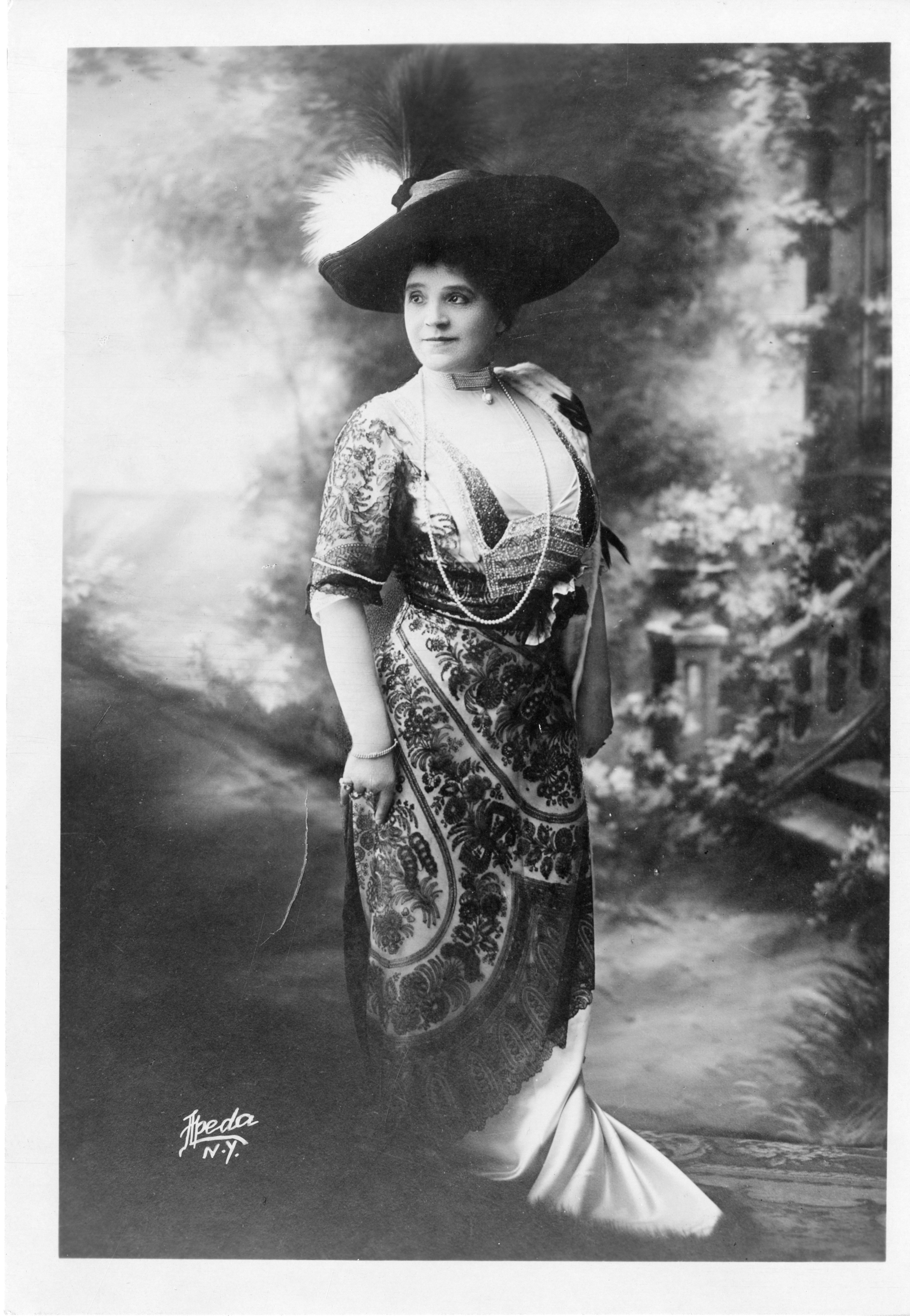
Image of Opera Singer Madame Sembrich. Photograph by Apeda Studio (New York).
Madame Sembrich, an opera singer, performed three times during the early years of Symphony Hall including on December 14th, 1900. One of the most active musicians of the late 19th and early 20th centuries, she performed in lead roles at the Metropolitan Opera and in concerts and recitals in the United States and Europe. Her performance in 1900 at the Hall was well attended with the Boston Globe commenting that she “received greater recognition than has ever before been accorded a singer under similar circumstances.” (Boston Globe, December 15, 1900).
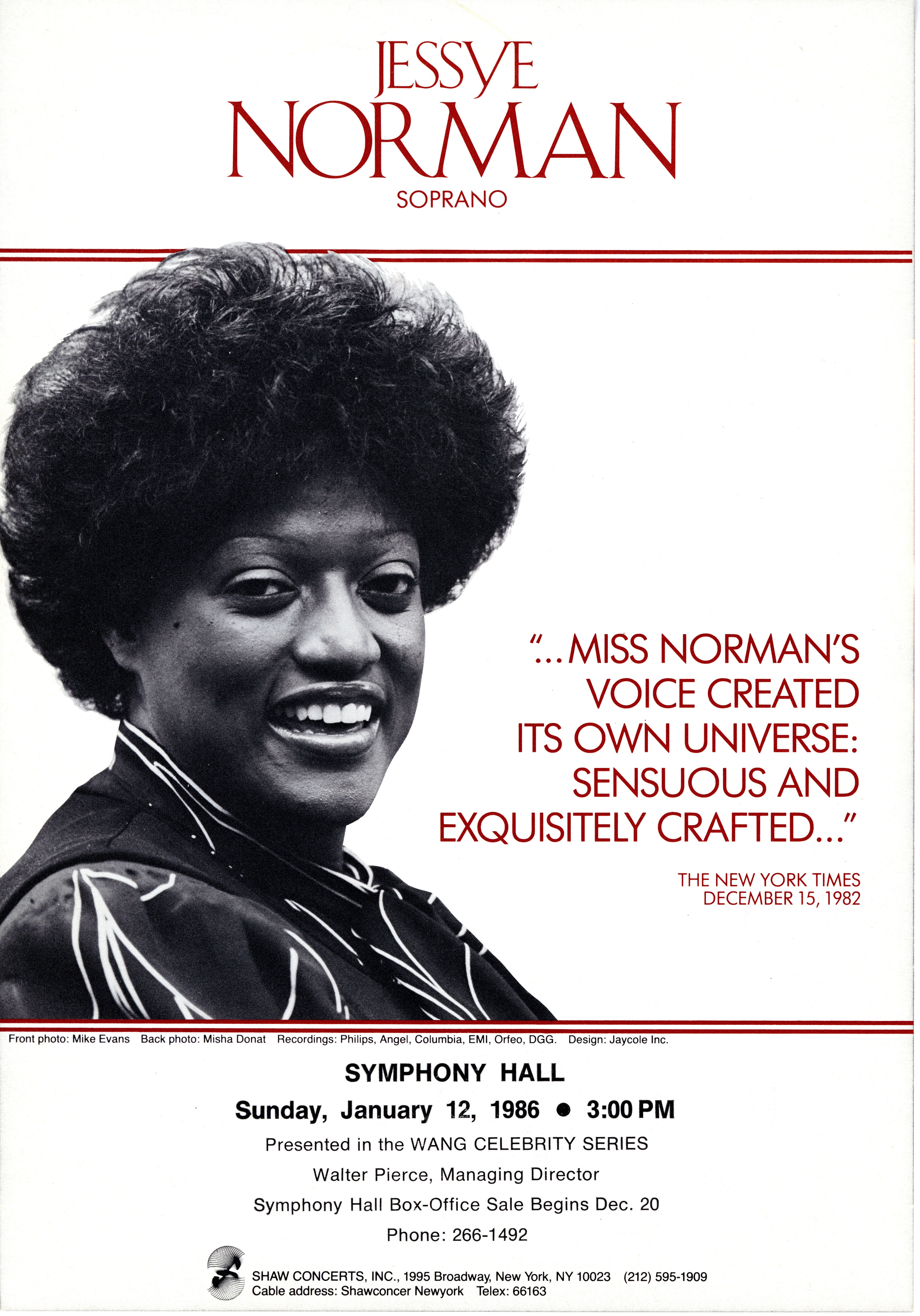
Flyer for a performance by Jessye Norman on January 12th, 1986.
Jessye Norman was an American opera soloist who performed in the late '80s and early '90s at Symphony Hall. Norman performed with the Paris Opera, Metropolitan Opera, two presidential inaugurations, and the 1996 Summer Olympics opening ceremonies in Atlanta. For her performance in 1986, the Globe reported that Norman “strode onstage yesterday afternoon in a magnificent silken cloudscape of a gown. And then she began to sing with the kind of voice that also spans the skies.” (Boston Globe, January 13, 1986).
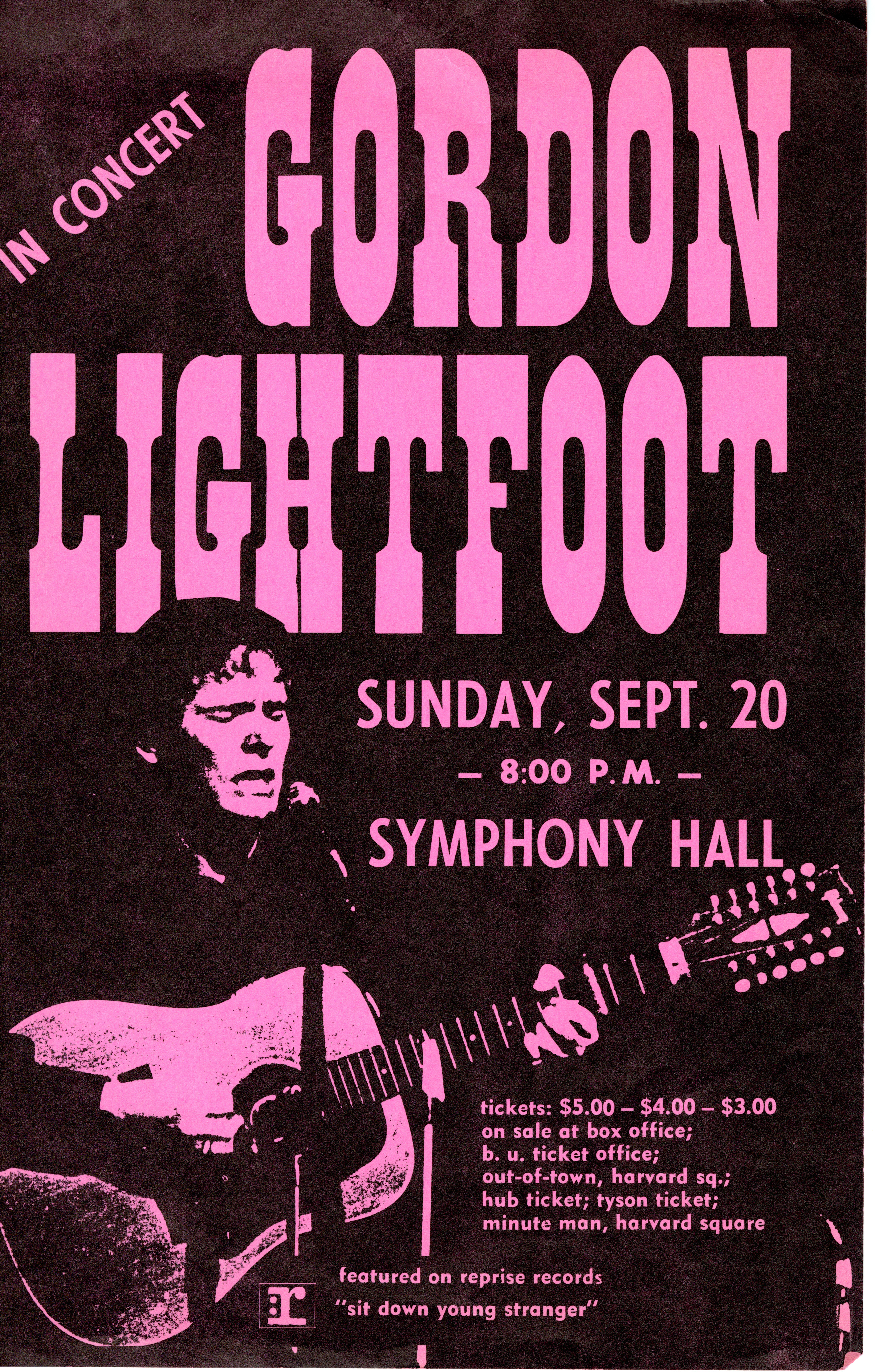
Flyer for a performance by Gordon Lightfoot on September 20th, 1970.
Gordon Lightfoot was a Canadian folk songwriter who was instrumental in defining the singer-songwriter period in the 1970s. Lightfoot gained recognition in the 1960s with many chart-topping hits including “Ribbon of Darkness.” Staying true to his folk style of music throughout this career he continued to perform and play until his death in 2023.
Films and Theater
Symphony Hall has hosted a wide array of films and theatrical performances since the Hall’s inception, ranging from the screening of King Vidor’s “Hallelujah!”, one of the first films to have an all-Black cast, to the groundbreaking production of Hamlet featuring Dame Judith Anderson in the title role.
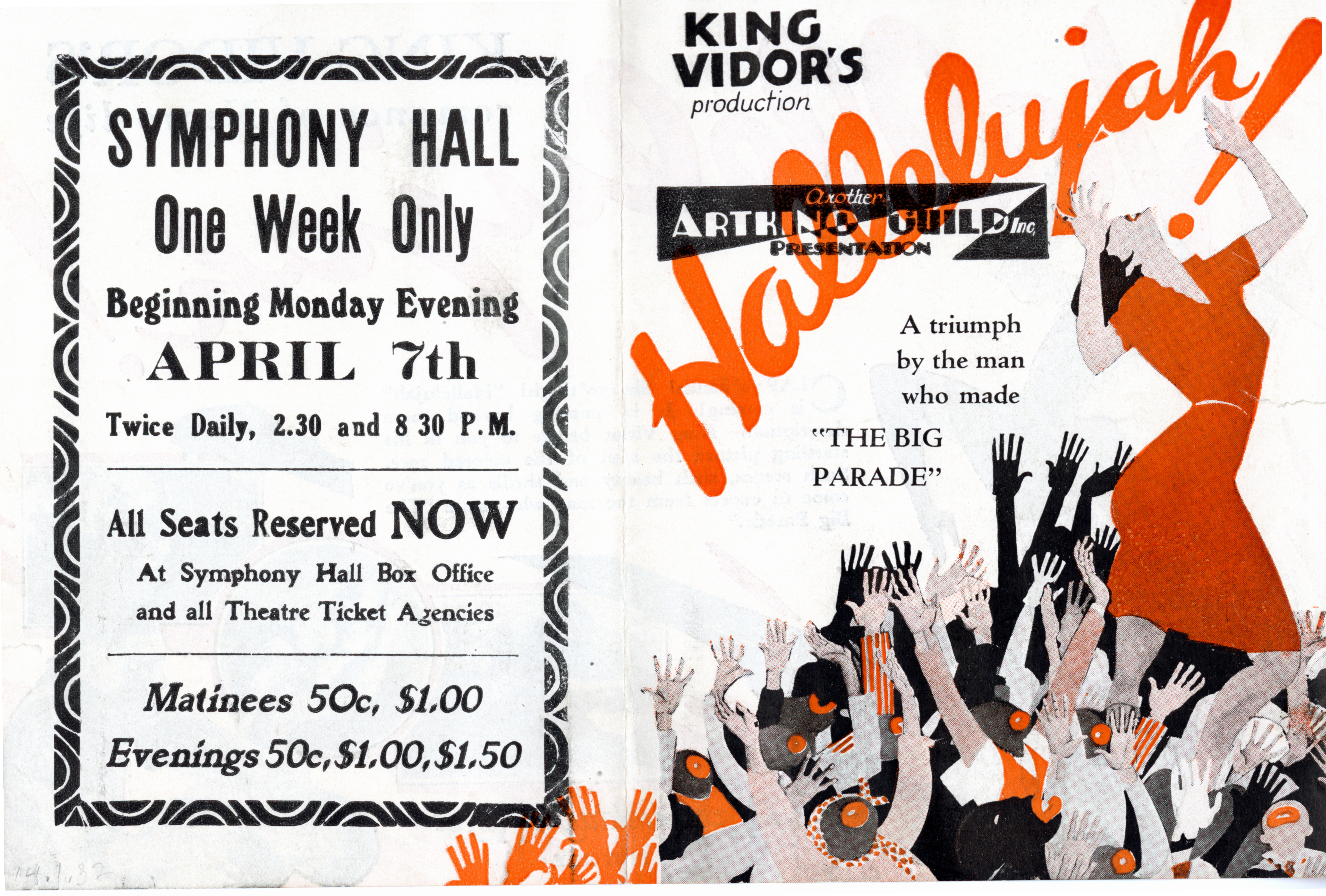
Flyer advertising a screening of King Vidor’s film “Hallelujah!” on April 7th, 1930.
Directed by King Vidor and starring Daniel L. Haynes and Nina Mae McKinney, “Hallelujah!” was one of the first films with an all-Black cast. Nominated for Best Director in 1930, Vidor aimed to portray a non-stereotyped depiction of Black life in the South based on his own experience. Facing resistance from studios, he even invested his own salary to make the film.
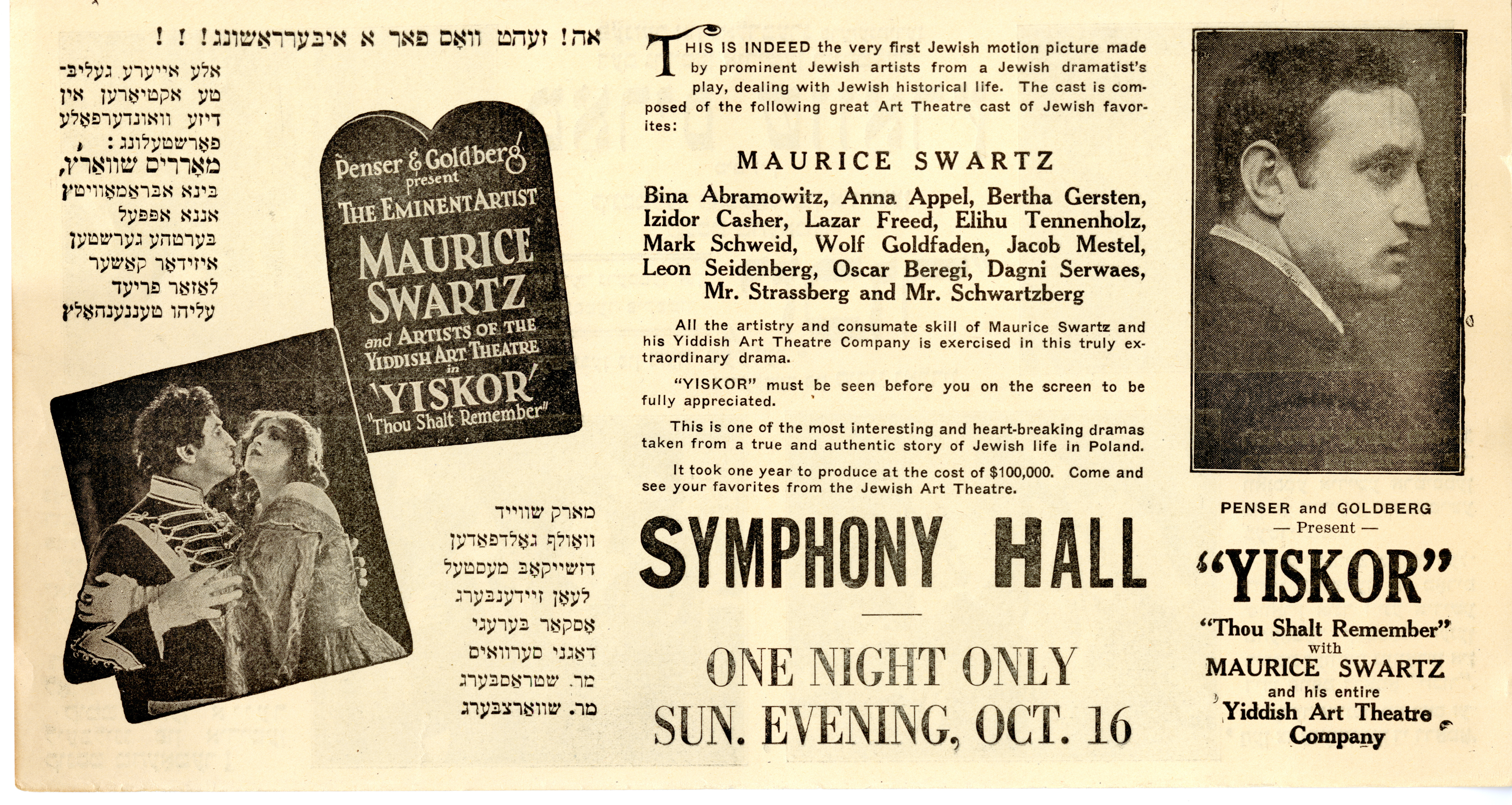
Flyer for a film screening of Yiskor “Thou Shalt Remember” by the Yiddish Art Theater Co. On October 16th, 1927.
Screened for only one night at the Hall, the film “Yiskor” was billed as the first Jewish motion picture made by prominent Jewish artists from a Jewish dramatist’s play dealing with Jewish historical life. The cast composed of Maurice Swartz and his Yiddish Art Theatre Company, was said to be “one of the most interesting and heart-breaking dramas” about Jewish life in Poland.
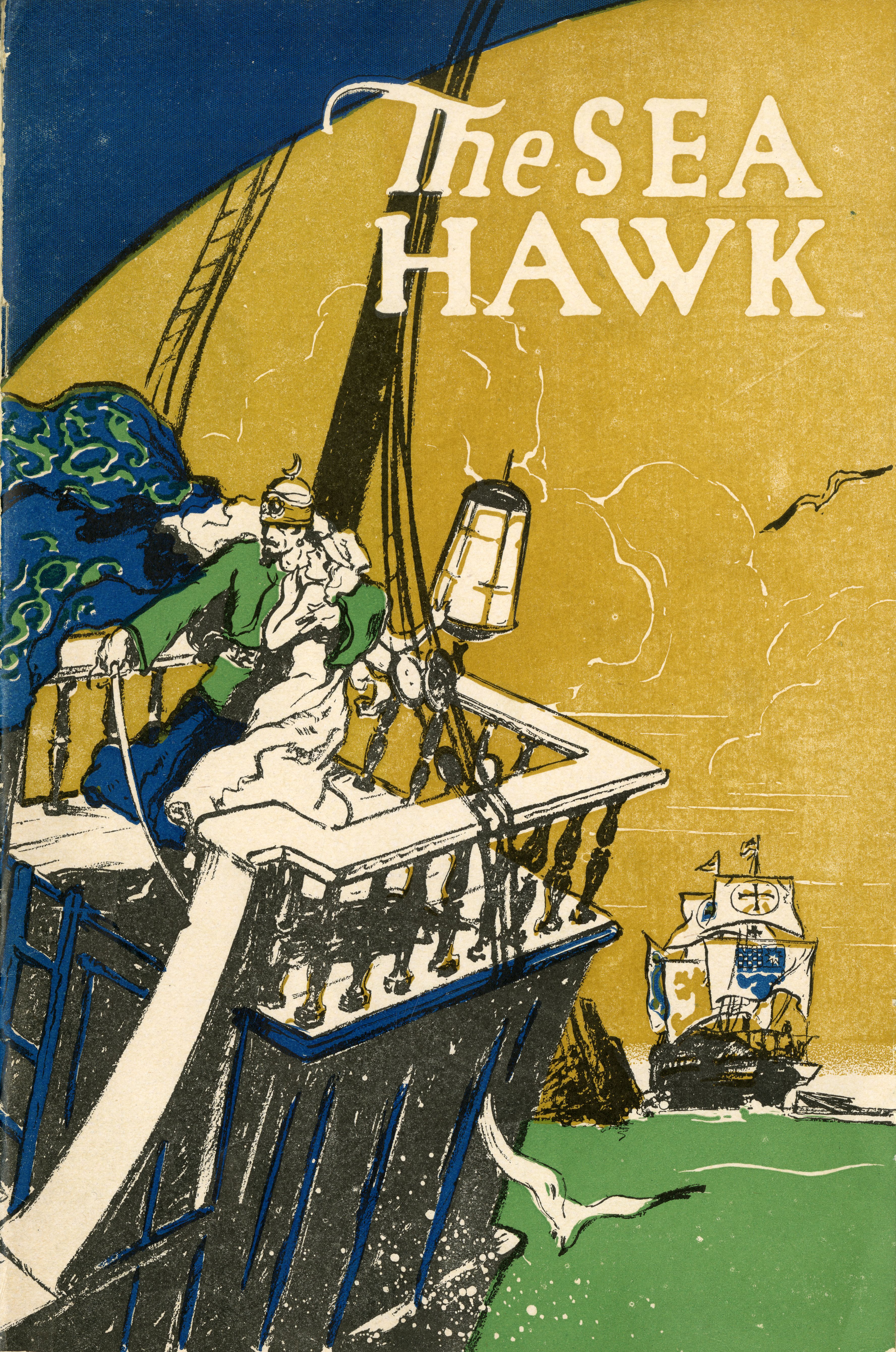
Poster for Frank Lloyd's The Sea Hawk, Symphony Hall, August 25, 1924.
An American silent adventure film produced by Frank Lloyd, “The Sea Hawk” was screened by Symphony Hall in 1924. The film tells the story of an English noble sold into slavery who escaped and turned himself into a pirate king. Lauded as “the best film entertainment that has been in Boston for many months” the film excited Symphony goers with its thrilling (albeit exoticized) adventures. (Boston Globe, August 26, 1924).
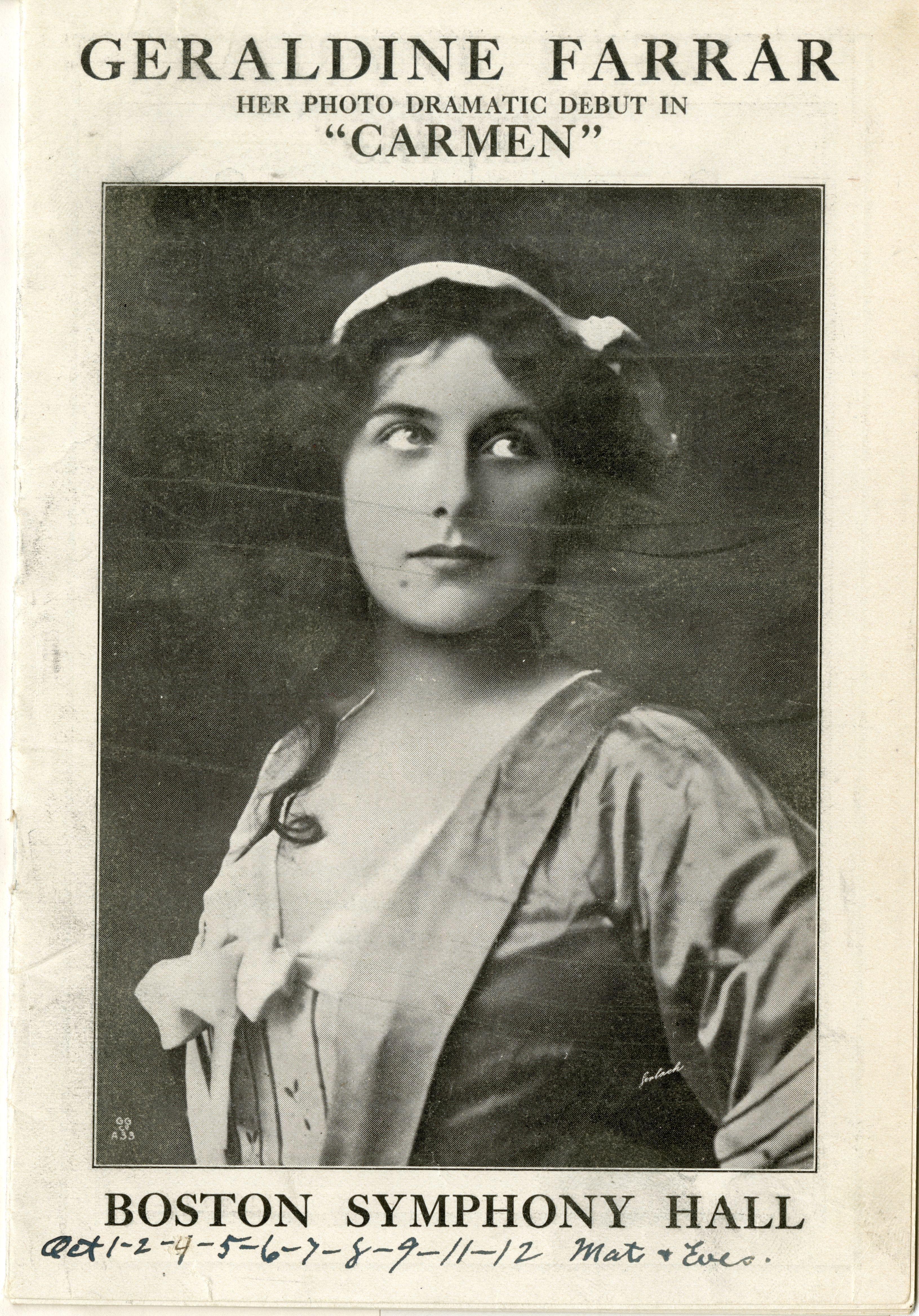
Program for premiere of the silent film version of Carmen, October 1-12, 1915.
The first viewing of the silent movie version of “Carmen” starring Geraldine Farrar screened at Symphony Hall on October 1st, 1915. An audience of nearly 3000 people gathered to watch the film. The Boston Globe reports that “nothing but praise was heard on every side” as to her acting. Miss Farrar’s presence at the event herself heightened the publicity of the event. (Boston Globe, October 2, 1915).
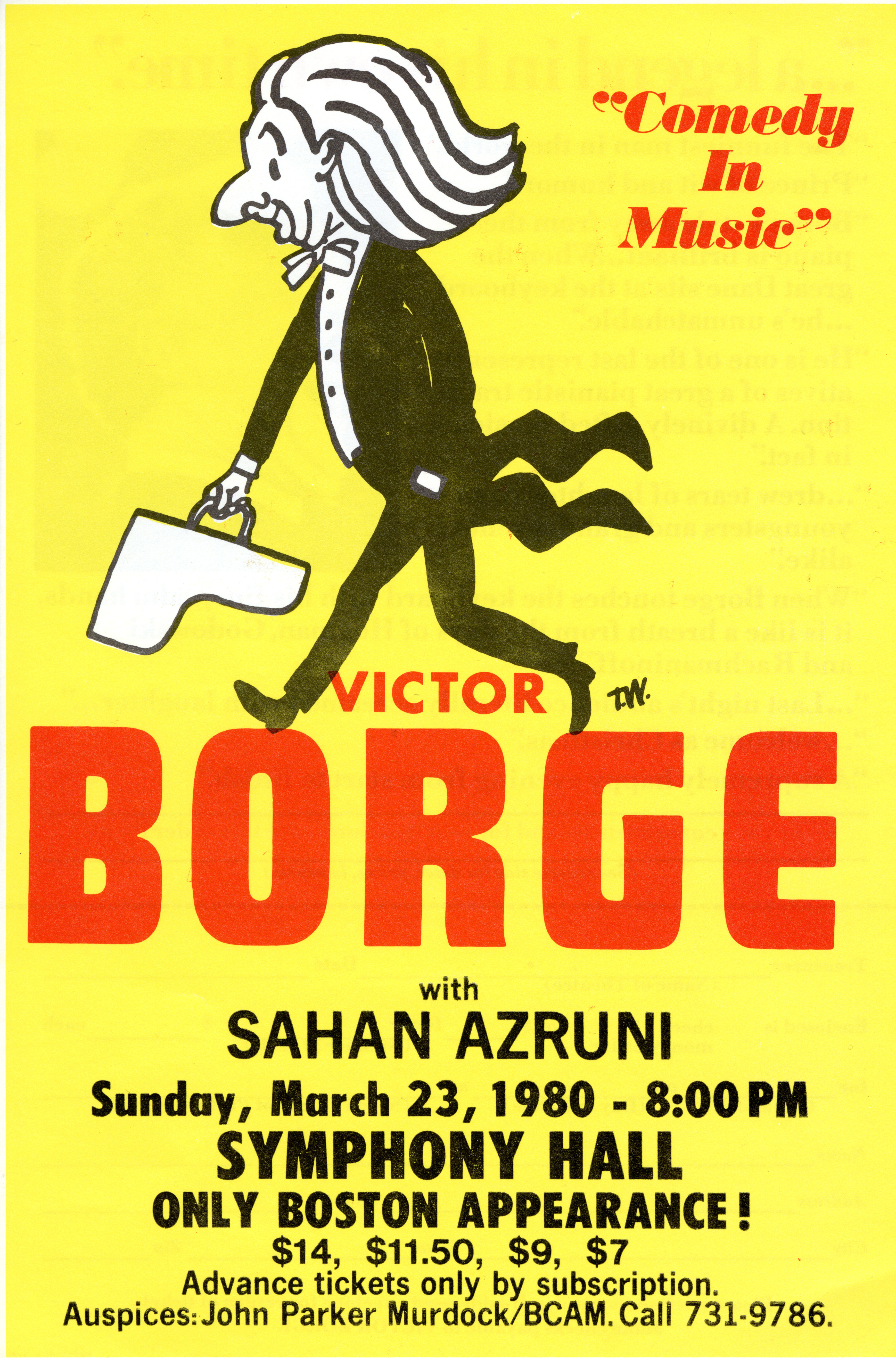
Flyer for a comedy performance by Victor Borge on March 23rd, 1980.
Victor Borge performed numerous times throughout the history of the Hall. Borge achieved popularity on the stage, radio, and television due to his blend of music and comedy. Borge made use of physical comedy and musicality during his routines, often misplaying the piano and falling off the bench. For his 1980 performance, the Globe commented that Borge “exhibits the kind of mastery of surprise, timing, and adaptability to any chance occurrence.” (Boston Globe, March 26, 1980).
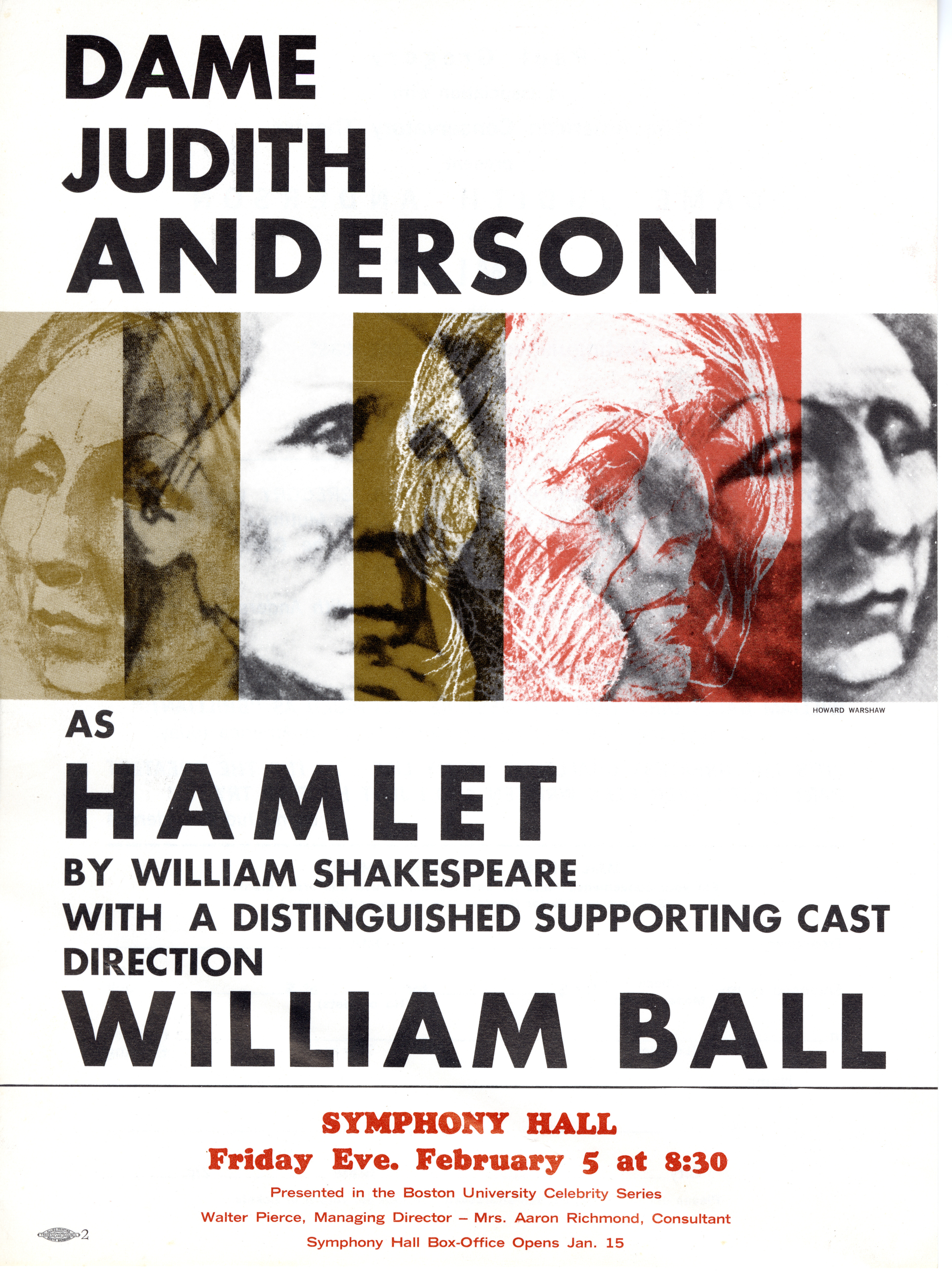
Flyer for a performance of Dame Judith Anderson in Hamlet on February 5th, 1971.
Dame Judith Anderson, a notable Australian actress, received two Emmy Awards and a Tony Award and a nomination for her role in Alfred Hitchcock’s film Rebecca (1940). In 1971 she fulfilled a long-held dream to play the role of Hamlet on the stage. Presented with minimalist staging and set, the production is seen as a notable event in theatrical history given the use of cross gender casting and the fact that Anderson was seventy-three at the time. While the production did not receive stellar reviews, it maintains its status as a boundary-pushing moment for the theater.
Dance Performances and Balls
Dance has occurred frequently in the Hall both on stage and off. From charity balls to celebratory dances, community organizations have filled the floor with twirling guests. On stage, performances by Uday Shankar (classical Indian dance), Anna Pavlova (classical ballet), Isadora Duncan (early modern dance), Jose Greco (flamenco), and the National Acrobats of Taiwan have brought a diversity of dance and movement to the Hall.
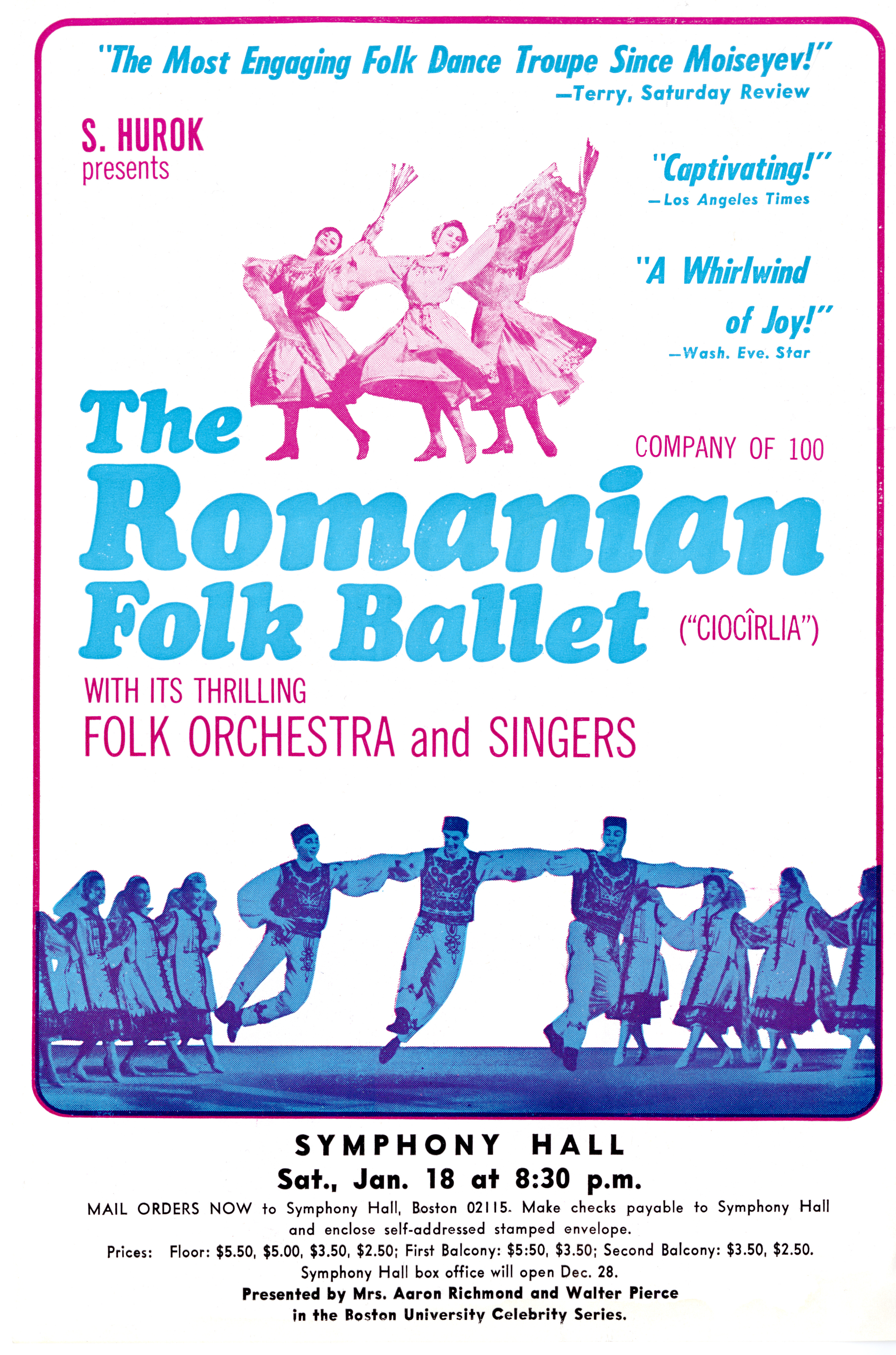
Flyer for a performance by the Romanian Folk Ballet on January 18th, 1969.
The company of 100 dancers, singers, and musicians gave a performance for one evening at Symphony Hall in 1969. Founded after World War II to preserve folk arts of the world, the company was created by an annual government-run competition. (Boston Globe, December 22, 1968)
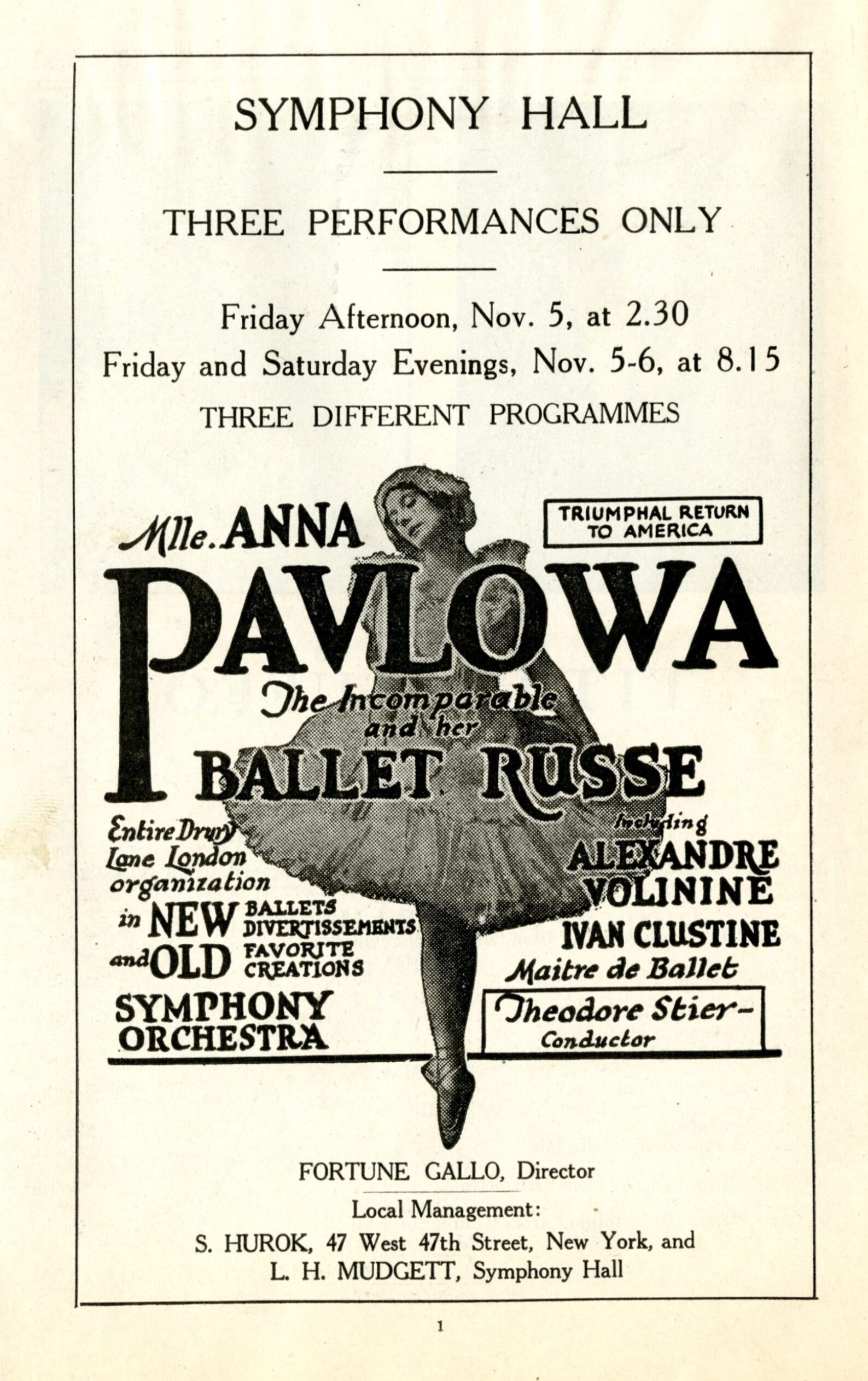
Flyer for the dance performance of Anna Pavlova and the Ballet Russe on November 6th, 1920.
Anna Pavlova, a Russian prima ballerina, performed to “enthusiastic applause” at Symphony Hall. Reviews praised her performance as a “revelation of grace and skill” and reported that spectators felt as though they were rediscovering “dance is a fine art akin to music and sculpture.” (Boston Globe, November 6, 1920).
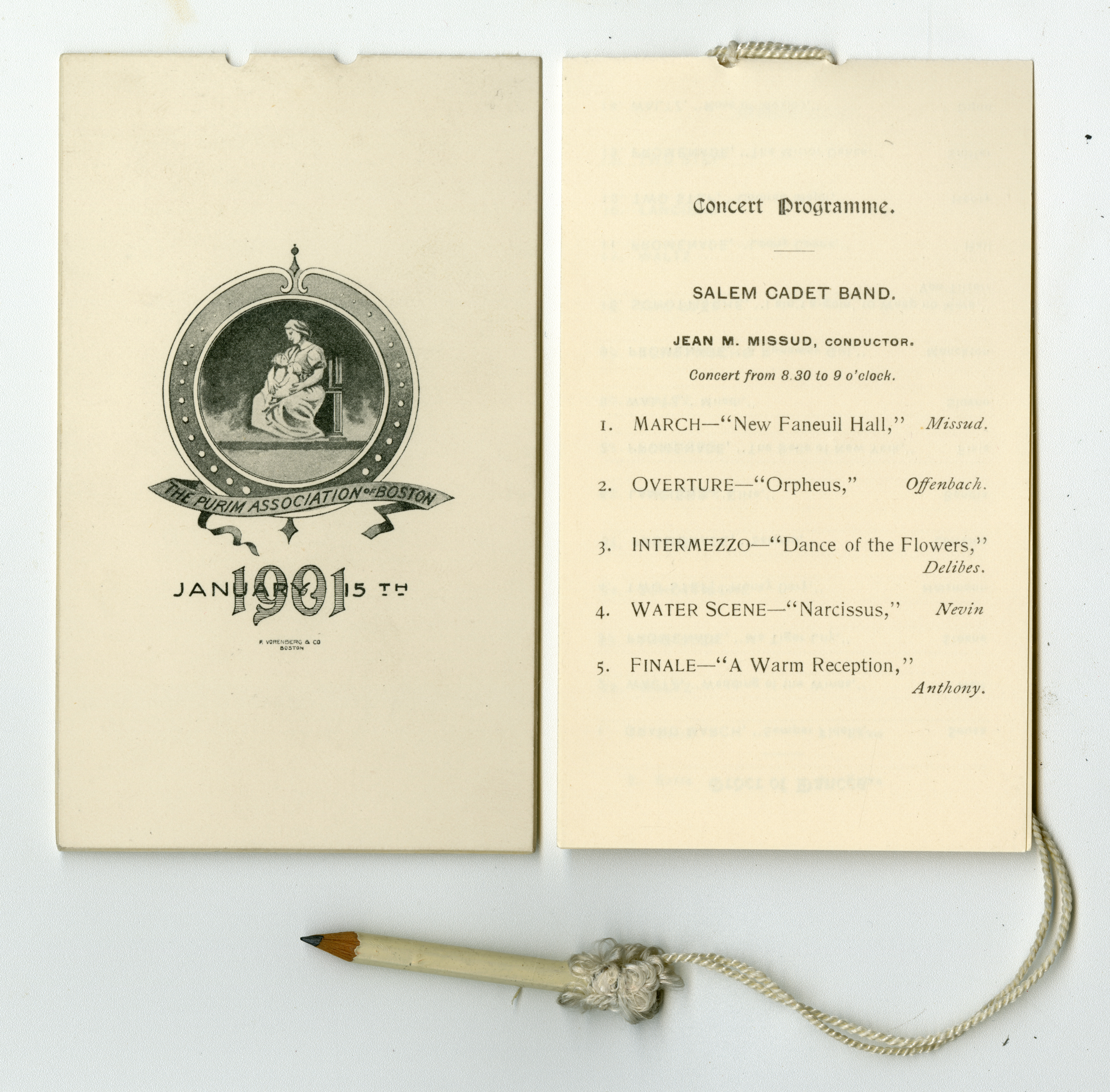
Program book and dance card for the Charity Ball of the Purim Association of Boston on January 15th, 1901.
Said to be one of the most important social events of the season, the charity ball held at Symphony Hall for the Purim Association brought together members of exclusive society circles. Raising money for the federation of Jewish charities in Boston, the event was among one of the first balls held in the Hall. (Boston Globe, January 16, 1901).
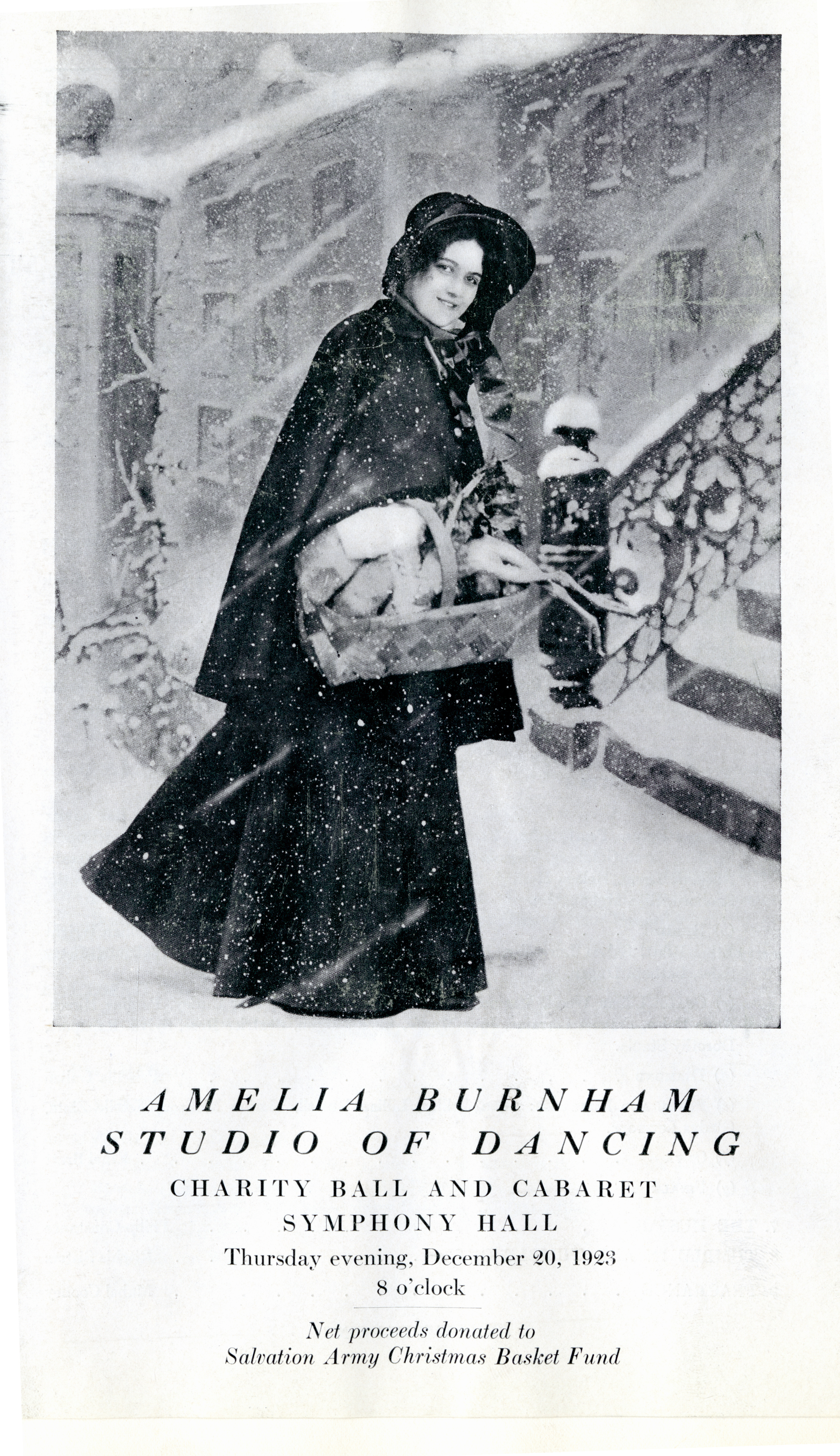
Flyer for a charity ball and cabaret by the Amelia Burnham School of Dancing on December 20th, 1923.
Raising money for the Salvation Army Christmas Basket Fund, the Amelia Burnham School of Dancing hosted a charity ball and cabaret at Symphony Hall in 1923. Vocal numbers, dances, and Christmas stories were given in the Hall as part of the programming. Members of the local community were among the entertainers including women from Hyde Park and Back Bay. (Boston Globe, December 21, 1923).
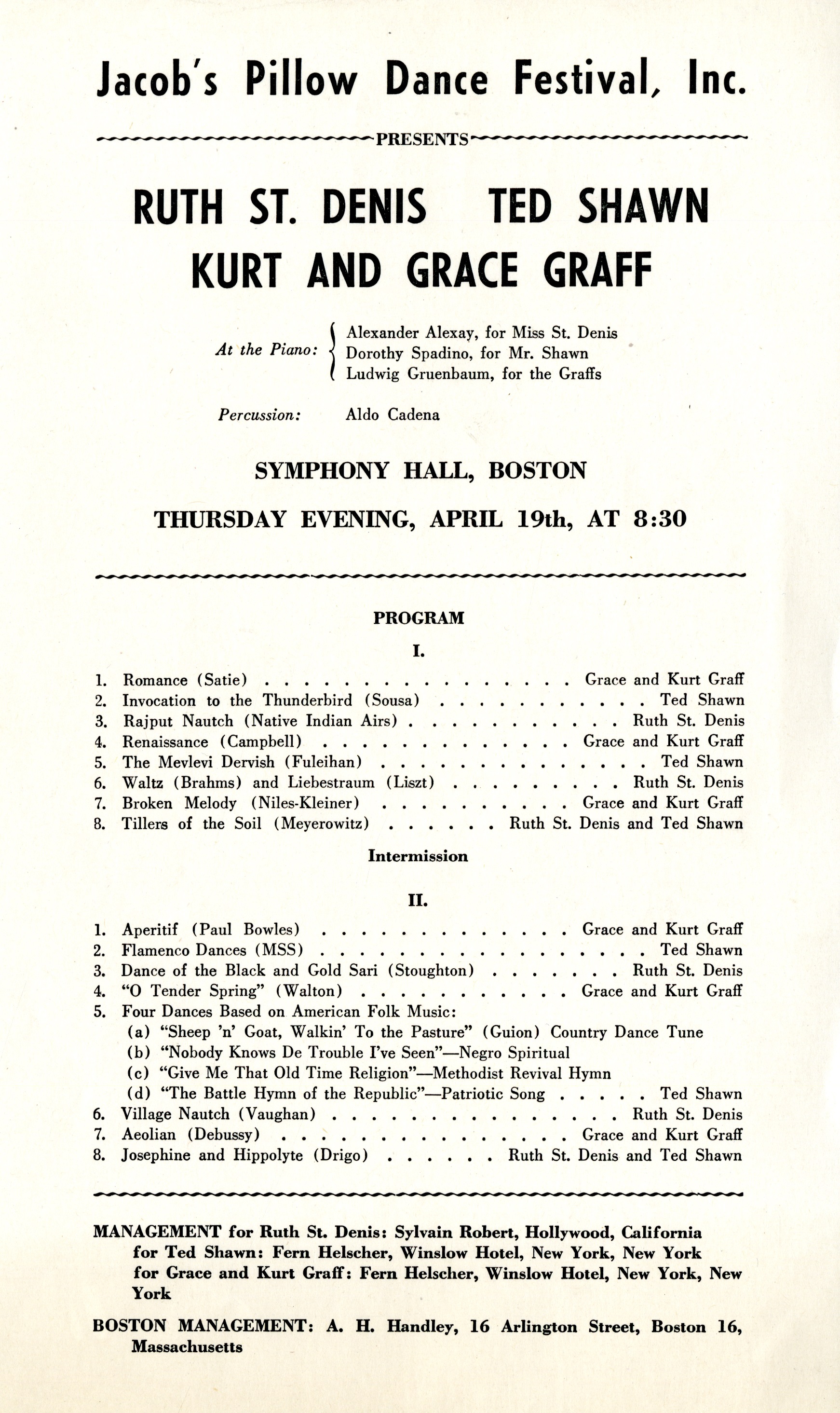
Program for appearance of Jacob’s Pillow dancers at Symphony Hall on April 19, 1945
Ted Shawn bought the Berkshires farm property Jacob’s Pillow shortly after separating from his wife, dancing and business partner Ruth St. Denis. His group of Men Dancers toured across the country throughout the 1930s. In the 1940s and beyond, Ruth St. Denis would make regular appearances with the Jacob’s Pillow dancers at Symphony Hall.
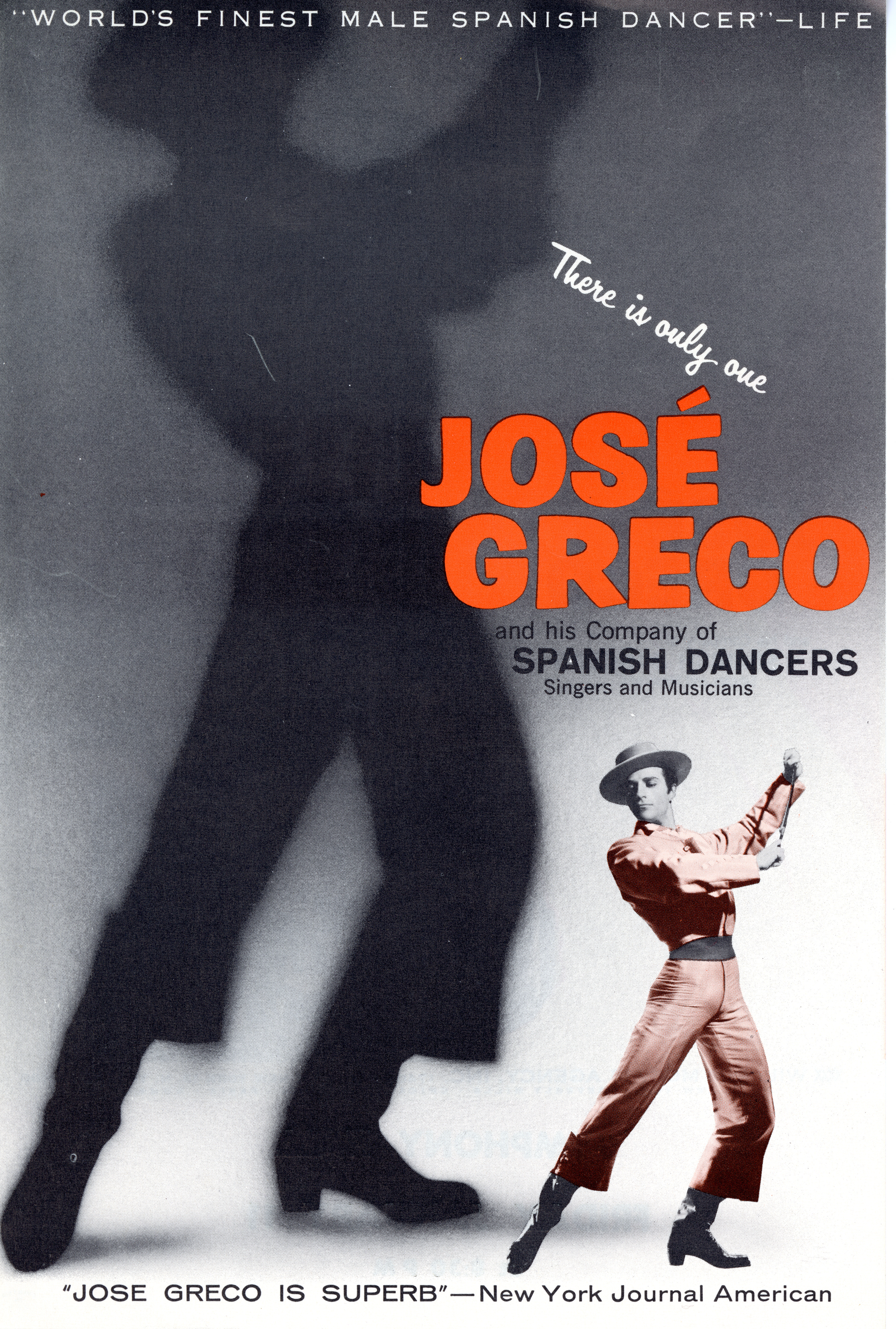
Flyer advertising Jose Greco and his Spanish Dancers.
Jose Greco and His Spanish Dancers performed numerous times at the Hall over the decades. An Italian-born American flamenco dancer and choreographer, Greco is most known for popularizing Spanish dance in the 1950s and 60s. A dynamic performer, his performances with the Spanish dancers were often well-received at the Hall.
Trade Shows and Exhibits
In the era before the Hynes Convention Center was completed in the 1960s, Symphony Hall from time to time served as a venue for trade shows, including automobile exhibits, fashion shows by Jordan Marsh (Boston’s first department store), and book fairs. The Hall also hosted art exhibits, including the work of Winslow Homer and contemporary Irish painting.
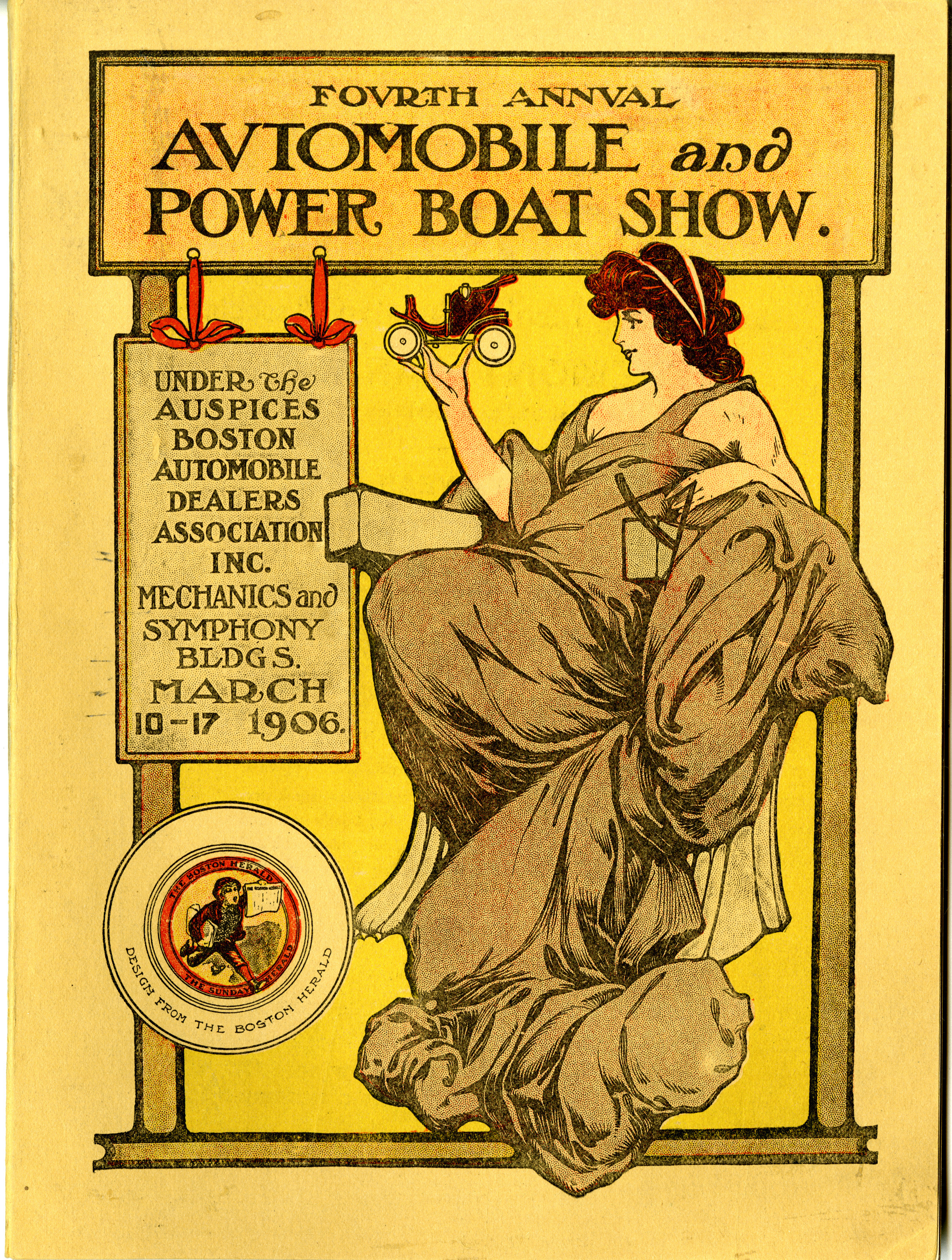
Flyer for the Boston Automobile Dealer’s Association 4th Annual Show on March 10th-17th, 1906.
Part of the Boston Dealer’s Association annual show, in 1906 the association put on an exhibition of automobiles and power boats at Symphony Hall and nearby Mechanics Hall. With 300 types of cars shown and 350 total exhibitors, the event was one of the biggest that the association had put on. (Boston Globe, March 11, 1906).
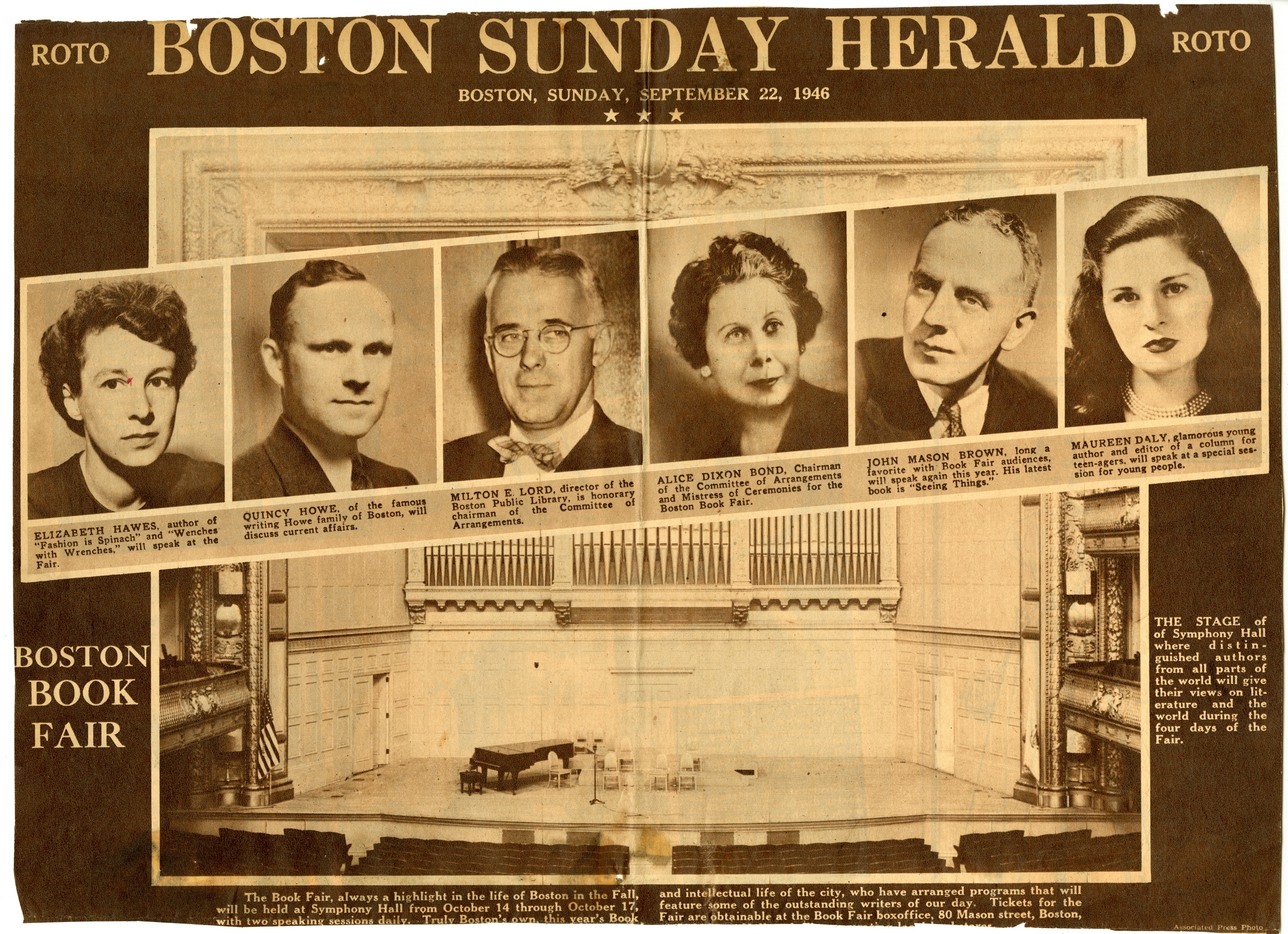
Newspaper clipping advertising the Boston Herald Book Fair of New England on September 22nd, 1946.
In 1946, the Hall hosted a book fair through the Boston Herald. Run by a committee made up of leaders in the civic and intellectual life of the city, the fair featured current popular writers in various speaker sessions. Authors spoke on the writing process and their views on literature in the world from the stage of the Hall, which held three of the Herald’s book fairs in the 1940s.
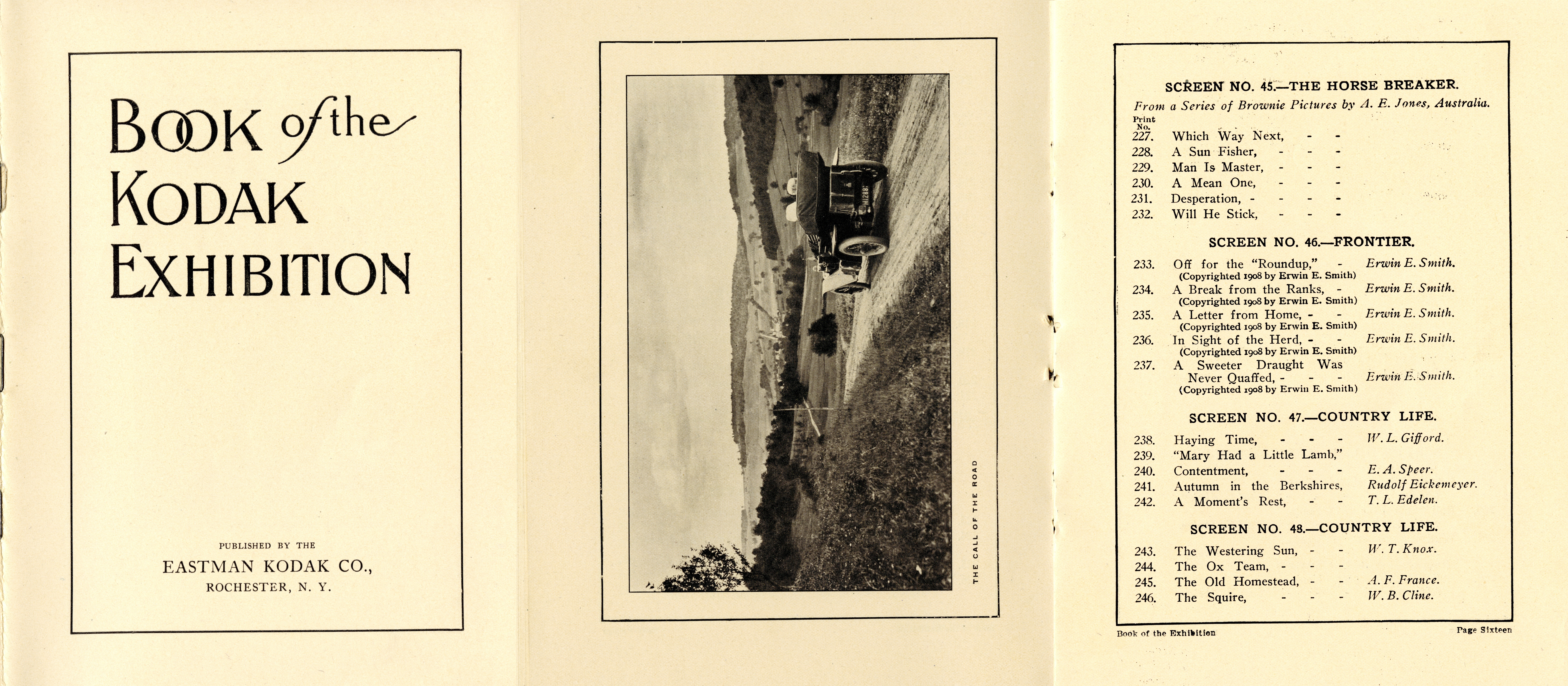
Exhibit book for Kodak Exhibition on December 8th, 1912.
In 1912 Kodak displayed an exhibition of photographs at the hall with the intent to focus on the simplicity of photograph meant to capture daily life. The handheld camera, only invented by Kodak in 1888, was still a relatively new invention. Advertising the appeal of “Kodakery” the exhibition emphasizes how photography of the everyday appeals because it enables anyone to participate without special training. Exhibits like those done by Kodak highlight Symphony Hall’s connection to innovative and new technology.
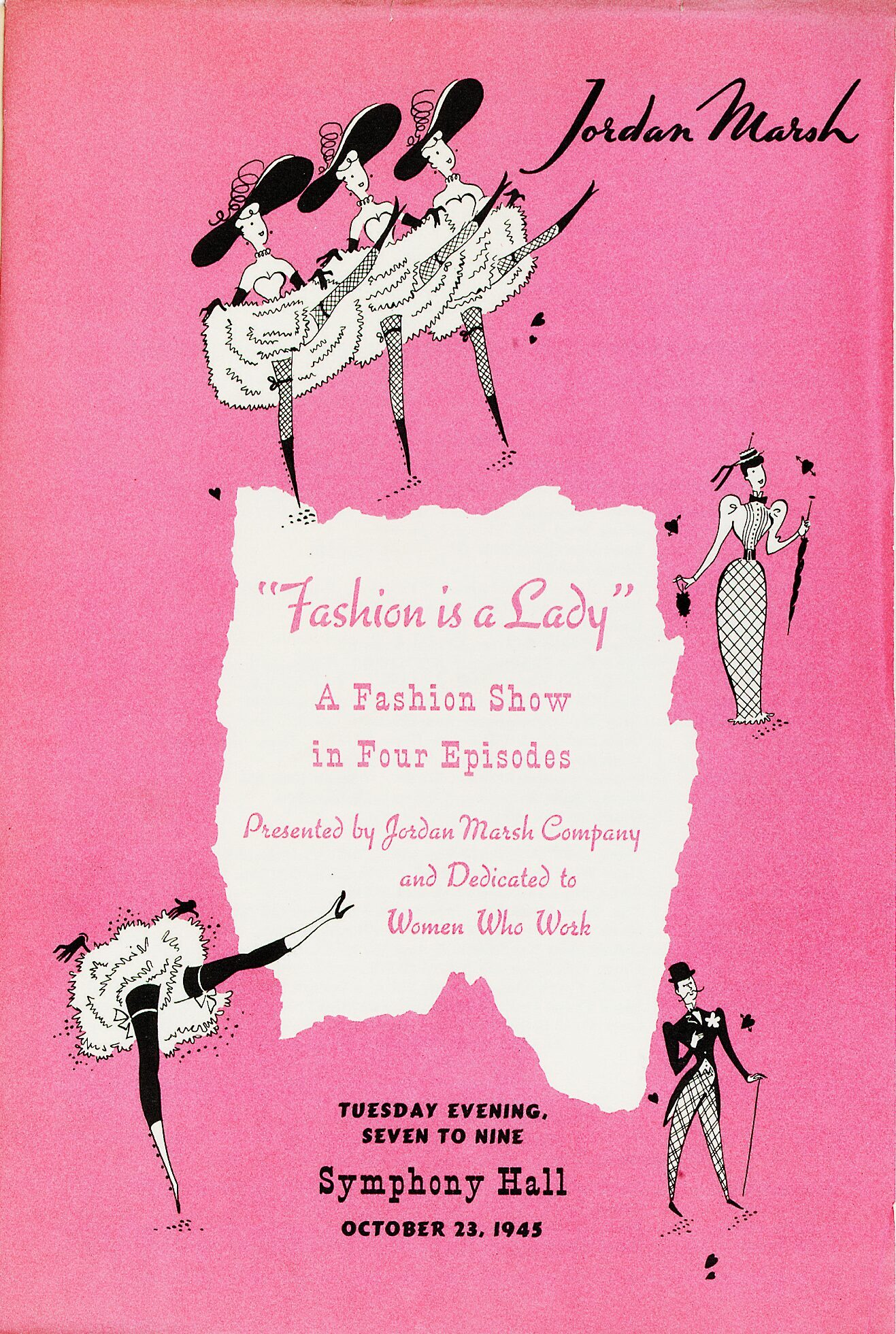
Program for Jordan Marsh Fashion Show “Fashion is a Lady” on October 23rd, 1945.
Founded in 1841 and a major player in Boston’s retail scene, Jordan Marsh department stores were a prominent New England-based chain. In 1945, 2000 women attended the fashion show from 17 of Boston’s leading business and industrial organizations. Dedicated to women who work, the event was part of a series of lectures for businesswomen. (Boston Globe, October 24, 1945)
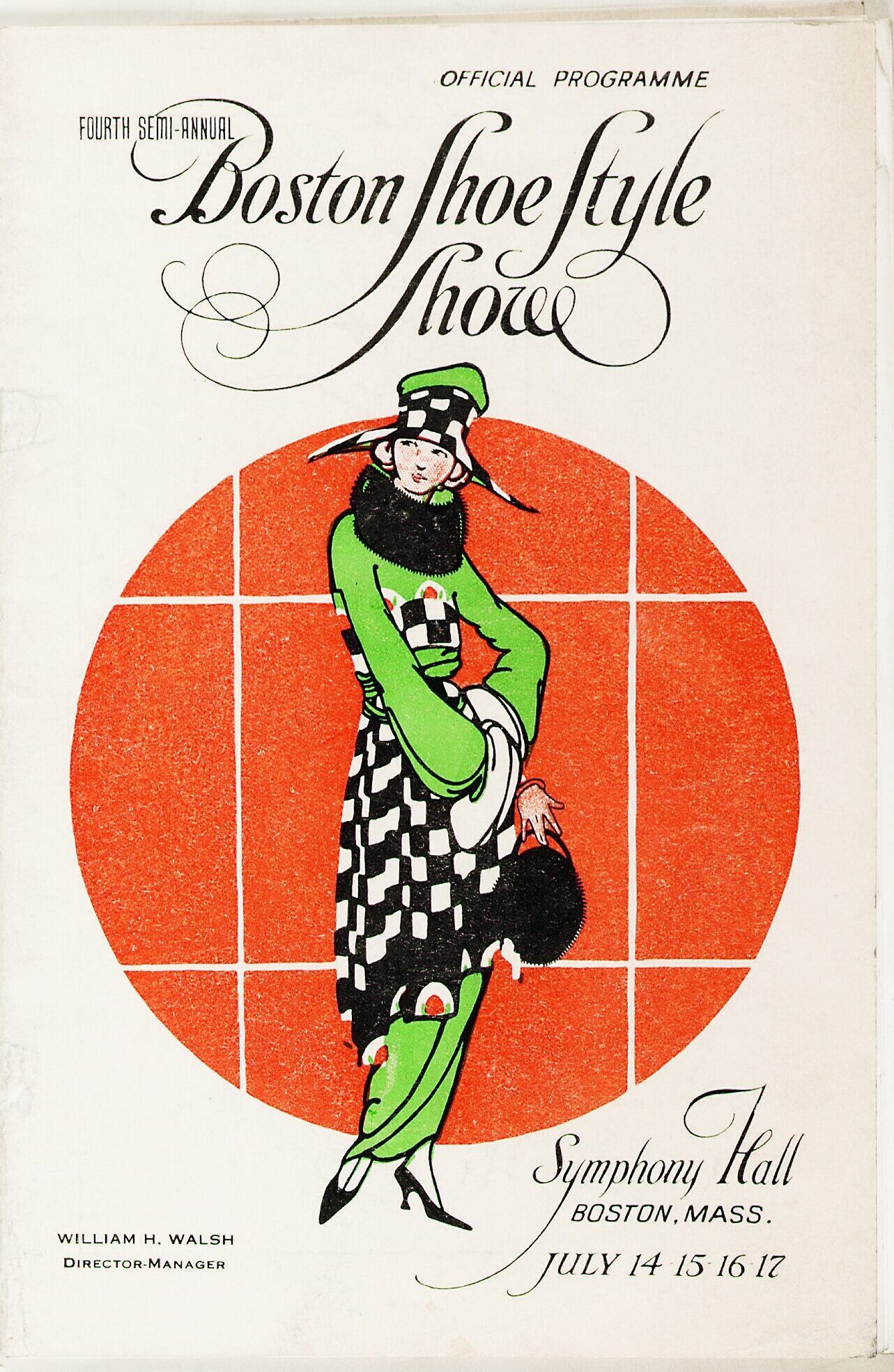
Program for the Boston Shoe Style Show on July 14th, 1919.
Thomas F. Anderson of the New England Shoe and Leather Association opened the Boston Shoe Style Show in 1919 stating “Every woman in Boston ought to be a walking demonstration of shoe styles and serviceability.” Buyers from all over the country made the rounds of the booths and over 30 women displayed shoe models on a runway decorated with roses. (Boston Globe, July 15, 1919)
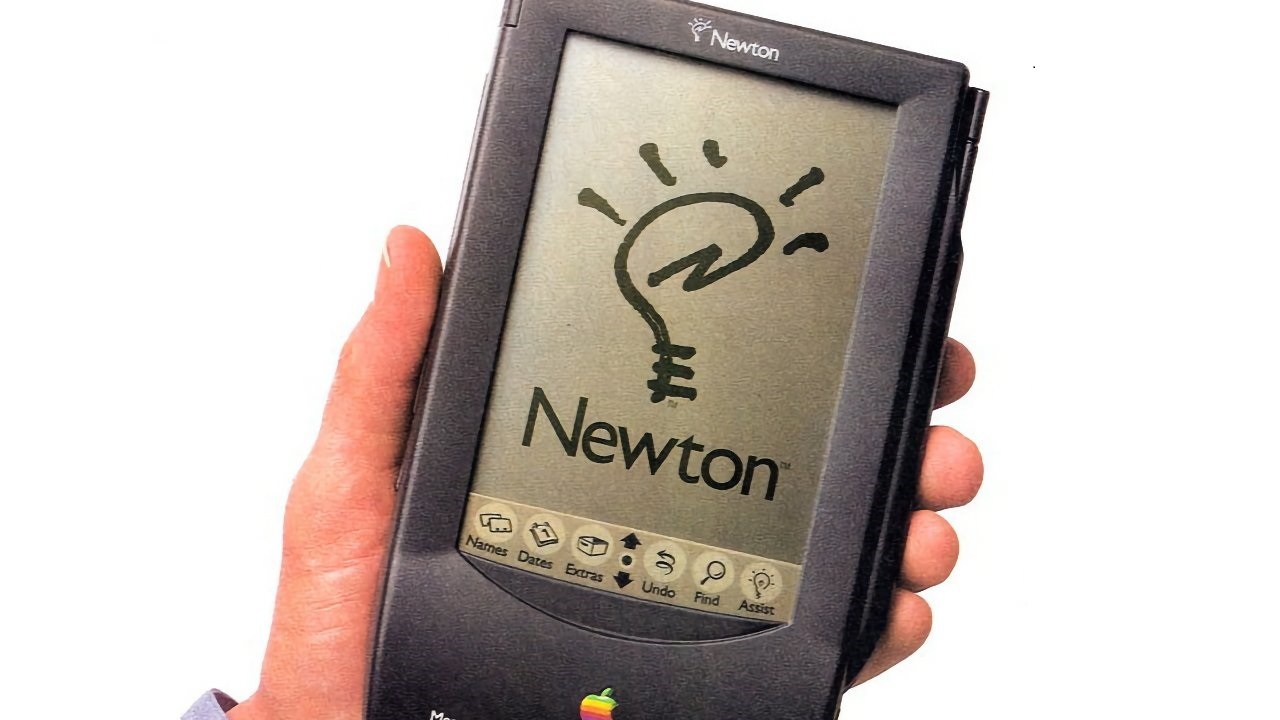
Image of the Newton MessagePad released on August 2nd, 1993. Photographer unknown.
On August 2nd, 1993, Apple launched the model of the Newton MessagePad on the stage of Symphony Hall. During this precursory event to MacWorld (which started the following day at the World Trade Center and Bayside Expo Center), Apple presented how the Newton would be used in real-life situations.
Political Events and Themes
Throughout its history, Symphony Hall has provided a platform for a wide variety of political events and discourse. Democrats and Republicans have used the Hall for debates, conventions, rallies, inaugurations, and state of the city addresses. Debates and lectures have covered topics ranging from women’s suffrage and Irish Republican activism to Armenian genocide and the atomic bomb.
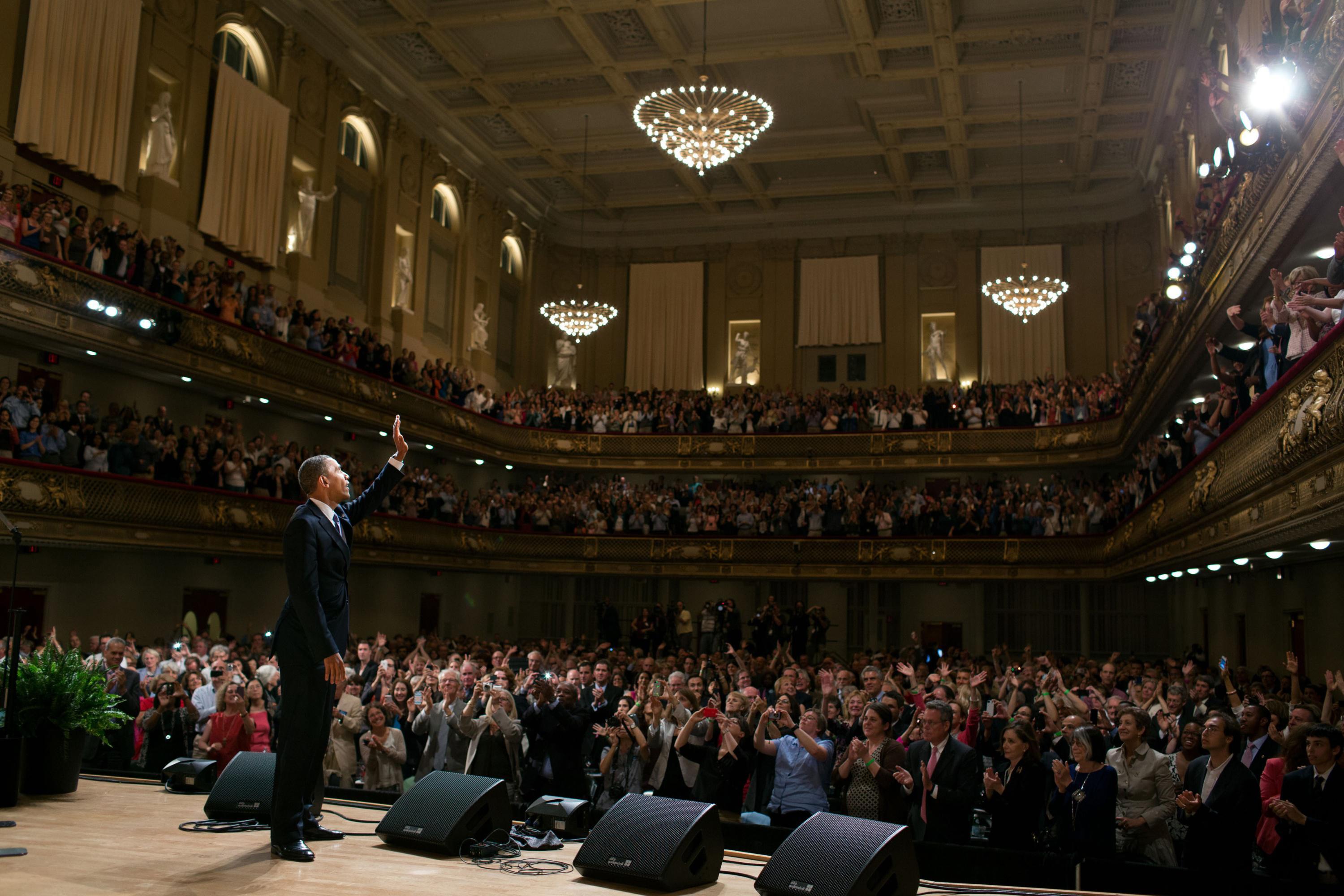
Photo of President Barack Obama speaking at a fundraiser for his re-election on June 25th, 2012. Photograph via Everett Collection.
Capping off a fundraising trip to Boston as part of his re-election campaign against Senator Mitt Romney in 2012, the former President spoke before 1,600 supporters at the Hall on health care, Wall Street reform, and affordable higher education. (WBUR, June 26, 2012).
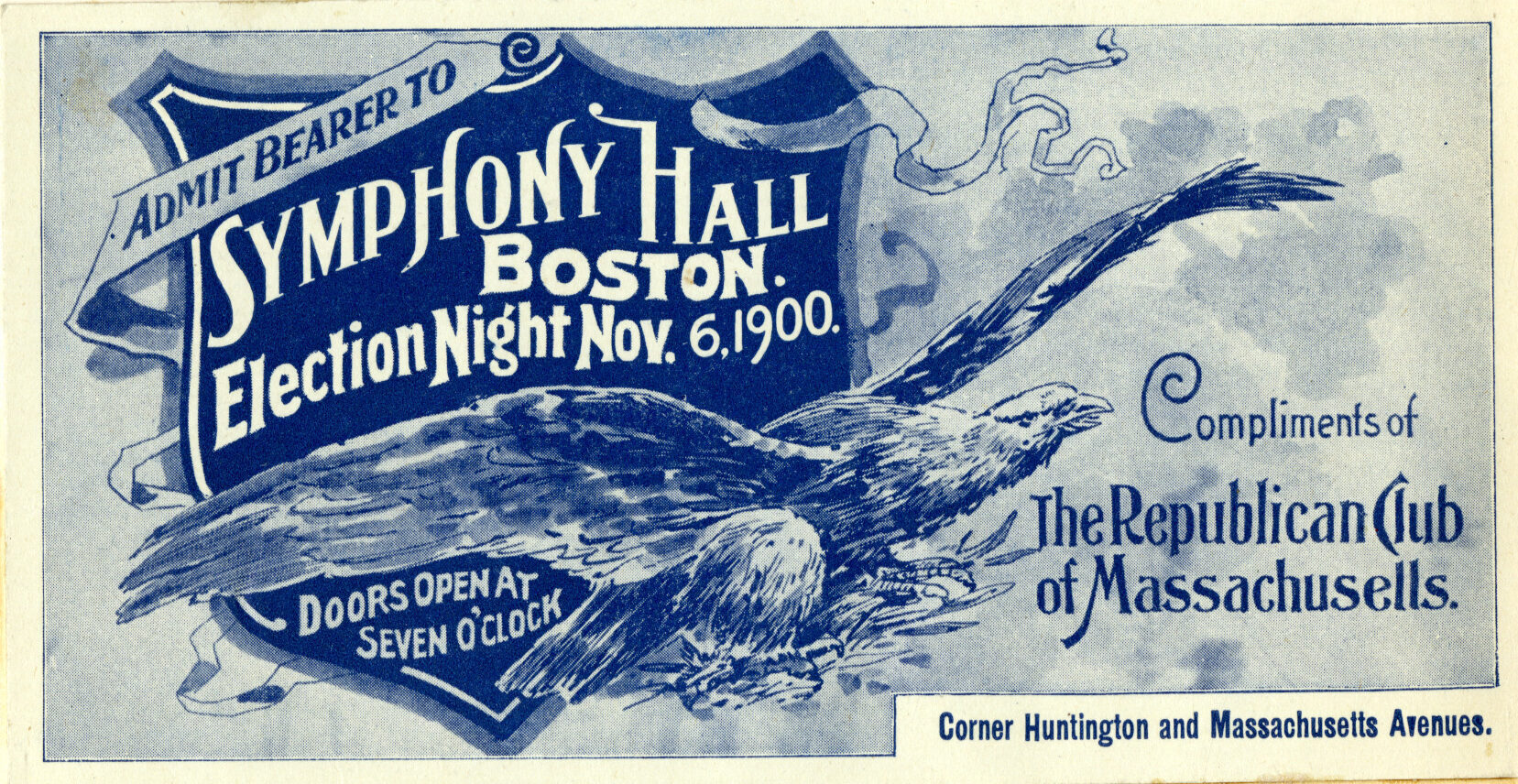
Flyer for the Republican Club’s Election Night Event on November 6th, 1900.
The Republican Club hosted an Election Night event in the brand-new Hall with nearly 3000 men and women in attendance. Eventgoers watched the returns of the election as they were flashed from a stereopticon, a popular machine for projection in the early twentieth century. (Boston Globe, November 7, 1900).
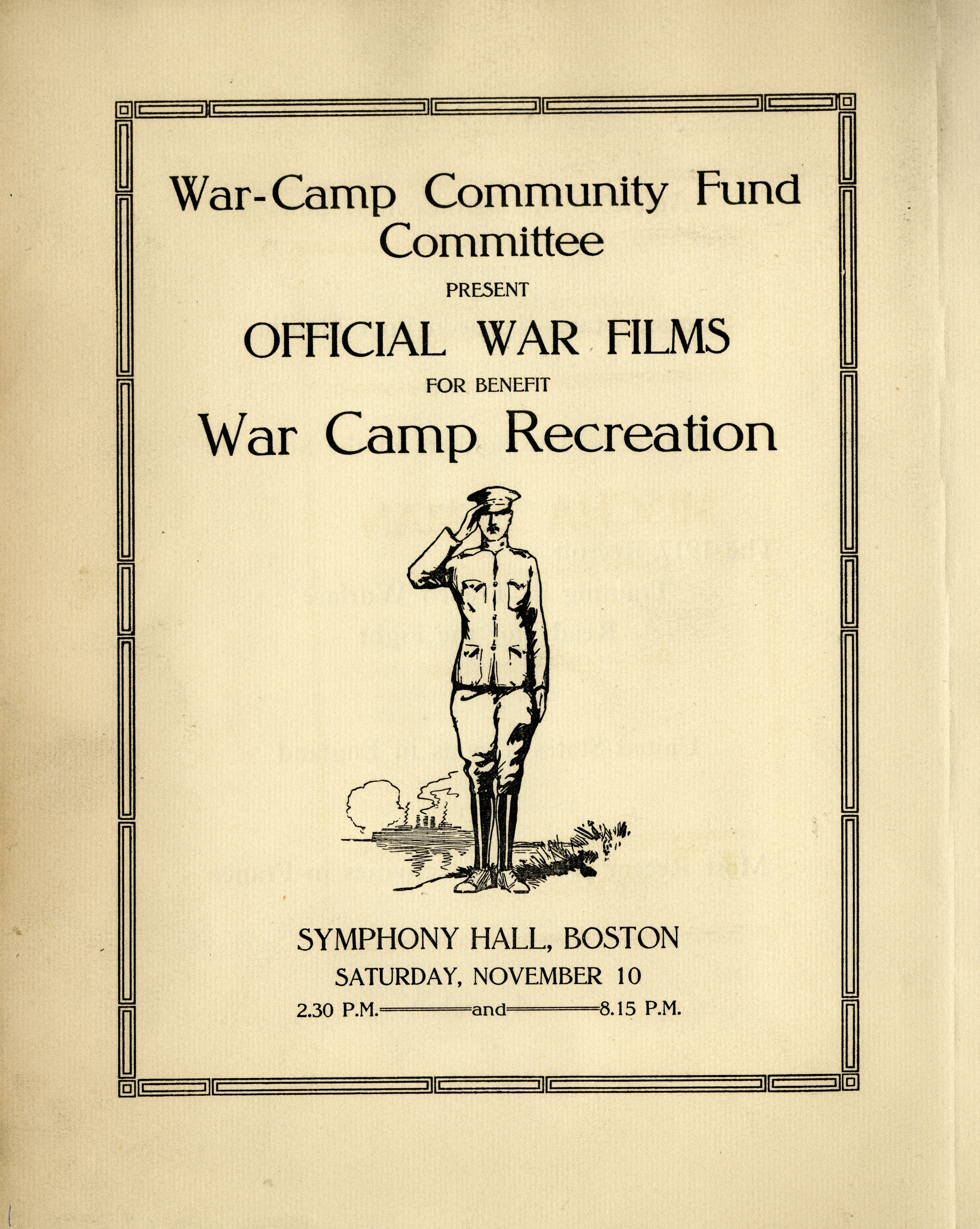
Program for World War I propaganda films shown in Symphony Hall, November 10, 1917.
Part of a series of fundraiser events to raise money for troops fighting in World War I, Symphony Hall hosted screenings for a series of war movies in November 1917. The films showed methods of training soldiers, marines, and sailors. Occurring alongside other rallies throughout Boston such as the State Fish Pier, the event was part of a broader effort to encourage people to donate to the war effort. (Boston Globe, November 10, 1917).
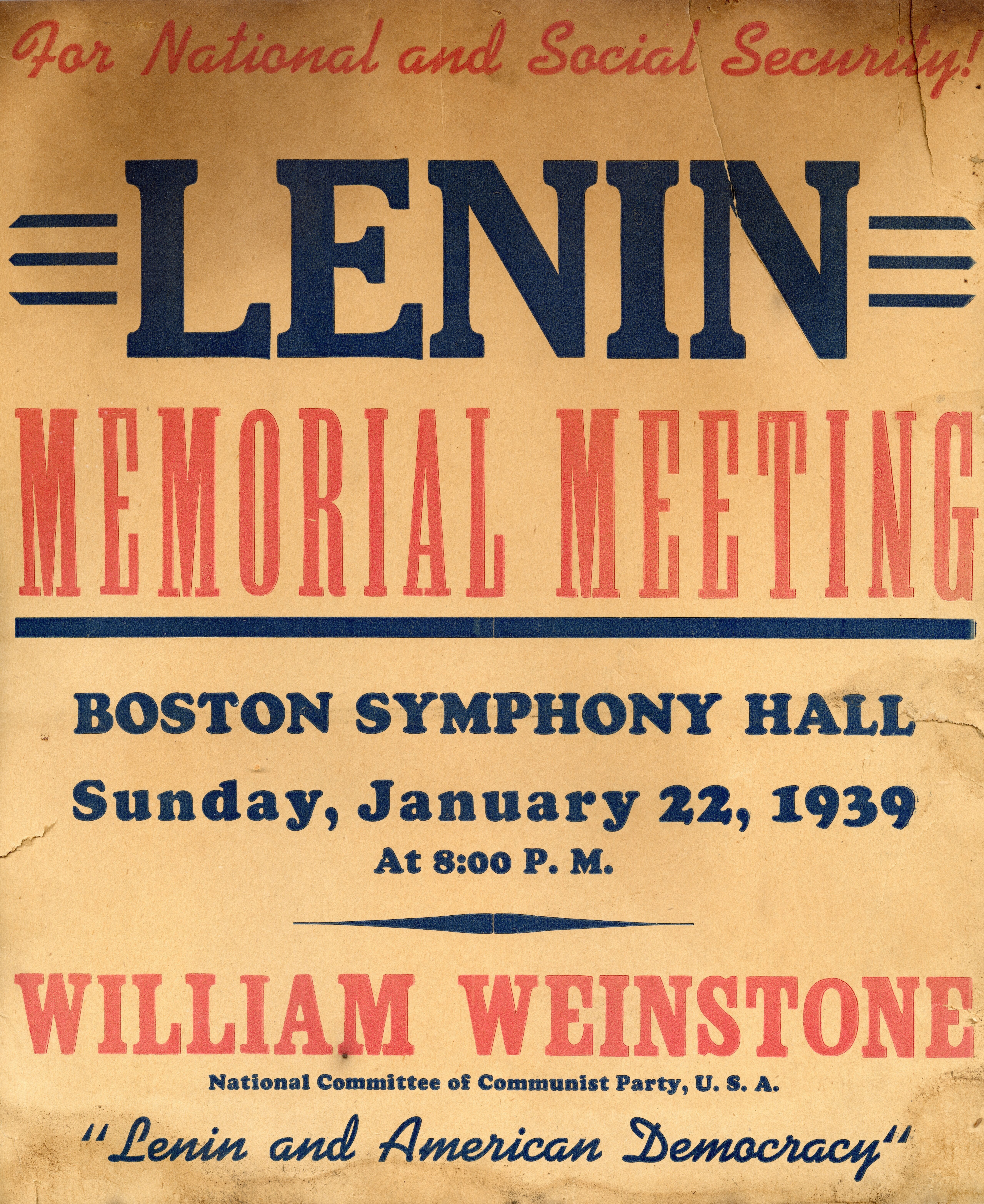
Poster for a Lenin Memorial Meeting on January 22nd, 1939.
Under the auspices of the Communist Party of Massachusetts, a Lenin Memorial Meeting was held at Symphony Hall in January 1939. William Weinstone, the Executive Secretary of the unified Communist Party of America, gave a speech titled “Lenin and American Democracy.”
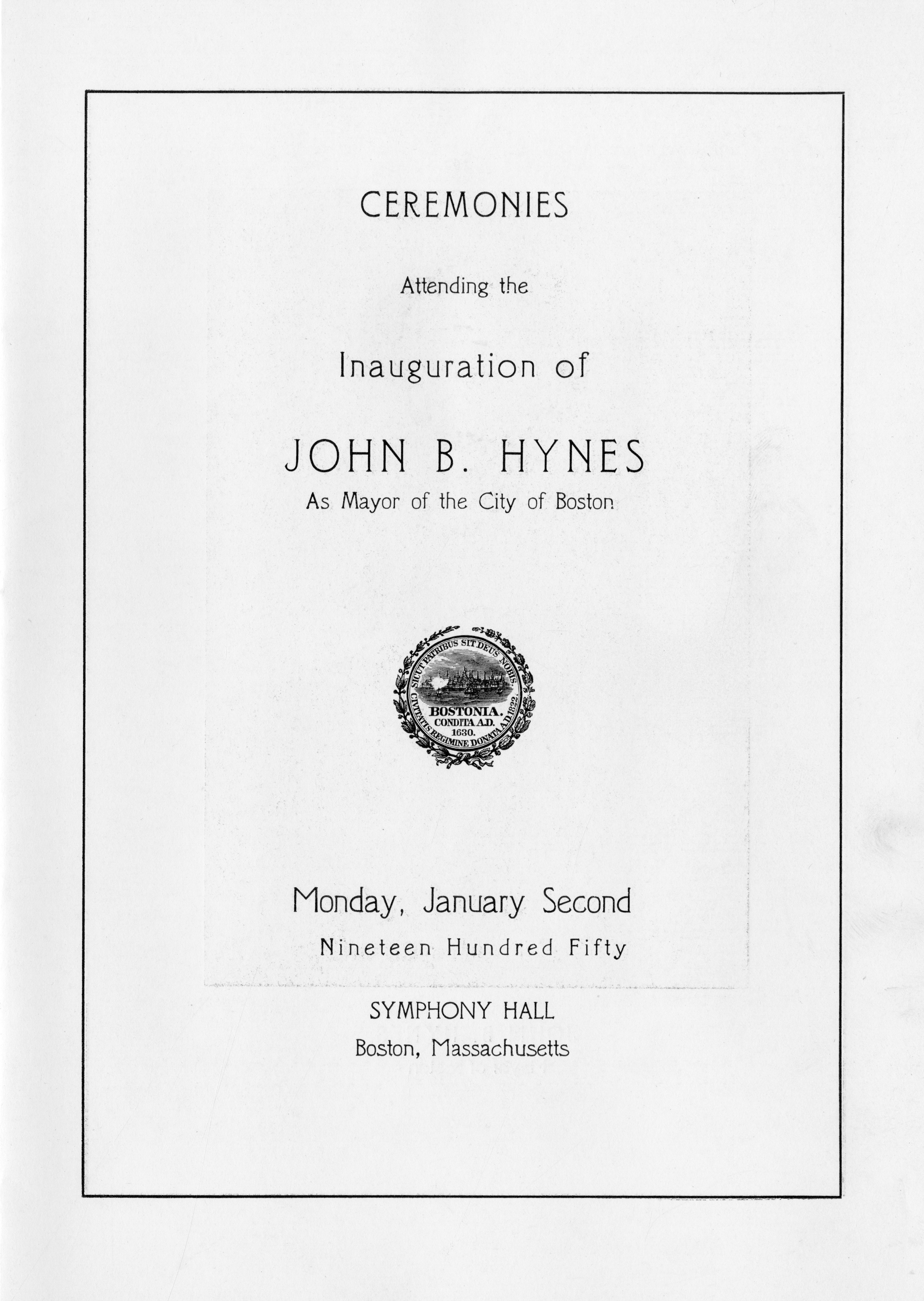
Program book for the inauguration of John B. Hynes as mayor on January 2nd, 1950.
John B. Hynes was sworn in for his first term as mayor in January 1950. He served as mayor from 1950 to 1960, the longest continuous period in that office in Boston’s history up to that point. In his remarks made at Symphony Hall, he stated that he was “warmed and heartened by the knowledge that great opportunities have been opened to me by the people of Boston—opportunities for real public service to our city and its citizens.” (Boston Globe, January 3, 1950).
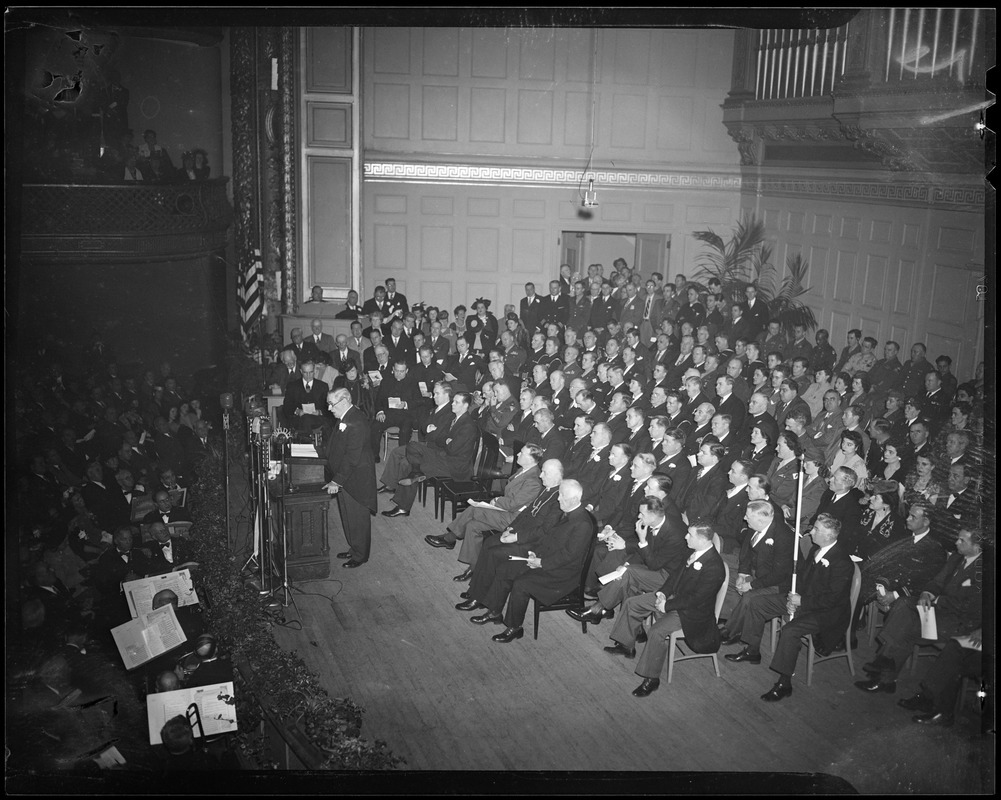
Image of James M. Curley inaugurated as the Mayor of Boston on January 7th, 1946. Photographer unknown.
On January 7th, 1946, James M. Curley was sworn in as the 52nd mayor of Boston. Having previously served another three non-consecutive terms, he was a political regular in the city of Boston. Despite frequent accusations of corruption including a five-month stint in federal prison in 1947 due to mail fraud, he was known for his controversial style of governing and was popular among Irish American voters.

Program for a performance of The Capitol Steps, a musical political satire on February 3rd, 1995.
The Capitol Steps, a “politically correct, hygienic, bipartisan troupe of current and former Congressional staffers” performed a series of satirical songs at Symphony Hall on February 3rd, 1995. Produced by Elaina Newport and directed by Bill Strauss, the group parodied existing songs to poke fun at political figures and events.
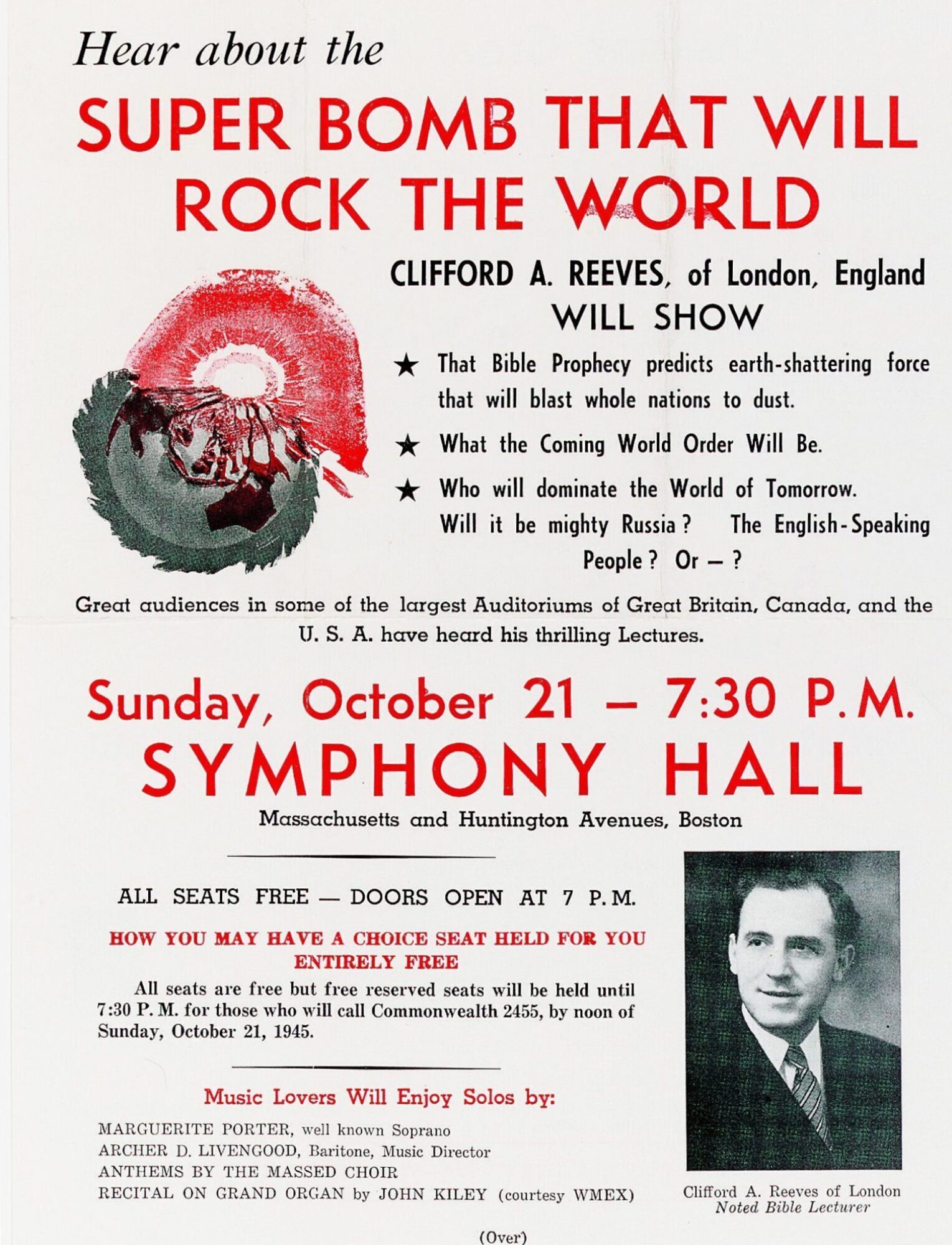
Flyer for a lecture series by Clifford A. Reeves titled “The Super Bomb that Will Rock the World” on October 21st, 1945.
Clifford A. Reeves, a Bible Lecturer from London, England delivered a talk in October 1945 where he claimed to show that “Bible Prophecy predicts earth-shattering force that will blast whole nations to dust.” Asking questions about what the new world would be and who would dominate it, Reeves attracted large audiences for his talks in Great Britain, Canada, and the U.S. (Boston Globe, October 20, 1945).
Pomp and Circumstance
Many caps and gowns have been worn in Symphony Hall during Boston’s busy commencement season. The Boston Public Schools as well as many of the area’s colleges and universities, including Boston University, Northeastern University, Simmons University, and M.I.T. have used the Hall to celebrate graduations and other significant benchmarks.
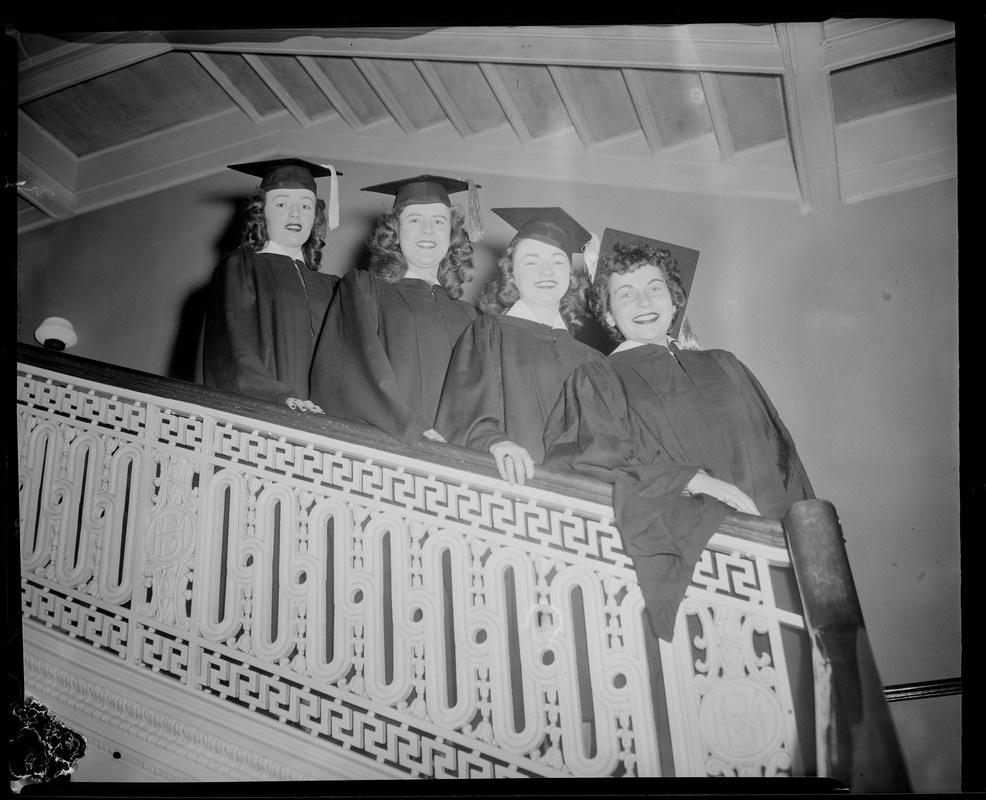
Image of Northeastern University graduates, ca. 1934-1956. Photograph by Leslie Jones.
Four graduates of Northeastern University stand on the stairwell during commencement activities at Symphony Hall. Northeastern has held numerous commencements and convocations at Symphony Hall from the Hall's earliest days through the 1960s.
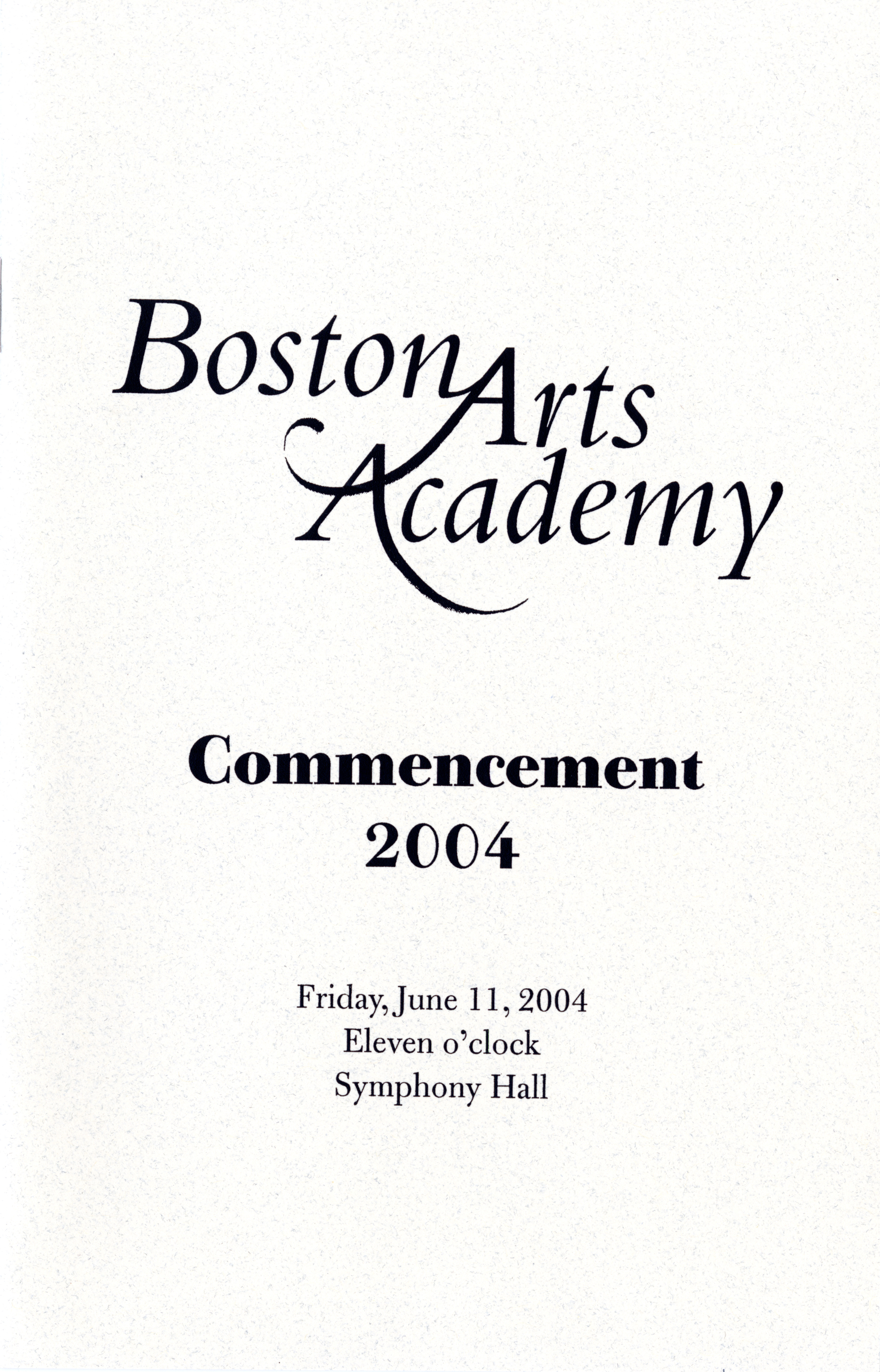
Program book for the commencement of the Boston Arts Academy on June 11th, 2004.
Boston Arts Academy, Boston’s first and only public high school for the visual and performing arts, hosted its commencement at Symphony Hall in June 2004.
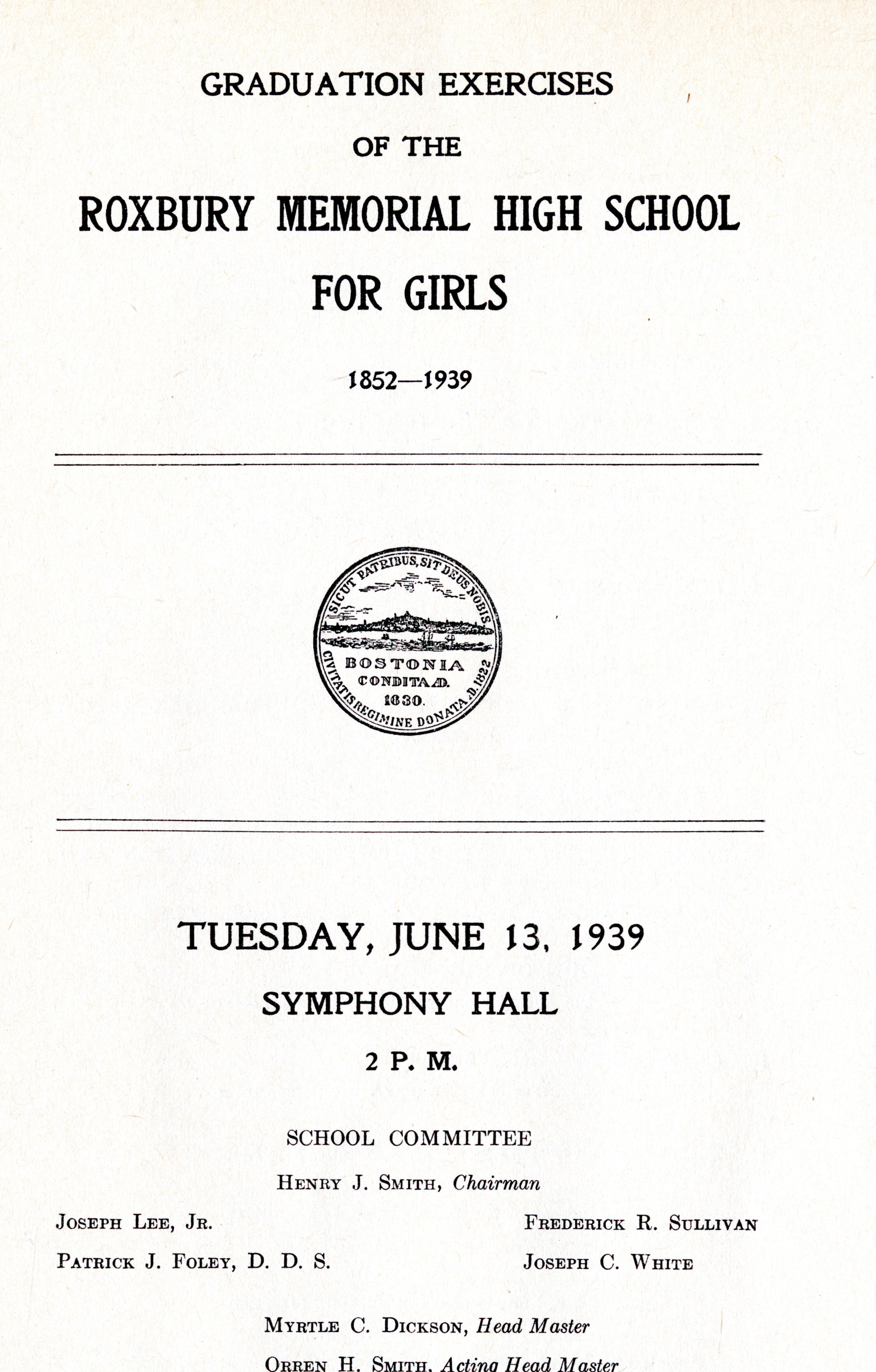
Program book of the commencement of the Roxbury Memorial High School for Girls on June 13th, 1939.
The speaker at the 1939 Roxbury Memorial High School Commencement was Joseph Lee, a member of the Boston School Committee who encouraged graduates to focus on a marriage of love and the home over a career. Lee’s comments exemplify the shifting attitudes towards love and marriage in the first half of the 20th century, which saw the prioritization of an established companionate relationship between couples before marriage. (Boston Globe, June 14, 1939).
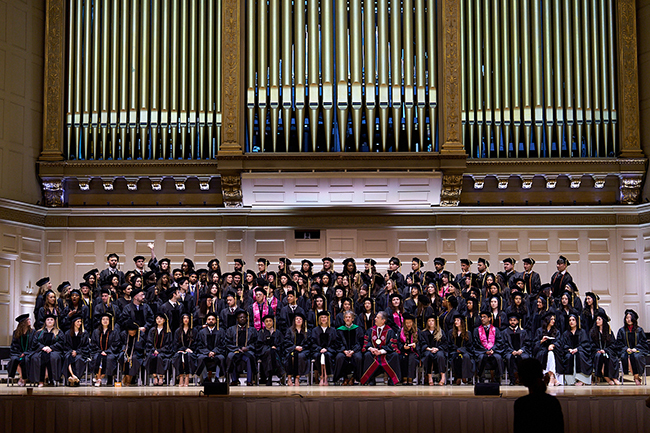
Image of graduates from the New England College of Optometry on May 18th, 2025. Photograph taken for the New England College of Optometry.
In May 2025, the New England College of Optometry conferred degrees to 128 students. Dr. Thomas Andrea, Assistant Professor of Clinical Optometry OD, FAAO, stated in his remarks to the students, “As new doctors of optometry, you’ve been trained to diagnose disease, preserve sight, and enhance patients’ quality of life. But it is important to recognize that your influence extends far beyond the exam room. You are now leaders and advocates in your communities.”
Other Gatherings
Throughout its history Symphony Hall has also served as a venue for a wide range of events hosted by clubs, associations, religious groups and traveling lecturers. A variety of religious denominations have held services and memorial events in the Hall, with Boston's Community Church meeting regularly on Sunday mornings from 1927 to 1942. Travel lecturers such as Burton Holmes and Dwight Elmendorf transported audiences to different continents at a time when travel was not as accessible. In the early 2000s, Symphony Hall was transformed into a venue for the United States Open Squash Championships (and later a World Squash Championship challenge event) – the only occasions that the Hall has hosted live sporting events.
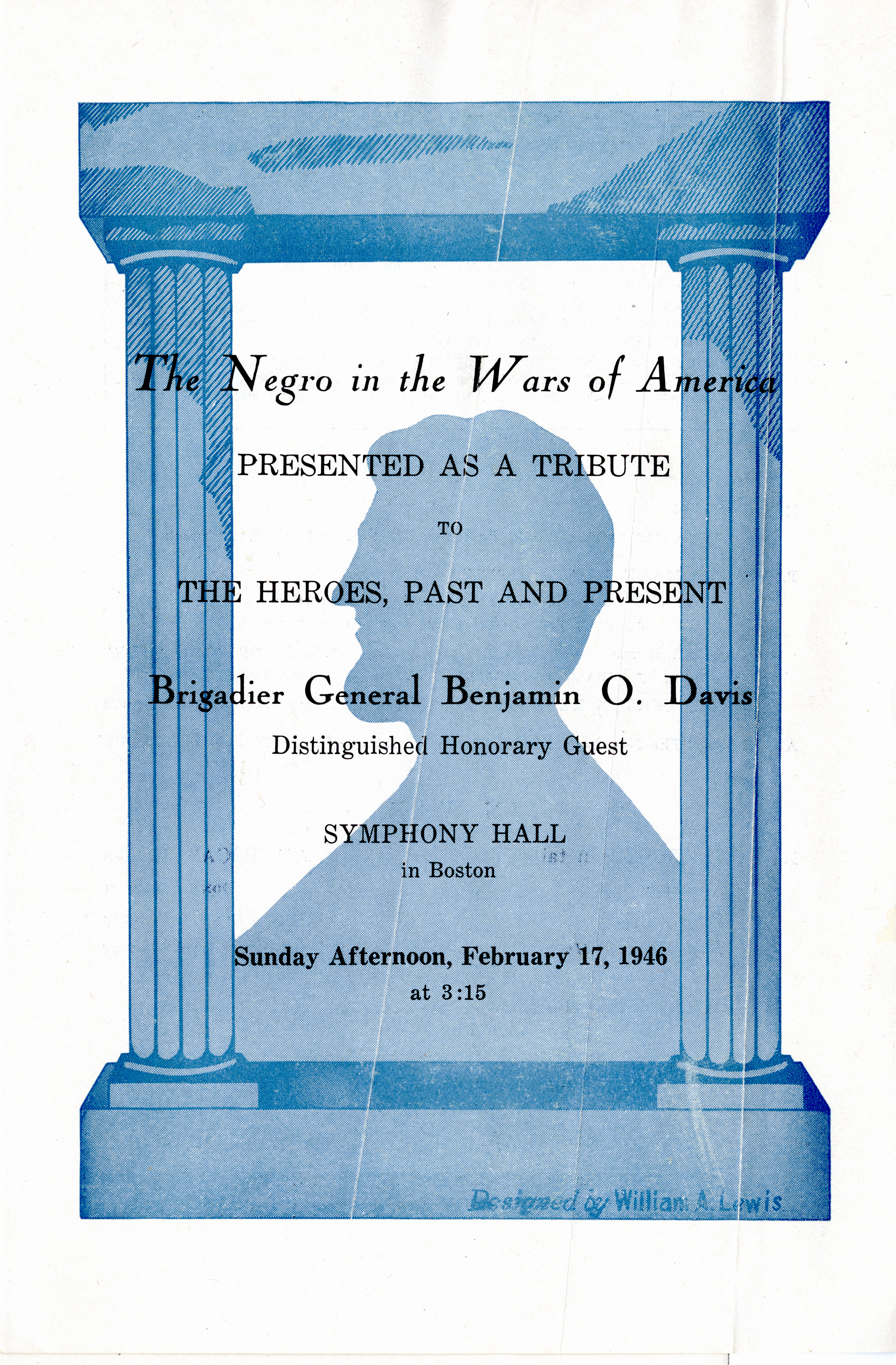
Flyer for a speech by Brigadier General Benjamin O. Davis on February 17th, 1946.
As part of what was known as “Negro History Week” in 1946, General Benjamin O. Davis, the first Black brigadier general in the Air Force and commander of the Tuskeegee Airmen, gave a speech at Symphony Hall about the importance of recognizing the accomplishments of Black soldiers. Gen. Davis declared “It is the duty of the American people to see that all groups, all individuals, have equal opportunities and the privilege of enjoying the fruits of their labors in all places provided for the public.” (Boston Globe, February 18, 1946).
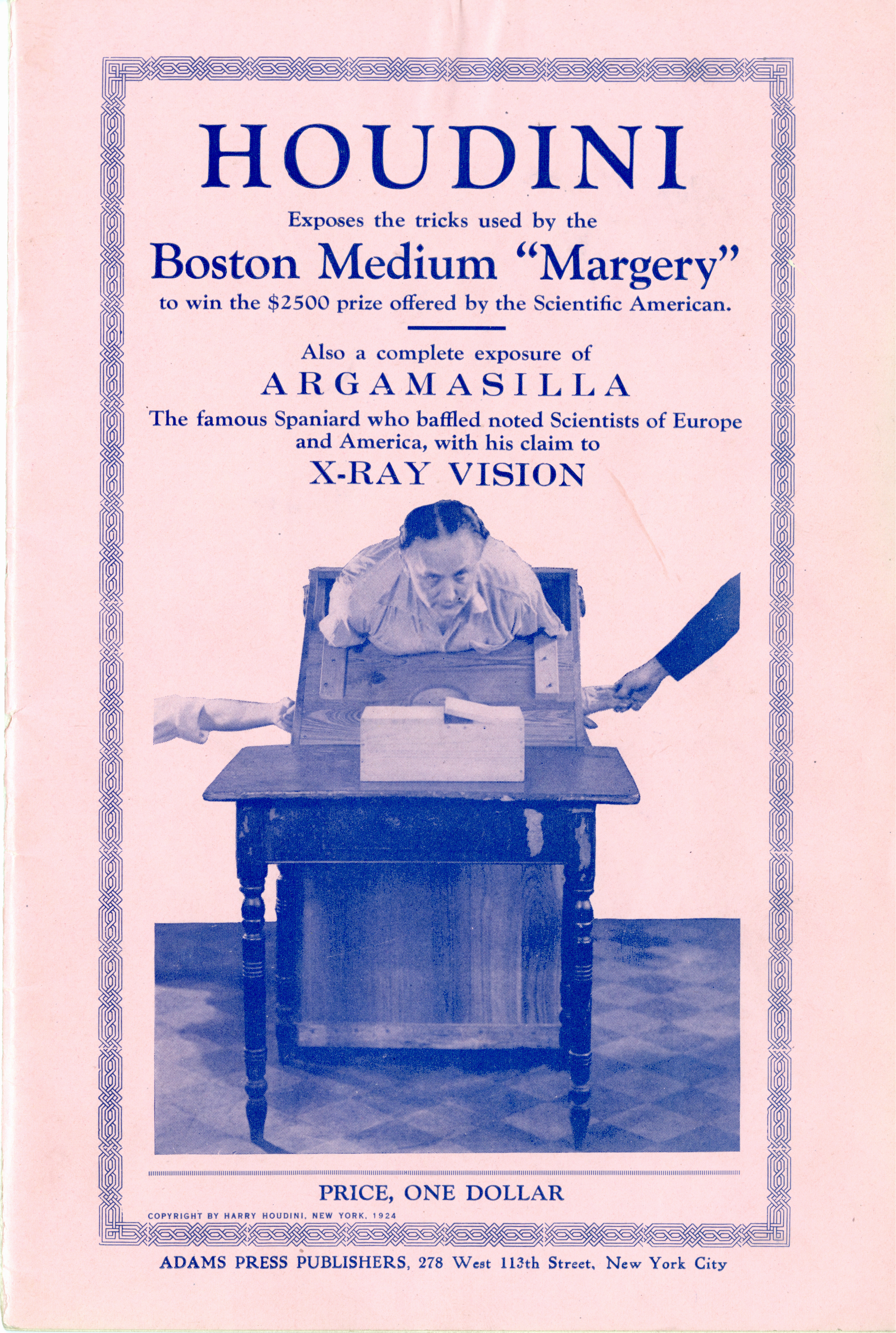
Flyer for Houdini’s presentation refuting Margery the Medium on January 2nd, 1925.
In 1925 Houdini set out to debunk the spiritualist known as “Margery the Medium” (real name Mina Crandon), the wife of a wealthy doctor and Boston Brahmin. After attending one of her seances, Houdini denounced Margery from the stage of the Hall, laying out the tools she used to perform such acts as levitating a table. Given her notoriety, Houdini’s fame, and a revived interest in spiritualism at the time, this was a well-publicized event.
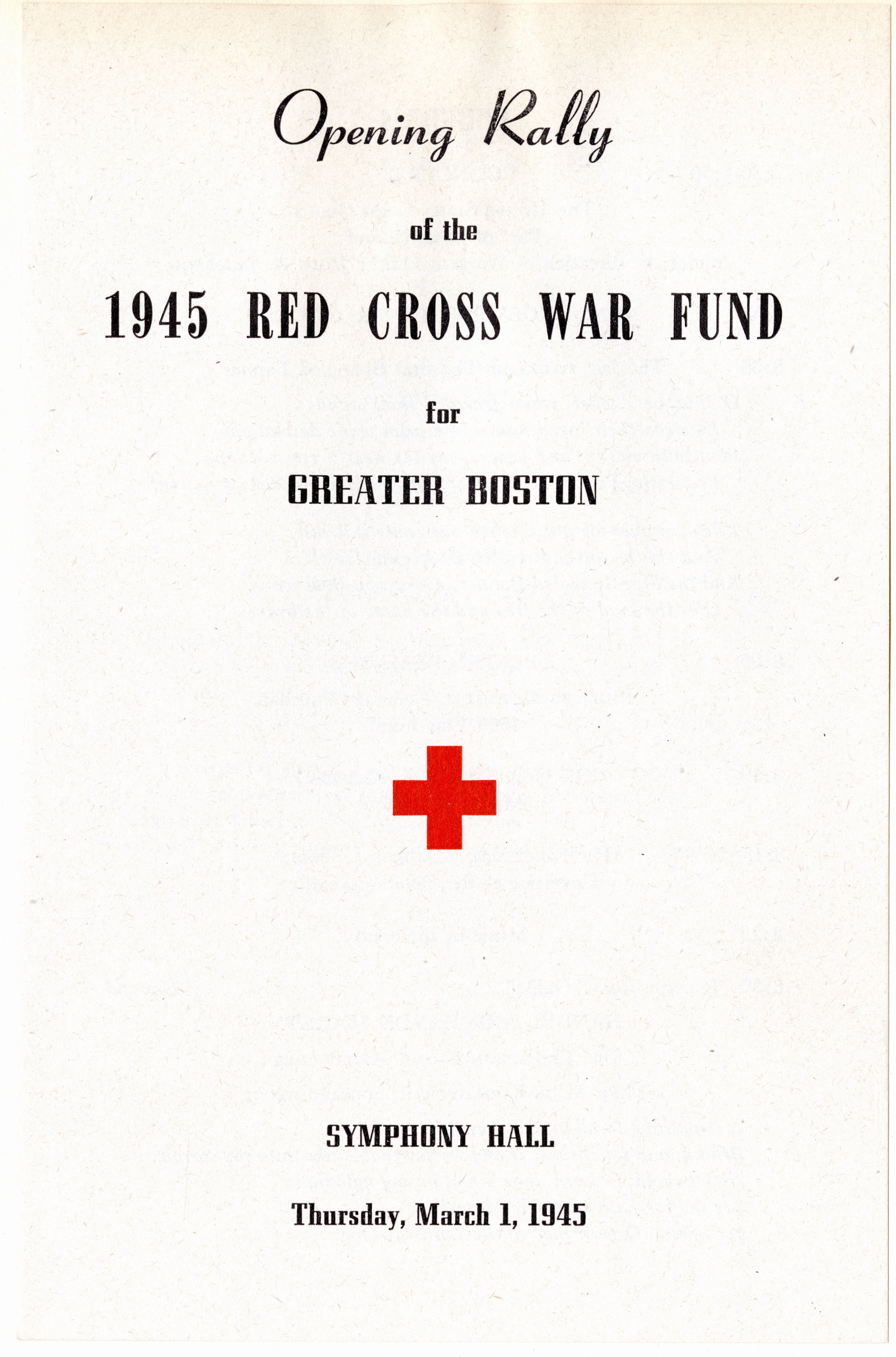
Flyer for the opening rally of the 1945 Red Cross War Fund on March 1st, 1945.
Ultimately raising over $300,000 in the Greater Boston Area, the Red Cross War Fund hosted a regional opening rally at Symphony Hall in March 1945. With Archbishop Richard J. Cushing as principal speaker, the rally also featured a pageant titled “Keep Your Red Cross at His Side” during which 600 Red Cross workers and servicemen participated. The rally launched a series of campaign collection events throughout Greater Boston on subsequent days ending on March 26th, 1945. (Boston Globe, March 1, 1945).
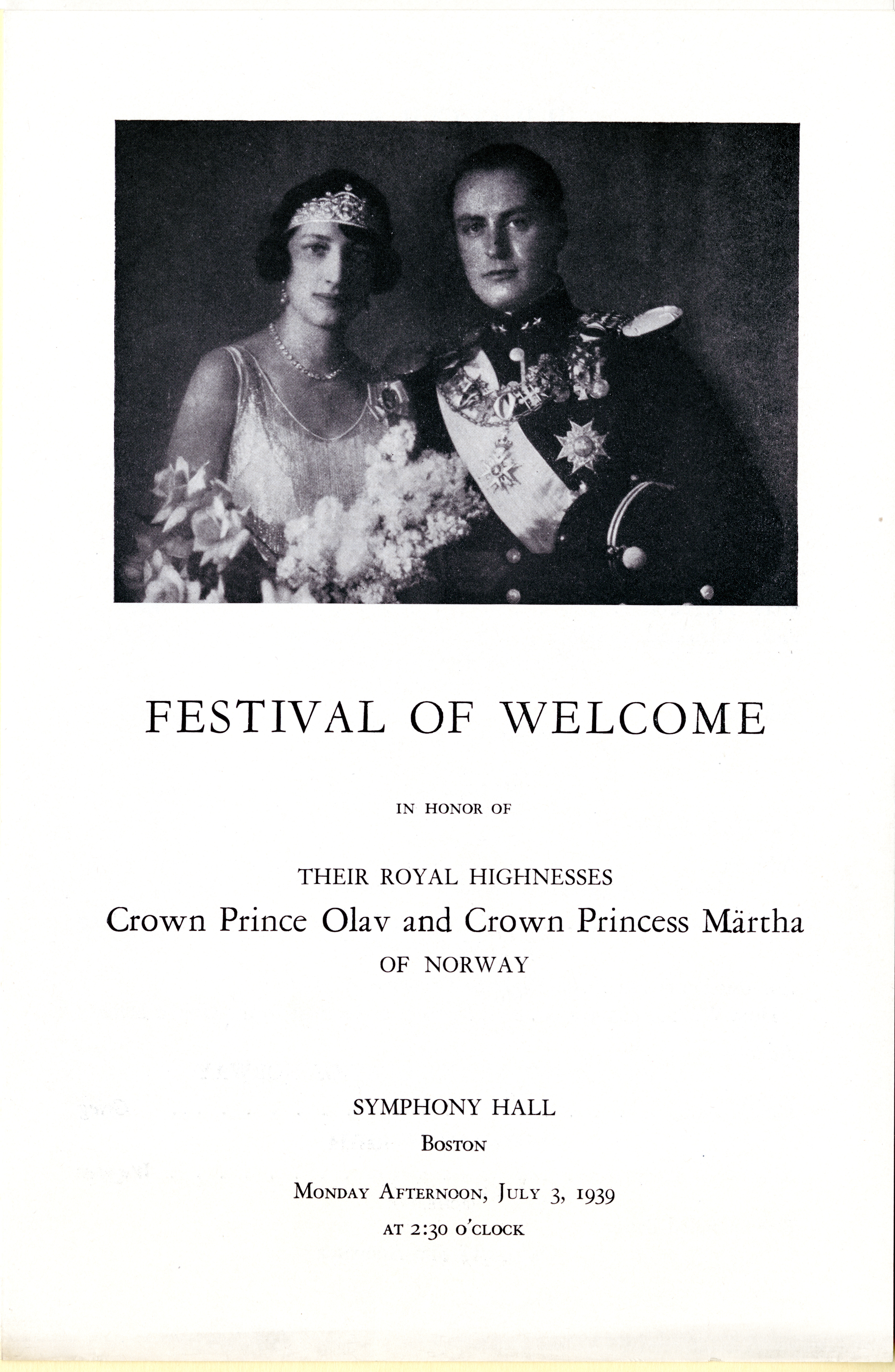
Flyer for a Festival of Welcome for Crown Prince Olav and Crown Princess Martha of Norway on July 3rd, 1939.
As part of a program of sightseeing, public appearances, and yachting during celebrations for America's Independence Day, the Crown Prince and Princess of Norway visited Boston in 1939. The heir apparent of the throne of Norway greeted members of the public at Symphony Hall as part of his busy visit. (Boston Globe July 2, 1939).
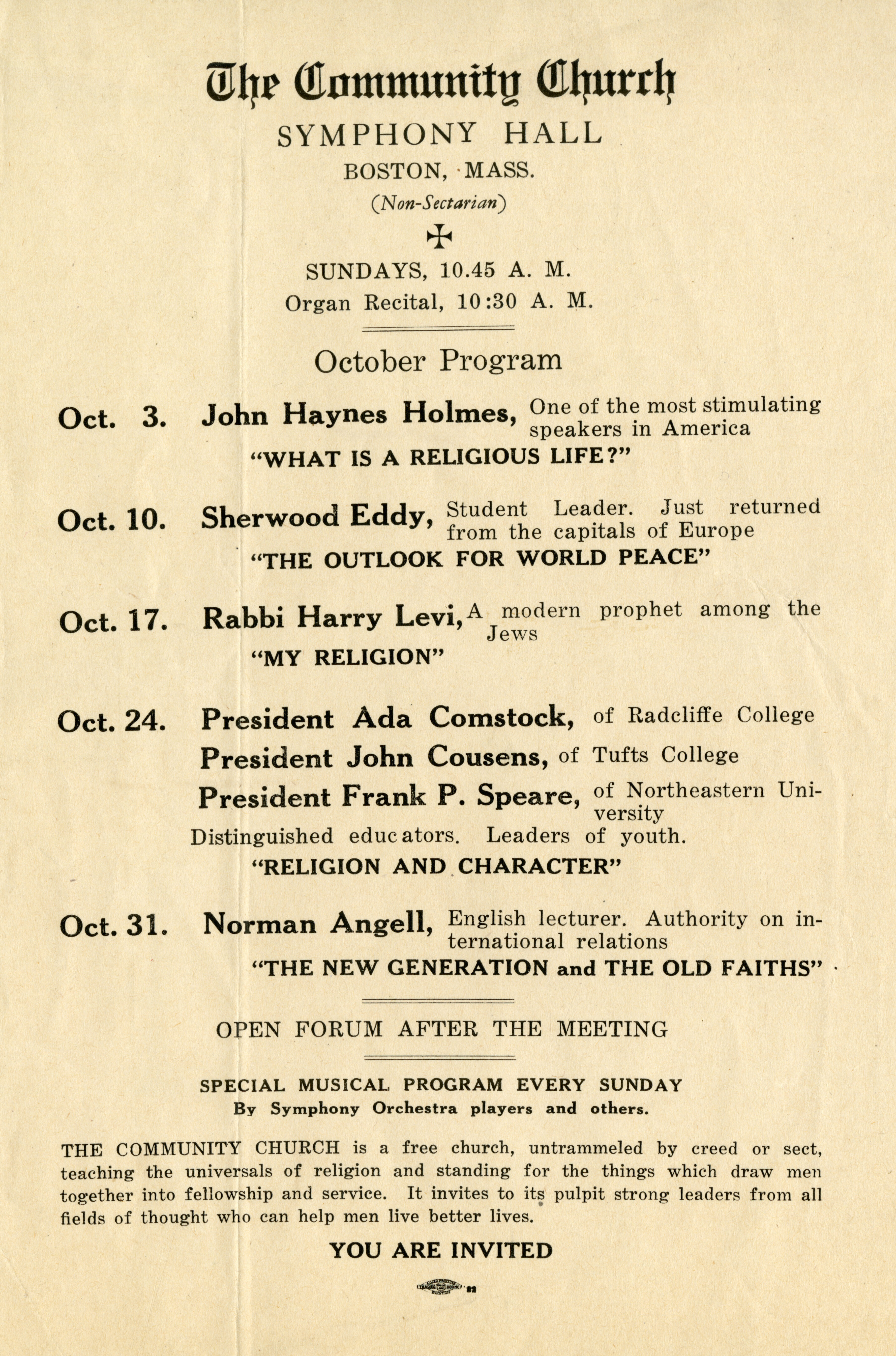
Schedule of fall lectures offered by the Community Church of Boston from October 3rd to 31st, 1926.
The Community Church of Boston’s fall lecture series in 1926 included lectures from John Haynes Holmes, an American Unitarian Speaker, Sherwood Eddy, a student leader, and President John Cousens of Tufts College. Topics included “What is a Religious Life?” “The Outlook for World Peace,” and “Religion and Character.”
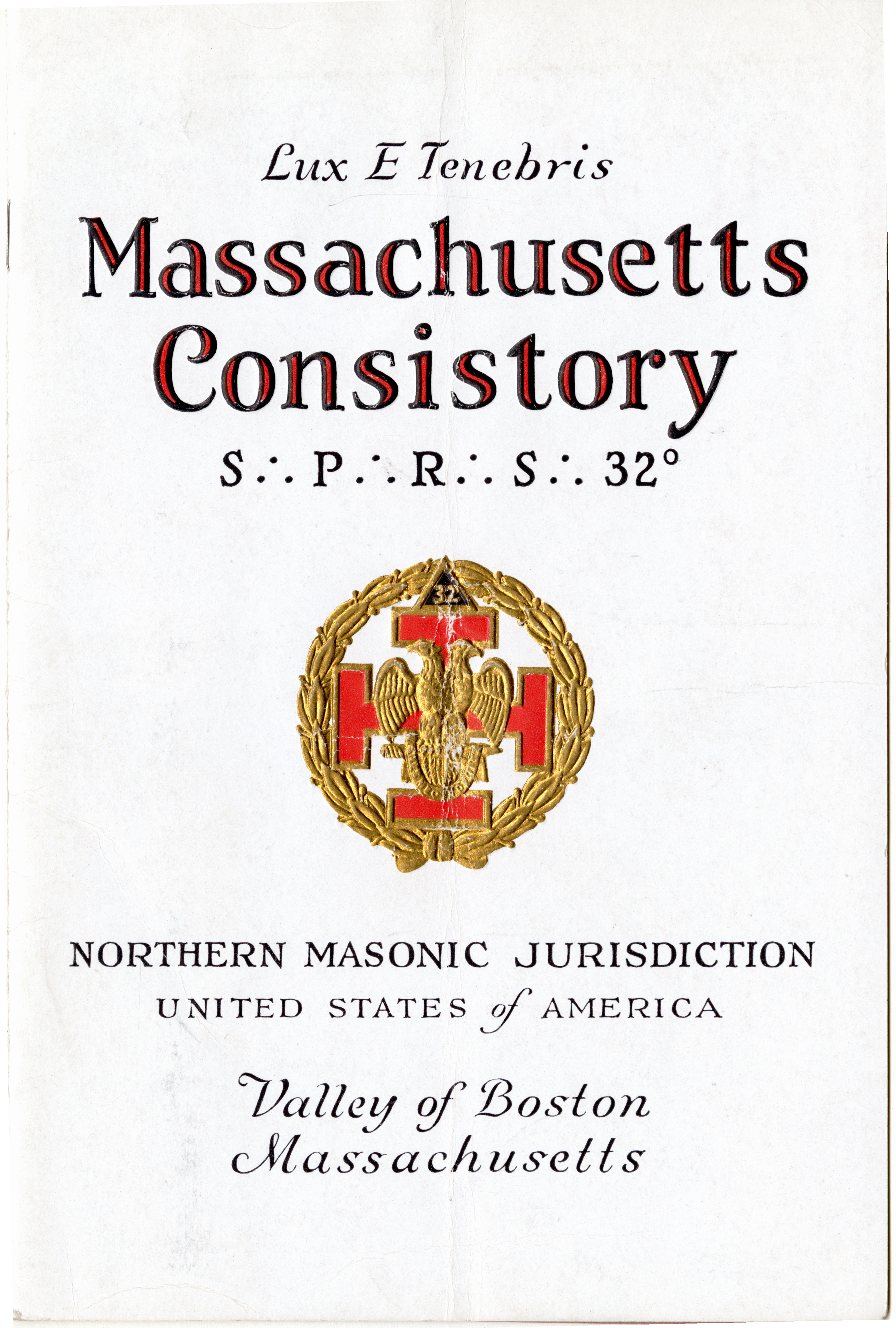
Flyer for Massachusetts Consistory SPRS 32 Annual Rendezvous on March 5th, 1930.
The Massachusetts Consistory, or an assembly of officers that grant the 19th to 32nd degrees within the Scottish Rite (a masonic organization), gathered for their Annual Rendezvous on March 5th, 1930, at Symphony Hall.
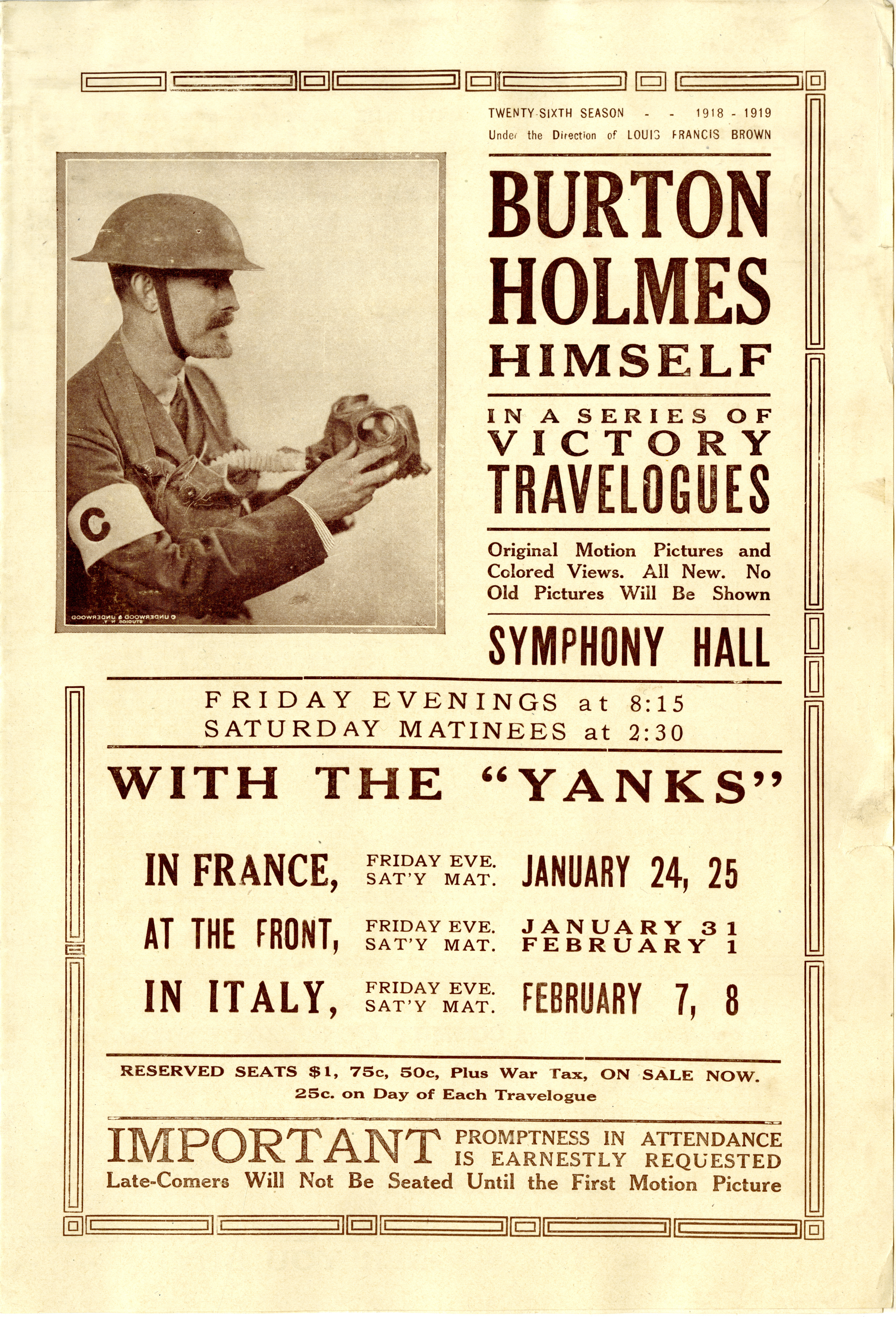
Advertisement for a lecture by Burton Holmes titled “With the Yanks in England” on January 10th, 1919.
Burton Holmes, a famed travel writer and lecturer, gave numerous lectures at Symphony Hall on various locations including Italy, France, Russia, and regions in South America. In 1919 he presented a series in which each lecture title began “With the Yanks...” which detailed life at war and on the front.
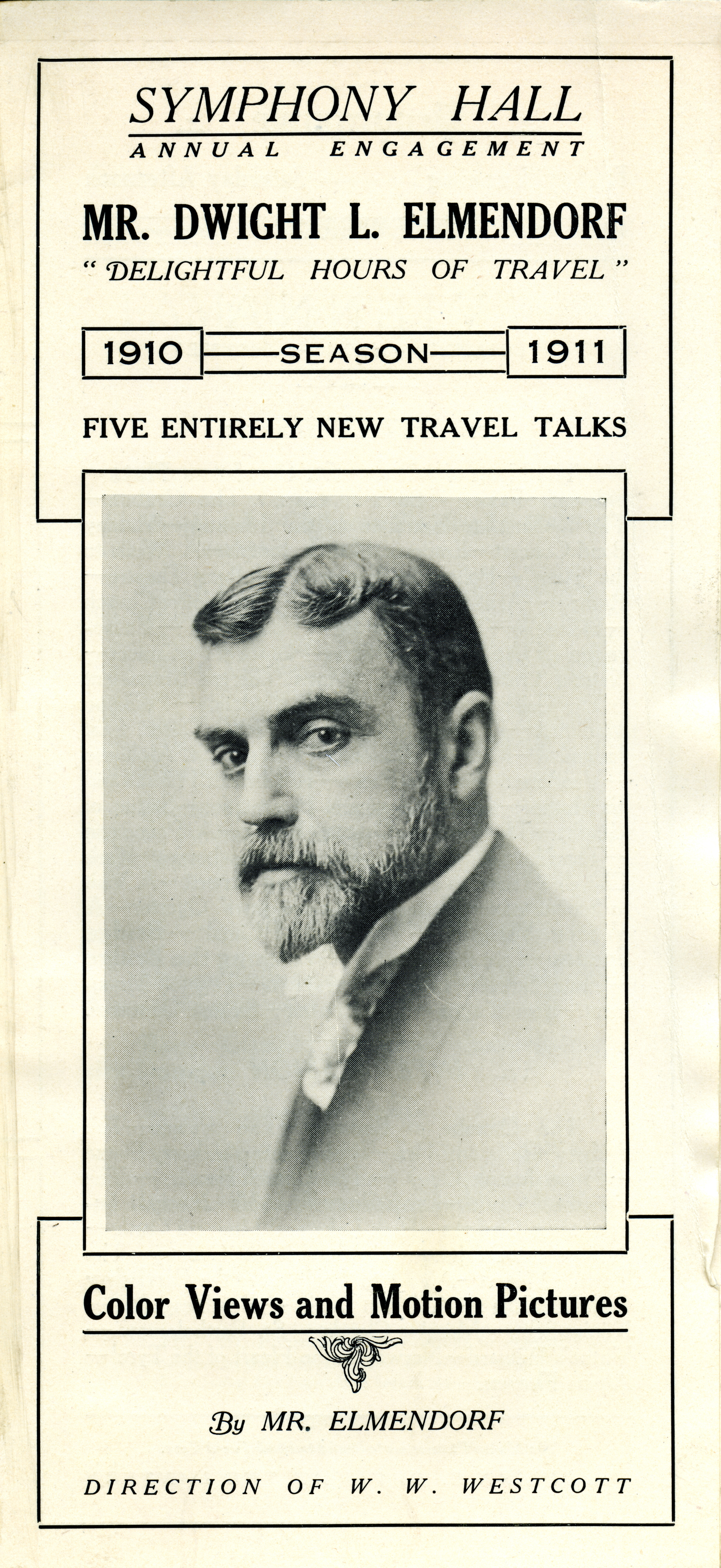
Flyer advertising the travel talks of Mr. Dwight L. Elmendorf, November 1910.
During the 1910-1911 season, Dwight L. Elmendorf gave a series of travel talks, speaking about London, Berlin, Vienna, and Paris, as well as Famous Paintings in Europe. Elmendorf’s presentations transported audiences to places they might not otherwise have been able to experience.
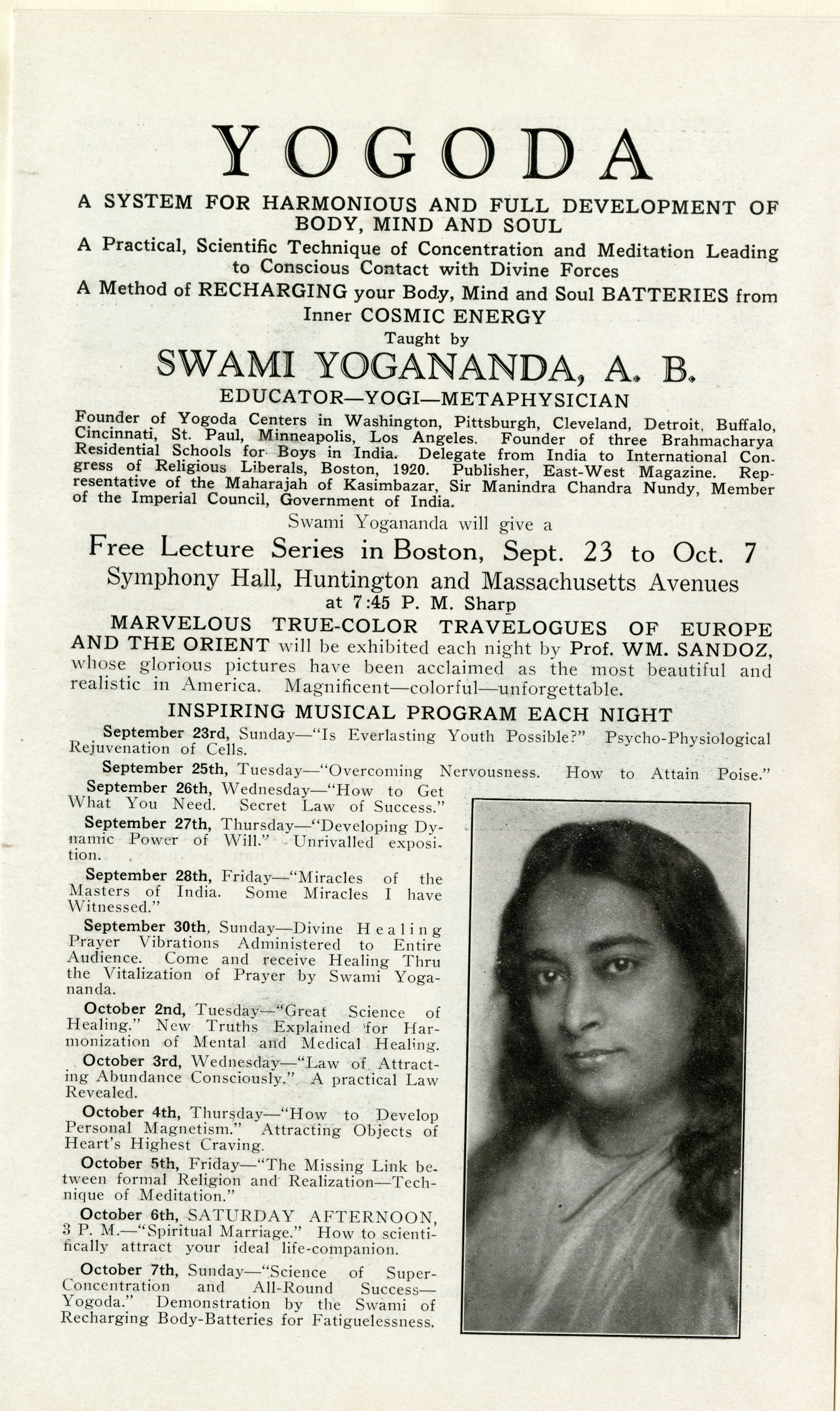
Flyer for lecture series by educator and yogi Swami Paramahansa Yogananda on September 23rd to October 7th, 1928.
A member of the Swami monastic order, Yogananda was one of the foremost early advocates for yoga in America. In 1928, he gave a series of lectures covering topics like the “secret law of success” and “developing the dynamic power of will.” In addition to incorporating a musical program into each lecture, Yogananda emphasized the “healing power of song.” (Boston Globe, September 16, 1928).
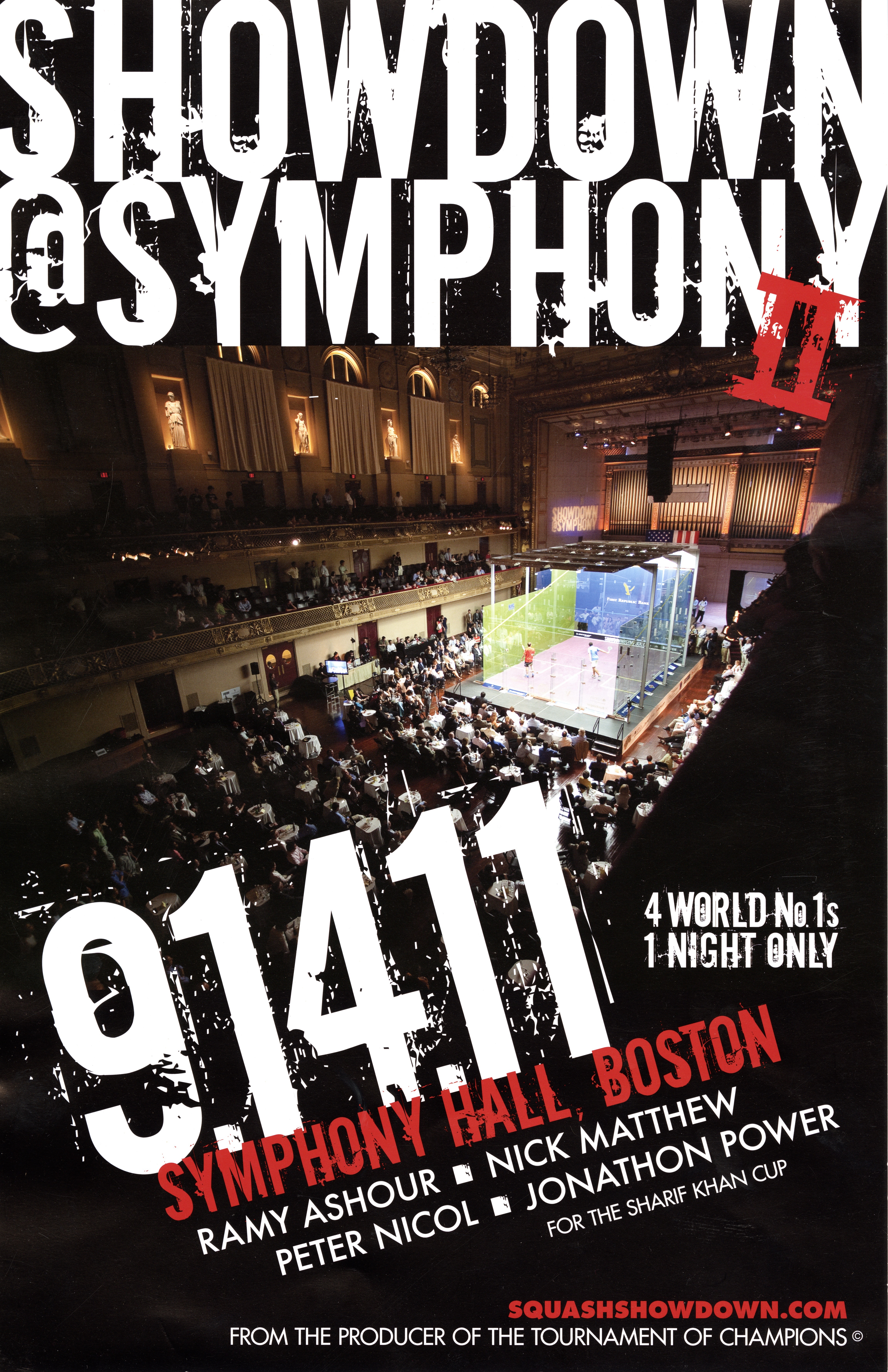
Poster featuring the World Squash Championship Challenge event on September 14th, 2011.
After successfully hosting the U.S. Open Squash Championships in 2002-2004, Symphony Hall morphed into a squash court once again in September 2011. The world no. 1 & 2 squash champions as well as two icons of the game faced off for the title. A large plastic cube sat in the center of the Hall for game play while eventgoers looked out from the Hall’s seating areas. John Nimick, the founder of Squash Engine, Inc. shared that the event was “quite the thrill” stating that “Boston is a serious squash town.” (Squash Mad, July 30, 2011).